
MANAGEMENT'S DISCUSSION AND ANALYSIS

FORWARD-LOOKING STATEMENT
The report contains forward-looking statements, identified by words like ‘plans’, ‘expects’, ‘will’, ‘anticipates’, ‘believes’, ‘intends’, ‘projects’, ‘estimates’ and so on. All statements that address expectations or projections about the future, but not limited to the Company’s strategy for growth, product development, market position, expenditures and financial results, are forward-looking statements. Since these are based on certain assumptions and expectations of future events, the Company cannot guarantee that these are accurate or will be realised. The Company’s actual results, performance or achievements could thus differ from those projected in any forward-looking statements. The Company assumes no responsibility to publicly amend, modify or revise any such statements on the basis of subsequent developments, information or events. The Company disclaims any obligation to update these forward-looking statements, except as may be required by law.
The world economy grew at a stable pace of 3.1% in CY 2016, aided by recovery in emerging economies particularly commodity exporters, while growth in developed markets remained modest. Increase in oil prices along with other major commodities like iron ore and copper aided recovery in global trade towards the end of CY 2016. The uptick in global trade was led by pickup in import demand in Asia and US which augurs well for underlying demand trends. While global growth was stable, markets were focused on geopolitical developments with change in leadership in the USA, and the UK working on modalities around its exit from the European Union.
Activity rebounded in the USA after a weak first half of CY 2016, as the economy approaches full employment. The US Federal Reserve continued with the interest rate normalisation cycle in FY 2016-17 by increasing rates twice, in Dec 2016 and Mar 2017. The global low interest rate and abundant liquidity cycle is likely to slowly normalise.
On the domestic front, India remained the fastest growing major economy in the world, after surpassing China last year. Gross Domestic Product growth rate was 7.1% for FY 2016-17, supported by strong consumption growth and government spending. Inflation eased sharply led by a decline in food inflation amidst government’s astute food management, facilitating a 50 basis points rate cut by the RBI in FY 2016-17 before it adopted a neutral stance. Diminishing vulnerabilities on the external and fiscal front with Apr-Dec FY 2016-17 current account deficit at 0.7% of GDP and government’s commitment to fiscal consolidation reinstated investor confidence in the economy, resulting in record Net Foreign Direct Investment of US$35.9 billion in FY 2016-17.
FY 2016-17 was also marked by two significant economic measures by the government. Government’s demonetisation move to counter the shadow economy and promote cashless economy has boosted digital payments in the country. The Goods and Services Tax (GST) - constitution amendment bill, passed by the government, to be implemented from July 1st, 2017 will have a significant impact on the taxation structure in the country. The reform process would further help boost India’s position in the global arena.
Global oil demand growth remained robust at 1.6 million barrels per day in CY 2016 led by a 3.3 % y-o-y growth in demand from the non-OECD countries. Gasoline demand trends remained robust contributing around 40% of global oil demand growth. US, China and India accounted for 60% of the global gasoline demand growth. Global oil price strengthened in FY 2016- 17, supported by the OPEC non-OPEC co-operation to cut oil production in the last quarter of CY 2016.
India became the second largest contributor to the global oil demand growth in terms of incremental oil demand. India also overtook Japan as the world’s third largest oil consumer (after USA and China).
During FY 2016-17, India's oil demand grew 5.2% led by strong consumption demand growth in gasoline (+8.8%) and jet kerosene (+12.1%). This was underpinned by 9.2% growth in passenger vehicle sales, 6.9% growth in two-wheelers sales and 21.7% growth in domestic airline passenger traffic. Domestic diesel demand remained muted at 1.8% as the industrial cycle lagged consumption. Polymer demand grew by 7% and polyester demand grew by 3% during FY 2016-17.
With the advent of Jio in the domestic digital services market, the Indian telecom industry witnessed unprecedented growth in data consumption. Over a 100 million Jio users propelled India into the largest mobile data usage market globally, with monthly data consumption of over 1bn GBs.
RIL’s downstream hydrocarbon businesses delivered a stellar performance in FY 2016-17. Refining business continued to register double digit Gross Refining Margin (GRM) and outperformed benchmark Singapore GRMs. Refining business was supported by stable middle distillate cracks, benign global demand growth and optimised crude sourcing. Favourable naphtha cracking economics, firm domestic demand and higher volumes in polyester chain underpinned record earnings from the Petrochemical business.
RIL progressed completion of the ongoing hydrocarbon projects with the phase wise commissioning of Paraxylene plant at Jamnagar, making it the 2nd largest producer of PX globally. During the year, RIL completed the world’s largest and most complex ethane sourcing project. It commissioned ethane receipt and handling facilities at its Dahej manufacturing facilities in a record time of less than three years. The Refinery Off gas Cracker (ROGC) and downstream projects as well as gasification linked to Domestic Tariff Area refinery achieved the installation and mechanical completion during the year and pre-commissioning and start-up activities are in full swing. The installation and mechanical completion for the gasification linked to RIL’s SEZ refinery has also been substantially achieved. The completion of the hydrocarbon capex cycle will significantly enhance RIL’s cash flows and impart a high degree of stability to its earnings stream.
Refining and Marketing (R&M) business delivered another year of double digit GRMs in FY 2016-17. Supportive product demand environment led by India and China, firm middle distillate spreads and well-supplied crude markets helped the R&M business to sustain high margins. RIL recorded GRM of US$11.0/bbl for the year, highest in last eight years. RIL continued to outperform Singapore benchmark, with an eight year high premium of US$5.2/bbl during FY 2016-17.
R&M business registered an EBIT of `25,056 crore (up 6.5% y-o-y) supported by better volumes, yield management and robust risk management.
During the year, RIL continued to process challenging and advantageous crudes. It processed 5 new crude grades in FY 2016-17. RIL’s refineries have now processed over 150 grades of crude.
RIL continued to build-out its domestic retail network with 1,221 fuel outlets operational as at the end of FY 2016-17. RIL’s fuel outlets registered significant volume growth with yearend exit throughput more than double the industry average, highlighting the superior customer experience and value added offerings.
Petrochemicals business delivered strong earnings growth led by volume growth, favourable naphtha cracking economics and recovery in polyester chain margins. Proactive inventory management and cost-discipline helped RIL dampen the transient impact on domestic demand growth during FY 2016-17.
The petrochemical business posted record earnings with 5 year high EBIT margin of 14%. The segment EBIT stood at `12,990 crore in FY 2016-17, up by 27.5% y-o-y.
During FY 2016-17, RIL progressed rapidly to enhance petrochemical capacities, strengthen integration and improve feedstock security. The new PX capacity will complete the integration within RIL’s polyester value chain, leading to improved margins and also strengthen its position in polyester industry globally. The supply of ethane to RIL’s crackers at Dahej, Hazira and Nagothane will provide feedstock security and flexibility enabling it to select the most optimal feed mix based on market conditions. This will improve the cost competitiveness of its existing crackers and enable it to optimise the portfolio in a volatile market environment.
INTERNATIONAL: SHALE GAS
The commodity markets showed improving trend towards the end of CY 2016. However, weaker Natural Gas differentials in the Marcellus region along with lower volumes resulted in a setback during the year leading to lower revenues and EBITDA.
Reliance Holding USA Inc., delivered negative EBIT of (`1,430) crore in CY 2016 compared to `3,280 crore in CY 2015. Operational trends remained strong across joint ventures (JVs), with improving costs and declining capex. Overall volume trends remained subdued reflecting the impact of forced curtailment of production at Marcellus and “zero development” strategy which are being pursued to conserve cash flows and safeguarding investment returns in a challenging business environment. Consequently, production (RIL share) was 14.6% lower at 174.0 Bcfe in CY 2016. The business is taking a cautious approach to resuming development and focusing on conserving cash and retaining optionality.
During the year, RIL commenced commercial production from its Coal Bed Methane block (CBM), at Sohagpur (West). The production from RIL’s Sohagpur CBM fields is expected to gradually ramp-up over the next 15-18 months making RIL among the largest unconventional natural gas producers in India.
Operationally, FY 2016-17 continued to witness lower upstream production and weak domestic gas price realisations. The domestic oil and gas production (RIL share) was down 23% to 95 billion cubic feet equivalent. The unfavourable upstream price environment and declining volumes resulted in negative segment EBIT for the year at (`131) crore.
In FY 2016-17, Reliance Retail registered strong growth with its turnover increasing by 60.2% to `33,765 crore over the previous year. The business delivered record profits during the year with an EBIT of `784 crore, up by 55.6% as compared to FY 2015- 16. During the year, Reliance Retail added 371 stores across various store concepts. At the end of the year, Reliance Retail operated 3,616 stores across 702 cities with an area of over 13.5 million square feet and 448 fuel outlets. The robust growth and operating performance is a reflection of strong business fundamentals and focused execution by a highly trained and capable team.
As part of Reliance Retail 2.0 initiatives, AJIO extended its offering by launching men’s wear, fashion tech and kid’s wear categories and rolled out various features such as IMPS, EMI, automated refunds and much more to enhance customer experience.
Reliance Retail continues to strengthen its International brand portfolio. During the year, it entered into partnership with Bally from Switzerland, Scotch & Soda from Netherlands and Flormar from Turkey.
In the Media business, Network18 Media and Investments reported consolidated revenue and negative EBIT of `1,491 crore and (`201) crore, respectively, for FY 2016-17 as it continued to invest in launch of new channels and digital businesses, while upgrading existing properties and talent.
CNBC TV18 and CNBC Awaaz continued to be the highest rated channels in the English and Hindi Business News genre respectively, with both garnering a 58% market share during market hours. OTT video app VOOT continued to gain traction. News18.com and Firstpost umbrella brands were extended into Hindi. Network18 maintained its impetus on penetrating regional markets. A second entertainment channel ‘Colors Super’ in the Kannada market was launched to further cement the group’s pre-eminent position in that market. During the year, three new regional news channels were launched in Kerala, Tamil Nadu and Assam/N.E. CNN-IBN was re-branded and re-launched as CNN-News18.
LIQUIDITY AND CAPITAL RESOURCES
During FY 2016-17, RIL successfully refinanced long-term financing of US$1.75 billion syndicated loan and US$550 million club loan aggregating to US$2.3 billion resulting in substantial interest savings over the remaining life of these loans.
RJIL issued secured long-term INR non-convertible debentures aggregating to `5,000 crore comprising of `3,000 crore debentures with maturity of three years and `2,000 crore debentures with maturity of five years.
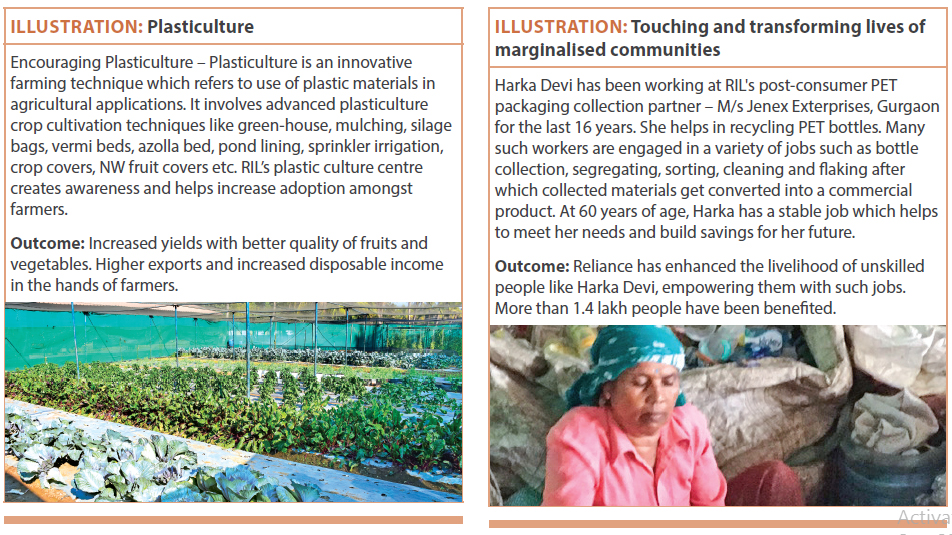
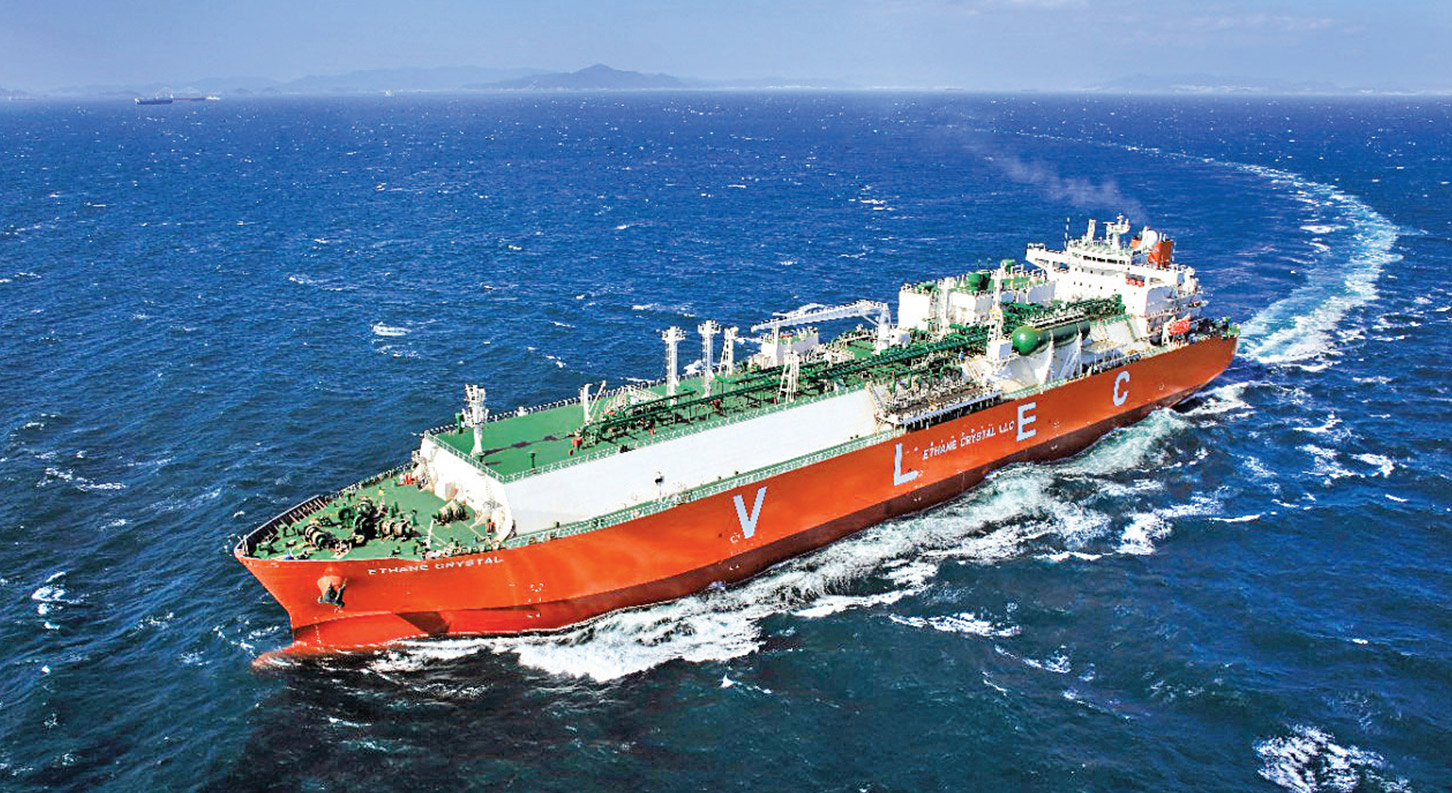
In October 2016, US$ 572 million financing was tied up to partially finance six state-of-the-art Very Large Ethane Carriers (VLECs) – the vessels being first of their type and size globally.
CORPORATE SOCIAL RESPONSIBILITY
During FY 2016-17, Reliance contributed `674 crore towards Corporate Social Responsibility (CSR).
CSR initiatives of Reliance are guided by the three core principles of SCALE, IMPACT and SUSTAINABILITY (SIS). In order to streamline its CSR initiatives, Reliance has identified 7 focus areas: Rural Transformation, Health, Education, Sports for Development, Disaster Response, Urban Renewal and Arts, Culture and Heritage.
ALOK AGARWAL
SRIKANTH VENKATACHARI

“Delivering superior performance in today’s volatile and global environment requires sound strategy and disciplined execution. Reliance achieved a number of milestones and performance records – demonstrated by solid earnings growth, EBITDA growth and margin expansion. Reliance has generated record cash profit of `42,800 crore (US$6.6 billion) for the year.
Across its integrated portfolio, Reliance is executing a number of strategic actions to deliver maximum value from each business. Reliance is enhancing its cost position and value of its integration between refining and petrochemicals business and at the same time investing in new growth platforms of retail and digital services. Reliance is well on its way to maximise returns for shareholders as all its investments in projects and new initiatives come to fruition this year.
During the year, Reliance has transitioned its financial statements reporting in compliance with Ind AS notified by the Ministry of Corporate Affairs.”
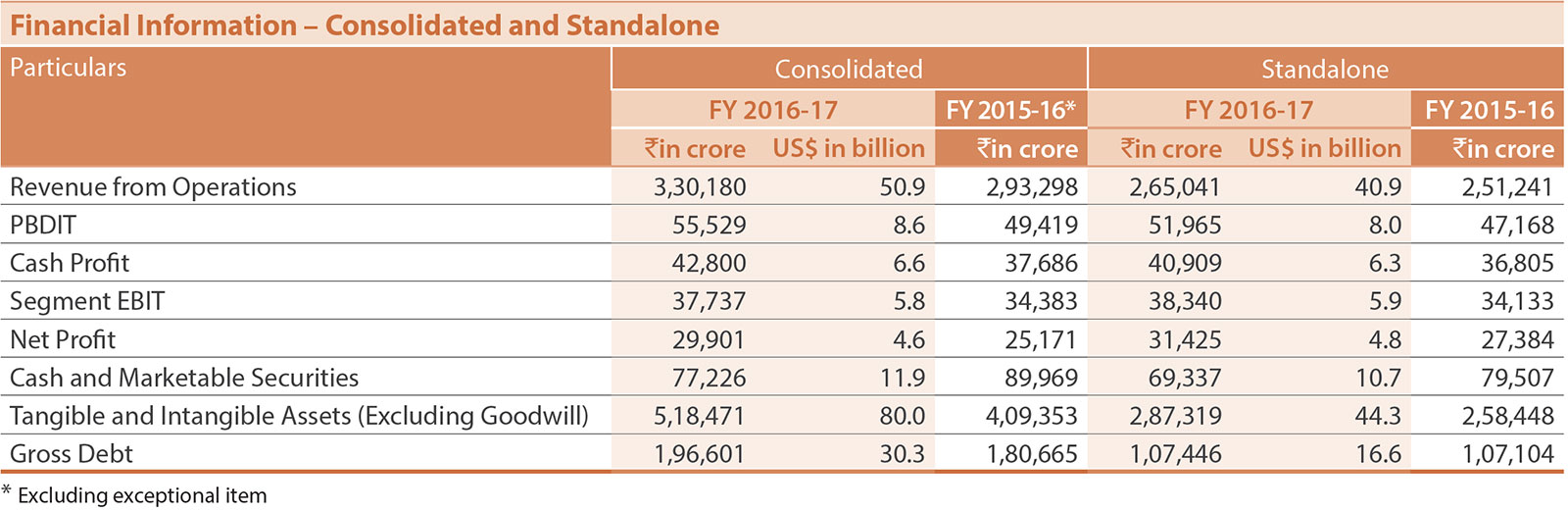
Other income was higher at `9,443 crore (US$1.5 billion) as against `7,479 crore in the previous year mainly due to profit on sale of investments.
Finance cost was at `3,849 crore (US$594 million) as against `3,691 crore in the previous year. The increase was primarily on account of higher average exchange rate for the year.
Depreciation (including depletion and amortisation) was higher by 0.7% to `11,646 crore (US$1.8 billion) as compared to `11,565 crore in the previous year primarily on account of capitalisation of new projects in the petrochemicals business.
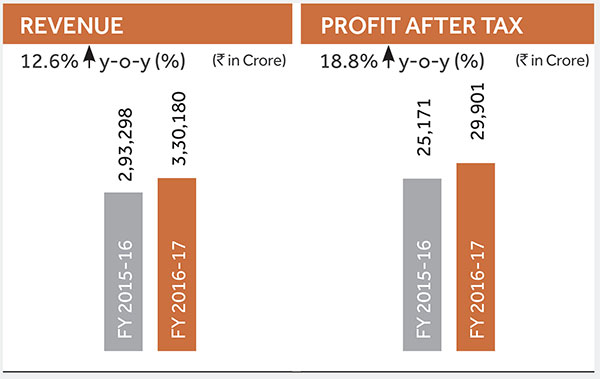
Profit after tax was higher by 18.8% at `29,901 crore (US$4.6 billion) as against `25,171 crore in the previous year
Basic earnings per share (EPS) for the year ended 31st March 2017 was at `101.3 as against `85.4 in previous year.
The Board of Directors of the Company has recommended dividend of `11.0 per fully paid up equity share of `10/- each, aggregating `3,916 crore (US$604 million), including dividend distribution tax.
Reliance’s fixed assets stood at `5,18,471crore (US$80.0 billion) as on 31st March, 2017. This includes fixed assets of `2,31,152 crore of its subsidiaries mainly in Reliance Jio, Reliance Holding USA and Reliance Retail.
Capital expenditure for the year ended 31st March, 2017 was `114,742 crore (US$17.7 billion) including exchange rate difference capitalisation. Capital expenditure was principally on account of ongoing projects in the petrochemicals and refining business (at Jamnagar, Dahej, Hazira) US Shale gas and Digital services business.
Reliance’s gross debt was at `196,601 crore (US$30.3 billion). This includes standalone gross debt of `1,07,447 crore and balance in key subsidiaries including Reliance Jio (`47,463 crore), Reliance Holding USA (`32,816 crore), Recron Malaysia (`1,586 crore), Reliance Gas Pipelines Limited (`1,450 crore) and Independent Media Trust Group (`1,307 crore).
Cash and marketable securities were at `77,226 crore (US$11.9 billion) resulting in net debt at `1,19,375 (US$18.4 billion).
RIL’s standalone revenue from operations for FY 2016-17 was `2,65,041 crore (US$40.9 billion) an increase of 5.5% on y-o-y basis. Standalone profit after tax was at `31,425 crore (US$4.9 billion) an increase of 14.8 % against `27,384 crore in the previous year. Basic EPS on standalone basis for the year was `96.9 as against `84.6 in the previous year.
Indian Accounting Standard
The Ministry of Corporate Affairs (MCA) notified Companies (Indian Accounting Standard) Rules 2015 enabling implementation of Ind AS. Pursuant to this notification RIL and its subsidiaries, associates and joint ventures have adopted Ind AS (the converged IFRS) with effect from April 1, 2016.
Accordingly, the standalone and consolidated financial statements for the year ended 31st March, 2017, and 31st March, 2016 including transition date balance sheet as at 1st April, 2015 have been prepared in accordance with Ind AS. The effect of transition to Ind AS has been given in detail in Financial Statement section.
HITAL R. MESWANI

C BORAR
SRINIVAS TUTTAGUNTA
P RAGHAVENDRAN
HARISH MEHTA
“Refining segment recorded its highest ever EBIT of `25,056 crore, led by 8 year high GRM of US$11.0/bbl. The unparalleled operational excellence and world class assets at Jamnagar complex provide RIL a sustained competitive advantage. RIL continued to outperform the Singapore refining benchmark by US$5.2/bbl.
RIL leveraged the flexibility provided by the superior configuration of the refining assets at Jamnagar to optimise crude and product slate, to capture higher netbacks. RIL expanded its domestic fuel retailing business by re-commissioning 1,221 fuel outlets and achieved industry-leading throughput per outlet. The installation and mechanical completion for the Gasification project linked to DTA refinery has been completed in the quarter ended 31st March, 2017 and the pre-commissioning and start-up activities are in full swing. The installation and mechanical completion for the Gasification linked to RIL’s SEZ refinery has also been substantially achieved and pre-commissioning activities are expected to start soon. On completion, this project will enhance energy self-sufficiency for the Jamnagar complex. During the last year RIL focused on expeditious completion of construction work of Petcoke gasification project to enhance energy self-sufficiency."
Refinery
configuration 
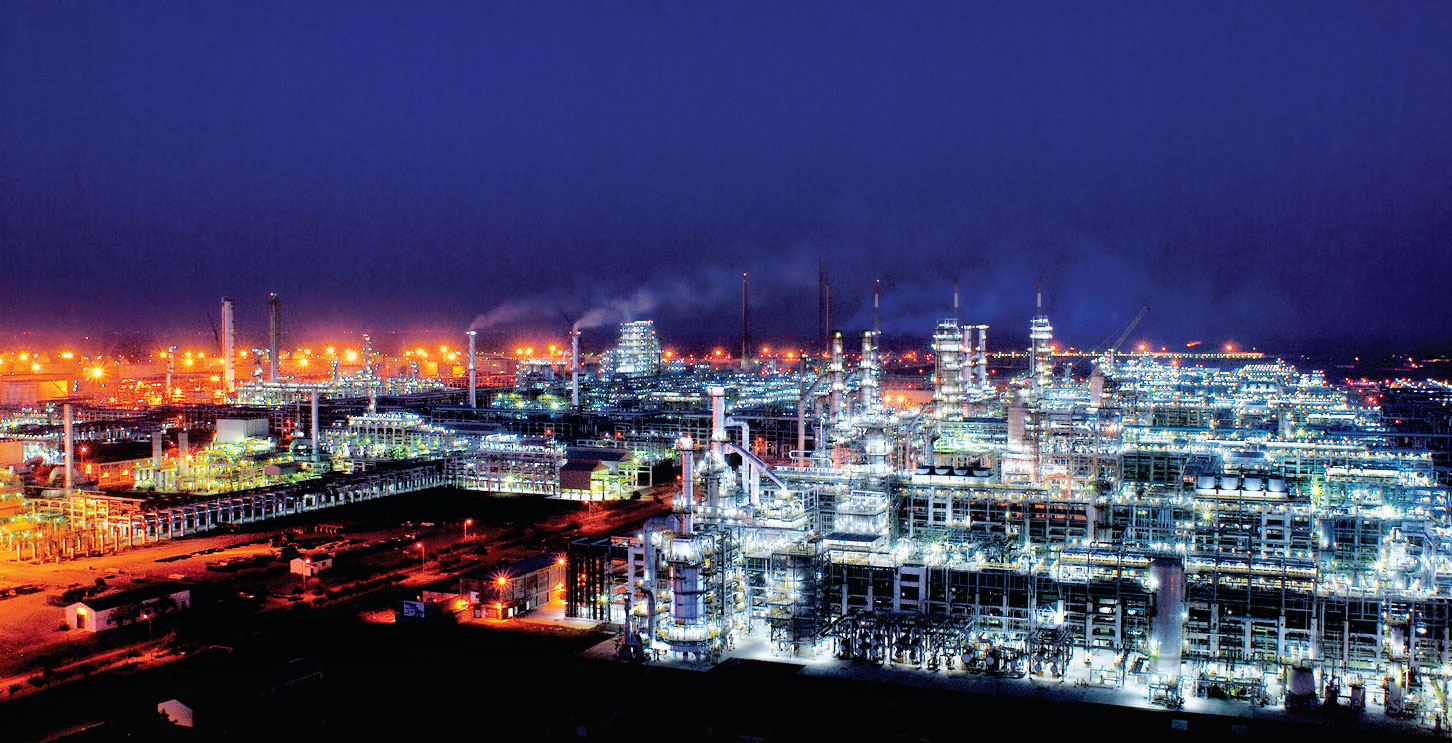
RIL’s refinery at Jamnagar is among the largest and most complex refining assets globally, with a design capacity for processing 1.24 million barrels of crude per day (MMBPD) and a Nelson Complexity Index of 12.7. The complexity level of Jamnagar refinery will increase to great extent on commissioning of Coke Gasification project. The refinery’s superior configuration gives RIL the ability to process a wide variety of crude and meet differentiated and stringent product specifications.
Additionally, RIL has significant flexibility to alter the product mix, thereby capturing opportunities arising due to evolving market dynamics.
The commissioning of new paraxylene unit has provided further integration with petrochemical enabling higher value addition.
Crude selection and
sourcing 
RIL’s refinery configuration and logistics infrastructure availability allows crude portfolio optimisation with changing market dynamics. With inherent design flexibility, RIL optimises the crude diet, sourcing the most advantageous crude globally. During FY 2016-17, new initiatives were launched to enhance the flexibility of RIL’s assets and enable them to process even heavier and higher contaminant content value additive crude. Five new crude grades were processed in FY 2016-17. RIL also entered into a long-term supply contract for additional heavy crude.
Continuous
innovation 
RIL continuously focuses on debottlenecking, capacity enhancement, yield and product quality improvement to enhance its competitive strengths. Examples in FY 2016-17 include:
Operational
excellence
RIL excels in asset optimisation while maximising the returns. It maintains the highest safety standards with continuous efforts on improving the energy efficiency and minimising operating & maintenance cost. RIL ensures adoption of latest developments in technology for improving the asset reliability and avoid any unplanned outages, thus enabling high on-stream factor.
Logistics and
supply-chain
RILRIL has state-of-the art logistics infrastructure to support the largest refining hub at Jamnagar. It includes marine facilities, Rail and Road loading facilities and pipeline connectivity. Marine facility enables berthing of wide range of ships from Very Large Crude Carriers (VLCC) to small chemical carriers. This provides significant benefit on crude and product freight optimisation.
Market access and
responsiveness
RIL’s global outreach, including trading offices at key locations like Houston, London, Singapore and Mumbai, gives it a broad coverage for crude supplies and product sinks. Tankages at Rotterdam, Ashkelon and Singapore locations allow RIL to move its selling point closer to consumption hubs and improve responsiveness to market needs
Energy
Independence
With commissioning of coke gasification at Jamnagar, RIL will upgrade low value coke into high value syngas leading to enhanced self sufficiency of energy requirement at Jamnagar supersite. Syngas from gasification will substitute imported LNG, enabling energy cost savings.
ROBUST OIL DEMAND GROWTH SUSTAINED EVEN WITH RISING OIL PRICES
Global oil demand grew 1.6 mb/d in CY 2016, after a near record growth of 2.0 mb/d in the previous year, despite crude oil prices trending higher. Both OECD and Non-OECD countries contributed to oil demand growth. Higher demand for light distillates supported the healthy growth in oil demand.
During CY 2016, about 45% of the global oil demand growth came from China and India. Chinese oil demand growth moderated to 0.4 mb/d in CY 2016 (0.7 mb/d in CY 2015). In China, strong growth in gasoline demand was underpinned by a 14% growth in car sales. Diesel demand contracted on weaker industrial activity in China, Government discouraging coal production to curb pollution and shutting down of industrial units prior to the G20 summit in Hangzhou supported demand.
India was the second largest contributor to demand growth with 0.3 million barrels per day of growth in CY 2016. India’s demand growth was led by gasoline, jet-kero and LPG. The growth in gasoline demand was driven by strong passenger vehicle and two-wheeler sales, which grew by 9% and 7% respectively in FY 2016-17.
OPEC GAINS MARKET SHARE
Global oil supply grew by 0.4 mb/d in CY 2016, significantly lower than the nearly 3 mb/d growth in CY 2015. OPEC gained significant market share in CY 2016 as OPEC supply (including Natural Gas Liquids) grew by 1.1 mb/d. and non-OPEC supplies fell by 0.8 mb/d y-o-y. Biofuels contributed 0.1 mb/d of growth in CY 2016. Decline in non-OPEC production has been led by the US where supply fell by 0.5 mb/d.
Supply growth from Saudi Arabia, Iran and Iraq was 1.4 mb/d in CY 2016. Russian production also increased by 0.3 mb/d in CY 2016. Production from Nigeria fell by 0.3 mb/d due to frequent disruption from militant attacks.

HIGHER INVENTORY CAPPED PRICES
Brent crude oil prices averaged US$48.6/bbl in FY 2016-17, marginally higher than US$47.5/bbl in FY 2015-16. Oil prices rose in H1 CY 2016 on lower production due to Canadian wildfires and disruptions in Nigeria. The production cut by OPEC and some non-OPEC members in Q1 CY 2017 had little impact on OECD crude and product inventories. These higher inventory levels and also additional supplies have capped the upside on crude oil prices. Further, the higher production outlook for US shale oil has been acting to undermine efforts to tighten the crude markets.
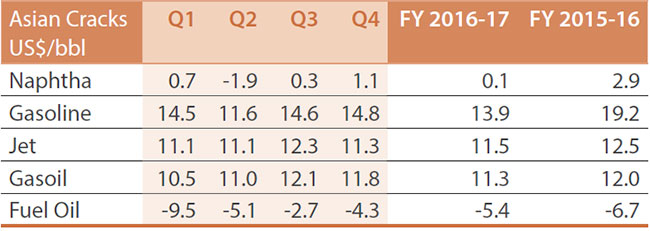
BENCHMARK REFINING MARGINS MODERATED ON LOWER LIGHT DISTILLATE CRACKS
Strong refining margins in early CY 2015 enticed refiners globally to run at a higher utilisation as well as maximise gasoline production in early 2016 too. Global refinery utilisation at 83.5% in 2016 was flat y-o-y albeit higher than the 5 year average of 82.6%. This sustained utilisation driven supplies with relatively lower demand growth and inventory build-up during the year moderated refining margins from exceptional highs in the previous year.
LIGHT DISTILLATES
Light distillate cracks receded from the record high reached in FY 2015-16. Gasoline demand contributed around 40% of global oil demand growth, with the US, China and India contributing 60% to the global gasoline demand growth.
US gasoline demand was strong in CY 2016 with 3% increase in passenger miles travelled, supported by improving passenger car sales.
Total car sales in China grew by ~14% in CY 2016 despite higher taxes and higher fuel and credit costs. SUV sales registered strong growth throughout the year, at an average rate of 44% contributing to the higher gasoline demand growth.
However, post higher gasoline margins in early 2015, refiners maximised gasoline production leading to higher gasoline supply in the later part of CY 2015 as well as in CY 2016. Gasoline stocks in the US, the world’s largest gasoline market, were at a 5 year high for the most part of CY 2016 capping gasoline cracks globally.
Demand for naphtha from petrochemical sector remained firm due to stable end product demand and favorable naphtha cracking economics with narrower spread between Naphtha and LPG. However, gasoline-naphtha spread was lower y-o-y reducing the gains from naphtha blending into gasoline.
MIDDLE DISTILLATES
Middle distillate cracks marginally weakened in FY 2016-17 over the previous year. Globally the demand growth for diesel was relatively subdued despite moderate economic growth. Diesel demand in China contracted for the first time since 2009 on economic slowdown. India’s diesel demand grew at a slower pace of 1.8% during the year.
Jet fuel demand growth was aided by robust 7% growth in global international passenger traffic and 6% growth in domestic air travel. Indian domestic aviation is a bright spot in the global aviation market with growth of 22% y-o-y (Revenue Passenger Kilometers) in FY 2016-17. Jet fuel supply grew during the year as compared to a decline in global gasoil supply indicating that refiners took advantage of the better regrade (jet fuel – gasoil differential).
FUEL OIL
Fuel oil demand grew y-o-y for the first time in the last 10 years on strong bunker fuel demand with pick-up in shipping activities. Fuel oil supply, however was tighter due to lower utilisation at Latin American refineries. Exports from Russia also reduced due to addition of secondary processing units and adverse tax measures for fuel oil exports, which added to the deficit. Fuel oil cracks also strengthened with the OPEC oil output cut which is targeted mainly towards medium and heavy crude grades.
DEMAND GROWTH TO CONTINUE
Global oil demand growth is expected to average 1.3 mb/d in CY 2017 slowing down from the relatively high growth rates seen at 2.0 mb/d in CY 2015 and 1.6 mb/d in CY 2016. Increased shale oil production in US is expected to provide additional supplies. Gasoline demand growth is expected to remain supported in the current low oil price scenario. Gasoil demand is expected to firm up on better global economic outlook. Refining capacity additions are expected to lag global product demand growth for major part of CY 2017, supporting high refinery utilisation and product cracks.
Despite having a retail outlet network and almost a decade long market presence, it was difficult to attract quality channel partners due to low sales volumes. As a consequence, overall Lubes volumes had stagnated for the last few years.
Action Taken: RIL worked with an interested party to create a centralised Super Distributor for the Northern region. The team worked together to design operating model, draft the processes and execute the entire on-boarding in record time.
Outcome: Compared to erstwhile high of 40 kilo litre, new channel partner has already clocked over 100 KL every month reaching March exit volumes of 125 KL. This has not only provided the much needed boost in Lubes volumes, but has also helped in receiving multiple enquiries from the market for building similar channel setup in other parts of the country.
RIL CONTINUED TO OUTPERFORM REGIONAL BENCHMARKS
RIL achieved double digit GRM for the second year in a row. At US$11.0/bbl refining margins were at an 8 year high. Premium over Singapore GRM was also at a 8 year high of US$5.2/bbl. RIL achieved superior refining margins due to firm cracks, proactive risk and yield management, favourable crude sourcing and lower freight of crude. Better performance against benchmarks was underpinned by RIL’s ability to shift to higher value product yields, using a wider selection of crudes and focus on operational efficiencies.
RIL processed 5 new crude grades this year leading to over 150 crude grades processed till date. During the year, 65 different crude grades were processed. Over the years RIL has demonstrated its ability to process challenging crude grades with sulphur content of over 5%, Total Acid Number (TAN) of 5 (mg KOH/g), viscosity of ~ 5000 cst and an American Petroleum Institute (API) gravity as low as 100.
RIL fully utilised the flexibility available in its refining system to procure competitive feedstock and optimise product yields to improve margins.
Refining Margin vis-à-vis Global Benchmark
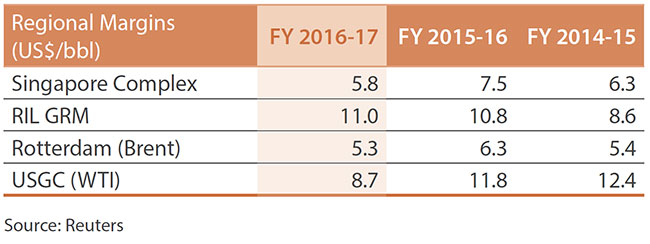
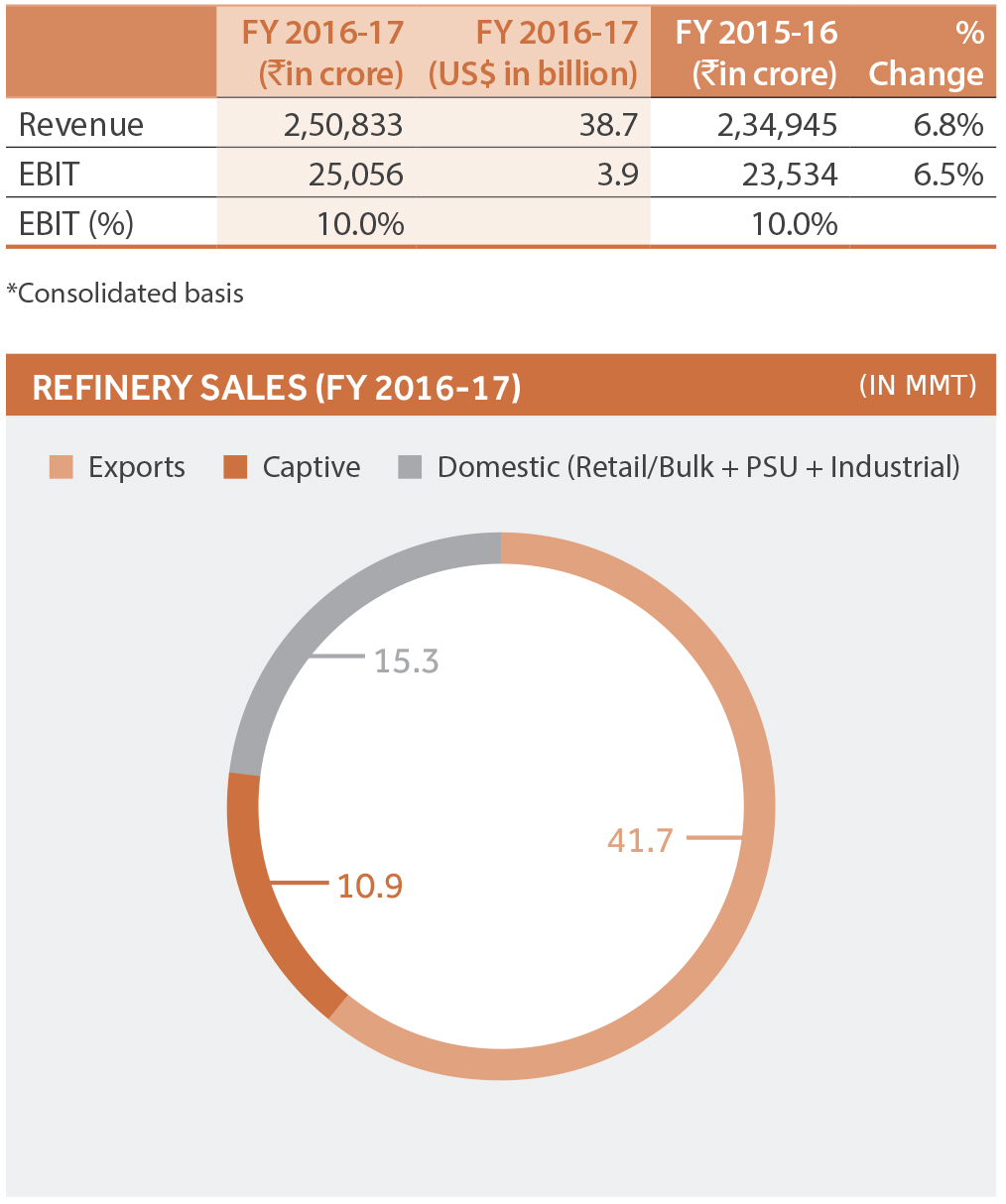
FY 2016-17 revenue from the R&M segment increased y-o-y to 2,50,833 crore (US$38.7 billion), reflecting higher average oil prices and volumes during the year. Refining EBIT increased by 6.5% y-o-y to a record of `25,056 crore, supported by strong product demand, lower freight rates and effective crude sourcing and robust risk management.
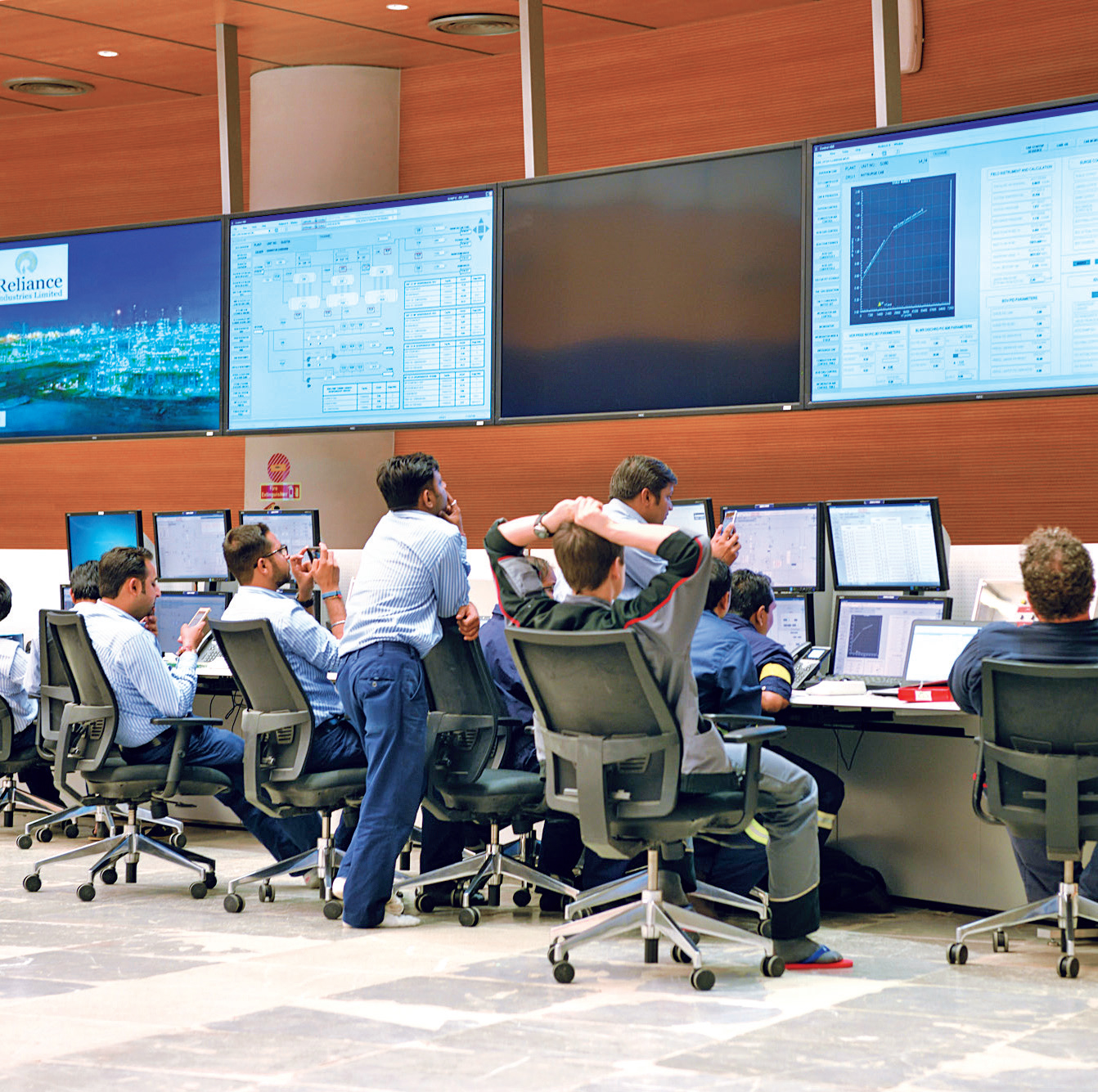
Redefining challenges, delivering results Focus continued in processing tougher opportunity crudes while producing superior product quality. GE Proficy SmartSignal has been deployed in rotary equipment to improve availability, reliability, efficiency and profitability.
Secondary processing unit capacity stretched with technological up-gradation, best in class operating and maintenance practices to maximise high value products such as Gasoline and Reformate.
MARKET ENVIRONMENT
For FY 2016-17, the overall industry transportation fuel volumes increased to 23 MMT in Gasoline up 10% and 75 MMT in Diesel up 3%. With muted growth from the direct segment, bulk of the growth has been registered by the retail outlets.
The total number of retail outlets in India has increased to over 59,500, as state owned oil marketing companies continue to expand their network. The coming year will continue to see expansion of networks by existing players as well as new entrants.
RIL continued to recommission its network, achieving a strength of 1,221 fuel outlets by the year end. RIL’s fleet customer count grew four fold to 1.6 Lakh during the course of the year.
Supported by network and growing fleet customer count, RIL outlets registered an outstanding Pump throughput of more than double the industry average in March 2017. This remarkable achievement of high throughput is also attributed to RIL’s Quality and Quantity of Fuels, superior service and value added offerings at the retail outlets.
OPERATING STRATEGY AND VALUE PROPOSITION
RIL continues to serve its family of satisfied customers with a unique Quality and Quantity fuelling experience delivered through stringent quality checks at various stages of product movement right up to the feeding terminals and to the Retail Outlets.
RIL's real-time network at 100% of the Outlets ensures online monitoring and centralised control system. The combination of latest technology, well-defined processes, value propositions with right channel partners and personnel ensures consistent delivery of superior customer experience.
Innovative Credit solutions to attract Fleet Operators and Easy working capital finance for Channel have been rolled out in tieup with major Financial players. Cash loading solution through Mobile apps and over 3,600 branches of major banks has vastly improved customer convenience.
In the coming year RIL is looking at setting new standards of fuelling experience using technology and further strengthening enduring bonds with millions of consumers.
LEVERAGING TECHNOLOGY INTEGRATION
During the year, RIL bolstered its fleet management offerings by introducing Mobile based applications, empowering customers with convenience of controlling and monitoring truck fleet on the go.
The fleet proposition was also integrated with Jio Payment Gateway providing customers the flexibility of 24X7 funds transfer for loading their fleet account.
Aligning to the vision of ‘Digital India’, the payment eco-system at RIL pumps has been overhauled to seamlessly accept multiple modes of payment. RIL's network is ready to offer the next generation dynamic pricing solutions to create unique and convenient options for RIL's customers. With digitisation gaining good traction, the fleet management program plans to embark on Virtual Card feature, by linking the card with owner / driver mobile number, enabling quicker fleet transactions.
OUTLOOK
For FY 2017-18, Reliance will primarily focus on two key areas:
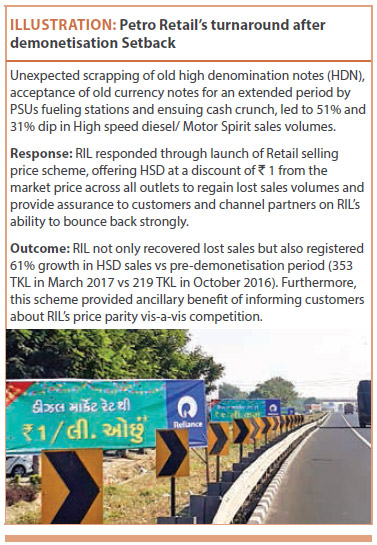
The overall 3% growth in HSD consumption of Industry has been dragged down by the bulk segment. Unlike transport, most of the other segments consuming HSD have either degrown or have had a tempered growth at best. The situation is as a result of improved operation efficiency, increased electrification and higher emphasis on green fuel [CNG].
Despite the stiff market environment and margin pressure due to competition, RIL has registered 52% y-o-y volume growth to 528 KT in FY2016-17. On account of superior technology and better service standards, RIL has become one of the priority supplier for the Indian Railways. Increased sectoral focus has allowed RIL's foray in fisheries, infrastructure and Steel & Coal Mines (SCM) which will drive RIL's volume growth over the next few years.
At present, India is the ninth-largest civil aviation market in the world and is likely to become the third-largest by 2020. With the high growth trajectory of the aviation industry, the demand for Jet fuel in India grew by a robust 12.1% in FY 2016-17, driven by a 22% growth in domestic passenger traffic.
Reliance Aviation is one of the fastest growing ATF supplier in India. The throughput handled has grown by 21% y-o-y in FY 2016-17. RIL has leadership market share at 30% of the airports it operates in. RIL's range of services encompasses storage, into-plane, and hospitality besides operations and maintenance services. Besides strengthening presence at existing 25 airports, RIL is striving to maintain its growth momentum by expanding its network, augmenting its resources and strengthening its supply chain.
Pursuant to the Sale agreements signed by Reliance Exploration & Production DMCC (“REPDMCC”), an indirect wholly owned subsidiary of Reliance Industries Limited (“RIL”) and TOTAL, for the sale of the entire 76% interest held by REPDMCC in the Mauritius-incorporated Gulf Africa Petroleum Corporation (“GAPCO”), REPDMCC, TOTAL and GAPCO have obtained requisite regulatory approvals, consents and successfully completed the sale transaction.
PETCOKE GASIFICATION
The Petcoke gasification project is one of the largest clean fuel projects globally. On commissioning, Jamnagar complex will be largely energy self-sufficient. The gasifier will convert petroleum coke, the lowest value refinery residue, into high value syngas. Syngas has applications in production of hydrogen for ultralow sulfur products, as cogen fuel for power and steam and as heater fuel for offgas cracker, while freeing up high value offgases. The Petcoke gasification project will minimise external fuel dependency at the Jamnagar site, making it less vulnerable to LNG price volatility. The installation and mechanical completion for the Gasification project linked to DTA refinery has been completed in the quarter ended 31st March, 2017 and the pre-commissioning and start-up activities are in full swing. The installation and mechanical completion for the Gasification linked to RIL’s SEZ refinery has also been substantially achieved and pre-commissioning activities are expected to start soon.
CSR INITIATIVES AT JAMNAGAR
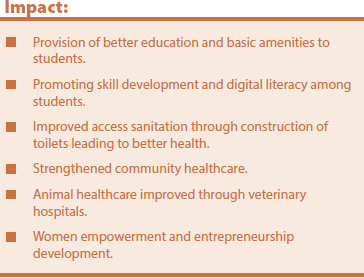
During FY 2016-17, RIL undertook several socio-economic development interventions to benefit the surrounding communities. Major focus areas at RIL Jamnagar involved education initiatives, community development and health related programs. Other focus areas included livelihood support and empowerment as well as promotion of arts, culture and heritage.
NIKHIL R. MESWANI
VIPUL SHAH
"RIL achieved record EBIT of ` 12,990 crore (up 27.5% y-o-y) and production of 24.9 MMT in the Petrochemicals Segment for the year, even though the global petrochemicals industry continues to face a highly uncertain business environment. Consolidating its leadership position, Reliance progressed rapidly on initiatives to enhance petrochemical capacities, strengthen integration, improve feedstock security and bolster sustainability.
PX expansion at Jamnagar was commissioned successfully in a phased manner. All six Very Large Ethane Carriers (VLECs) have been delivered to RIL and the crackers have started receiving shipments of Ethane from the USA. The installation of ROGC and downstream projects at Jamnagar have been completed during the year and pre-commissioning and start-up activities are in full swing.
Continuing to augment its customer centricity and consumer orientation, Petrochemicals business has progressed further on the expression of 'Chemistry for Smiles'. Reliance has strengthened the customer supply interface on digital platforms and further empowered customers and channel partners through e-commerce transactions on smart devices.
To minimise any impact on environment, Reliance deploys world-class technologies across all sites to reduce fresh water consumption per unit of production by maximising waste water recycle and minimising external discharge."
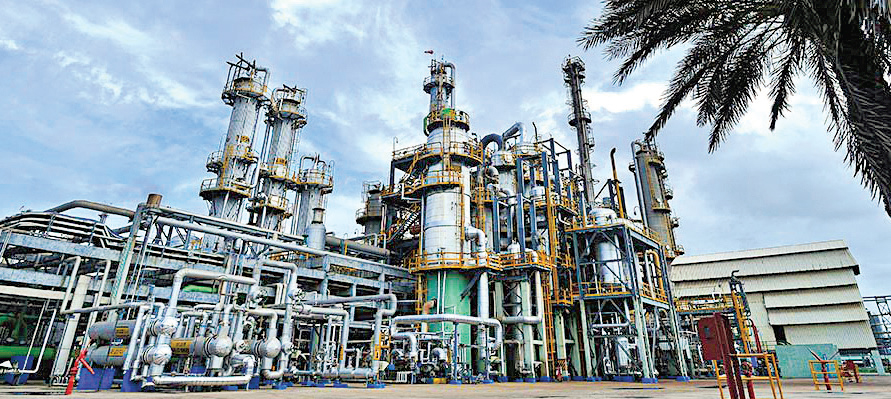
Global scale
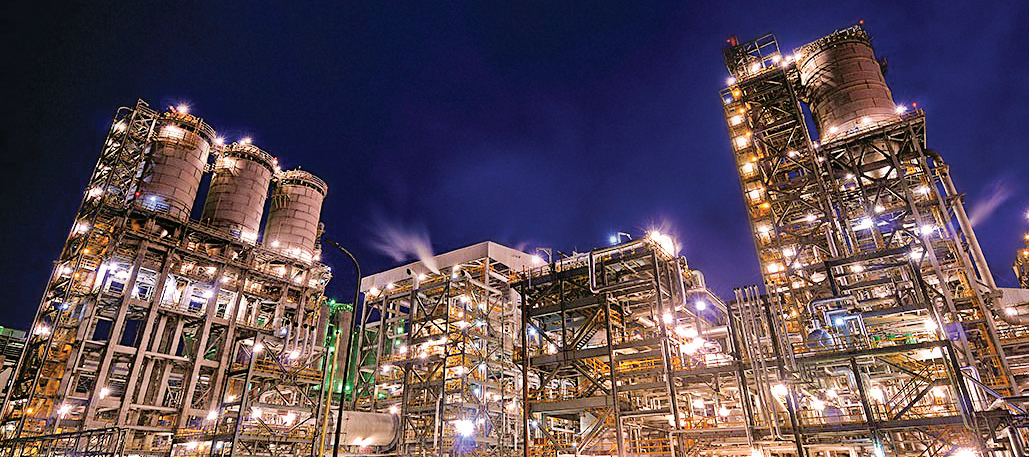
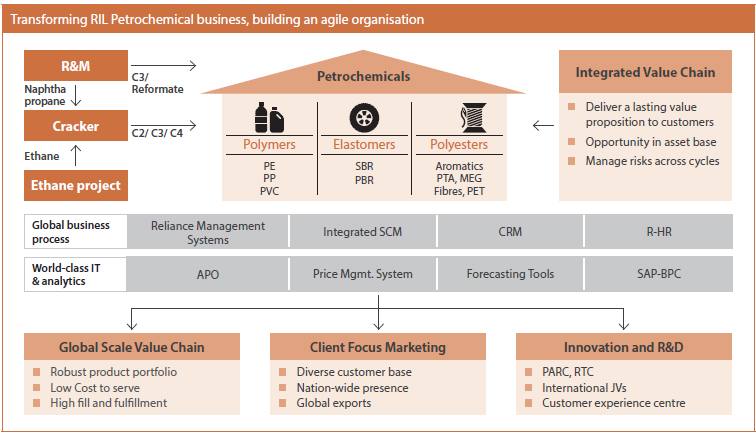
RIL is amongst the world's leading producer of petrochemicals with global scale and capacities across polymers, polyester, fibre intermediates and elastomers.
RIL has 10 manufacturing locations in India and 3 in Malaysia.
Reliance is the first Company globally to conceptualise large scale imports of Ethane from North America as feed stock for its cracker portfolio in India through Very Large Ethane Carrier (VLECs).
Integration
Integration between refining and downstream petrochemical products is among RIL’s key competitive advantages. The deep integration within each chain helps RIL mitigate the impact of price volatility in the global energy and chemical industry, and manage the impact of external shocks.
RIL also has a diversified raw material
slate, with both naphtha and gas based
crackers, which helps mitigate risk
involved with raw material sourcing and
margin volatility.
Leadership
A relentless focus on safety and continuous improvement helps RIL in achieving industry-leading profitability across business cycles.
RIL's focus on technology leadership,
cost efficiencies and responsible
operational practices, while
maintaining high operating discipline
is key in maintaining domestic
market leadership, and is a source of a
renewable and sustainable competitive
advantage.
Reliance’s Petrochemical business caters to the requirements of a vast range of industrial and consumer products manufacturers. From fibres to plastics and polymers to industrial chemicals, the Company’s petrochemical products have applications in a number of industries such as agriculture, healthcare, pharmaceutical, textiles and apparels, plastic products, automotive, telecommunication and infrastructure.
Reliance manufactures a wide range of petrochemicals including:
Olefins are unsaturated open-chain hydrocarbons having at least one double bond. It includes compounds such as Ethylene, Propylene, etc. These products form the input materials for polymers and other industrial chemicals.
Polymers are chemical compounds made of small molecules arranged in a simple repeating structure to form a larger molecule. For example, Polypropylene (PP), Polyethylene (PE), Polyvinyl chloride (PVC), etc. These products are used in applications such as plastic products, packaging materials, pipes etc.
It includes chemical products which form the input materials for the polyester and textile industries. Products such as Purified Terephthalic Acid (PTA) and Monoethylene Glycol (MEG) are used as raw materials for manufacturing polyester products while Paraxylene (PX) is used in the production of Terephthalic Acid (PTA).
Polyesters are the most popular synthetic fibres primarily being used in textile and plastic products. It includes Polyester Filament Yarns (PFY), Polyester Staple Fibres (PSF) and Polyethylene Terephthalate (PET). PFY and PSF are predominantly used in manufacturing of textiles while PET is used majorly in food packaging, in manufacturing of bottles for beverages.
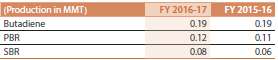
Elastomers are natural or synthetic polymers with high viscosity and elasticity. The most common form of elastomers are rubber products. RIL’s products include Butadiene, Poly-Butadiene Rubber (PBR) and Styrene Butadiene Rubber (SBR).
The primary feed for the Petrochemicals business comes from the light-end of the crude refining process such as naphtha, propylene, reformate and Natural Gas. The Company leverages its leadership position in the refining streams through conversion of naphtha, propylene, reformate and LPG to value added products that are sold globally.
More importantly, every business in the Petrochemicals segment uses chemistry and chemical formulations to help create a diverse range of end-products that make modern life more convenient and efficient.
Reliance Petrochemicals harnesses the power of chemistry, to help produce goods that bring smiles to the face of end consumers.
FY 2016-17 witnessed recovery in global energy prices from the lows of FY 2015-16. This was reflected in petrochemical feedstock and product prices. Profitability of naphtha based producers remained at historical highs for most of the year. Volatility in feedstock prices for Methanol to Olefins (MTO), Coal to Olefins (CTO) and Propane Dehydrogenation (PDH) units has impacted profitability resulting in lower utilisation rates for these units.
OLEFINS AND POLYMERS
Global demand for ethylene increased by 3.3% y-o-y to 146 million tonne (MMT) in 2016. Global ethylene operating rates, which are indicative of the margin environment, improved marginally on a y-o-y basis to 89.3% in 2016, sustaining above the five-year average of 86.9%. Operating rates are expected to dip marginally in 2018 as new capacities in US come online.
GLOBAL ETHYLENE SUPPLY/DEMAND 2016
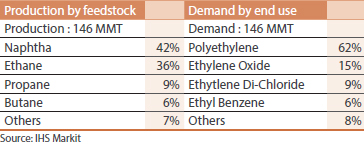
The global ethylene upcycle is expected to continue in 2017 with prices likely to remain high in 2017 on account of tight supply. Addition of capacities in US, based on low cost ethane from shale gas production could soften prices from 2018.
New propylene derivative capacities in Asia has resulted in firm propylene prices during the year. However, addition of 6-6.5 million tonnes per annum new global capacities in 2017 may result in well-supplied propylene markets in the near-term. Onpurpose Propylene units contributed almost 17 MMTPA (17% of global production) in 2016. On-Purpose propylene units are expected to remain as marginal suppliers and moderate their operating rates depending upon economic viability based on changes in feedstock prices.
Though crude oil prices have recovered, cash cost economics of naphtha based crackers remained favorable against crackers based on other feedstocks. Though the expected advantage of US gas crackers has reduced over time due to low crude oil prices, it still supports these projects given healthy margins and strong demand. Higher increase in feedstock prices for CTO, MTO and PDH units compared to crude have impacted competitiveness of these units as against conventional liquid crackers.
GLOBAL POLYOLEFIN AND PVC DEMAND
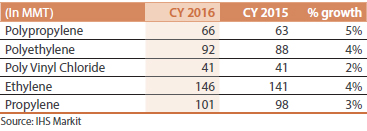
Global thermoplastics market in 2016 was estimated at 243 MMT. PE accounted for 38%, PP 27% and PVC 17%, of the market. Demand for the PE, PP and PVC combined grew by 3.6% during 2016 driven by India and China. Last 5 year CAGR for global polymers (PE, PP and PVC) demand was 3.9%. The global demand for these polymer products is estimated to grow at a CAGR of 4.1% over 2016-20 period.
PRICE AND MARGIN ENVIRONMENT
Crude oil price recovery was supported by OPEC/non-OPEC production cut agreement. Average naphtha prices in Asia were lower during the year as higher cracker turnarounds impacted demand. On a y-o-y basis, Asian Naphtha and ethylene prices were lower by 3-4%. Incremental ethylene availability, however, will be limited in Southeast Asia during 2017 as most of the new plants are likely to start in second half of 2017.
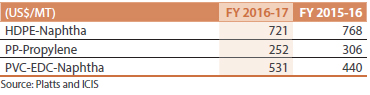
Polymer margins remained healthy during FY 2016-17, as end product prices remained firm with stable demand. On a y-o-y basis, PE margin corrected by 6% from exceptionally high levels reached last year. However, PE margins continue to remain significantly above the 5 year average. PP margins weakened y-o-y, with incremental supply and firm propylene prices. PVC margin strengthened on account of continuing strong demand and tight supply coupled with relatively weaker Ethylene Dichloride (EDC) prices. Incremental demand for PVC continues to outpace incremental capacity for the second consecutive year.
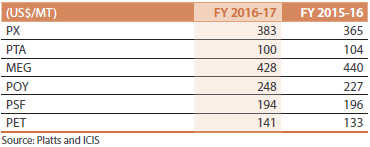
Polyester sector witnessed healthy recovery during the year as compared to the challenging market environment in the previous year. The sector remained resilient despite geopolitical uncertainties and muted Chinese demand. However, the operating environment was supported by favorable demandsupply fundamentals. Integrated polyester chain margins remained stable for the year.
Downstream polyester margins improved led by POY and PET. Polyester fibre and yarn markets witnessed strong demand pull and a stable price environment with balanced market dynamics. Capacity growth was 1.7 MMT compared to demand growth of 1.67 MMT during CY 2016. Operating rates of fibre and yarn plants in Asia remained high at around 80% during the year.
International cotton prices improved 5% y-o-y during 2016. Cotton to polyester price differential remained wide, favoring polyester in blending thereby reducing share of cotton in the fibre basket. Global cotton acreage in 2016-17 (Aug-Jul) is expected to further decline due to a prevailing low price environment from last year.
Global PET prices for the year remained flat around US$932/ MT, relatively weaker fibre intermediate prices supported 6% improvement in PET margins. Global PET demand remained supportive backed by emergence of new end use applications and firm beverage consumption demand from major developed and emerging economies. CY 2016 PET capacity increased by 1.4 MMT y-o-y against a demand growth of 0.9 MMT.
During the year, Fibre intermediates prices were largely stable, supported by higher crude oil prices and steady demand from downstream industry. Further, plant outages and shutdowns provided stability to the fibre intermediate markets.
PX market witnessed strong demand supported by healthy downstream PTA market and tight supplies owing to outages. This year witnessed increased Asian Contract Price (ACP) settlements after two years of disruption. Consequently, prices remained stable y-o-y, while deltas increased 5%. CY 2016 witnessed demand growth of 1.2 MMT with no capacity addition except Reliance’s new PX capacity in Jamnagar which was commissioned towards the end of the year.
PTA markets strengthened on account of healthy operational efficiencies supported by strong downstream demand. Bullish sentiments in Chinese futures market from June onwards and balanced supplies aided prices. Functional PTA capacities in China were running above 85% during the year. PTA prices were largely stable y-o-y with marginal decline in margin. CY 2016 witnessed improved operating rates with no capacity addition and estimated demand growth of 2.5 MMT.
MEG markets softened marginally with 3% y-o-y decline in prices and margins. MEG prices remained volatile during the year with unplanned outages in the beginning of the year. Also, prices recovered towards the end of the year, supported by speculative demand, tight supplies and robust downstream demand. Net global capacity addition of 1.6 MMT in CY 2016 was higher than the estimated incremental demand growth of 1 MMT.
The global capacity of butadiene remained stable at 15.3 MMTPA with average operating rate of around 75% in CY 2016. The key application for butadiene is in the manufacturing of PBR and SBR. Butadiene prices were volatile through the year particularly with scheduled and unscheduled shutdown of naphtha crackers and spike in natural rubber prices due to floods in Thailand.
PBR and SBR demand are directly linked to growth in automobile and tyre sector. During CY 2016, global passenger tyre sales driven by replacement market grew at 3% on the back of higher vehicle miles driven. Commercial vehicles tyre production has recovered and demand is likely to increase by 3% during 2017, after marginal improvement in 2016. With limited capacity additions in near future for synthetic rubber and growing demand, the operating rates are expected to improve.
DOMESTIC SCENARIO
Overall, petrochemical demand growth was impacted in the short-term with reduced cash circulation. Demand across product categories returned to normalcy by the end of the year.
RIL’s deep rooted connect with its customers proved to be useful during this period. The business acted proactively to ensure an optimum product mix to meet the customer requirements. While managing the efficiency in operations, efforts were put in to ensure efficient inventory management. This helped RIL maintain a robust supply chain and thereby ensured a minimal impact on the business overall.
India’s polymer market registered 7% growth y-o-y driven by increasing per capita GDP, rising middle class income levels, increased spending on infrastructure and thrust on consumer packaging, durables and automobiles sector. India is among the world’s fastest growing polymer markets with a five-year CAGR of 8.4%. India is the second largest contributor to polymer demand in Asia. Despite strong growth over the last few decades, the domestic market remains under-penetrated compared to other Asian developing countries. RIL’s new capacities will cater to growing demand in Indian market.
Polymer demand continued to be healthy during FY 2016-17. PP demand grew by 3% y-o-y with a good demand across all sectors including raffia packaging, non-woven, multifilament, automotive, hygiene applications and appliances sector. PE demand was higher by 8% due to firm demand from flexible packaging, moulded products and paper/woven sacks lamination packaging sector. PVC demand registered highest growth rate of 10% y-o-y with demand mainly driven by pipe and calendaring sector.
The healthy recovery in International polyester market also reflected in domestic market. In India, polyester demand witnessed 3% growth y-o-y, led by PET (+6%), and Polyester Filament Yarn (+3%). Polyester filament demand was driven by strong textiles demand and high growth in Fully Drawn Yarn supported by better demand for school uniforms, denim and circular knitted fabrics. Polyester Staple Fibre demand was largely stable amid steady offtake from non-wovens and auto upholstery segments. Domestic cotton prices increased 35% y-o-y owing to tight availability, which was favorable for polyester blending.
PET demand was supported by healthy end use demand and restocking. However, it was impacted by restrictions imposed on sale of certain pharmaceuticals formulations and drought across country forcing bottling plants to curtail operations.
Indian butadiene demand grew by 15% to 265 KT during the year as against an installed capacity of 550 KTPA. The excess production is expected to cater to export markets. Demand for PBR in India grew marginally to 198 KT and is expected to grow at 7-8% in annually in the medium-term. Consumers response to RIL's new PBR products and services has been favorable with wide acceptance in both tyre and non-tyre applications. India’s demand for SBR is estimated at 270 KT and is likely to grow at 8-10% annually in the medium-term. RIL's new SBR product has been successfully placed in the domestic market.
FINANCIAL PERFORMANCE*
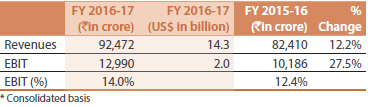
FY 2016-17 revenue from the Petrochemicals segment increased by 12.2% y-o-y to `92,472 crore (US$14.3 billion), primarily due to increase in prices across polymers and polyester chain products. Petrochemicals segment EBIT increased sharply by 27.5% to `12,990 crore (US$2.0 billion), supported by favorable product deltas and marginal volume growth. Petrochemicals EBIT margin improved by 160 bps to a five year high level of 14.0%.
Reliance’s overall petrochemicals production in India during FY 2016-17 was at 24.9 MMT.
POLYMER PRODUCTION
Reliance has an overall market share of 33% in the Indian polymer market.
Reliance is the world’s sixth largest producer of PP. During FY 2016-17, the Company produced 2.7 MMT of PP and has a pre-eminent position in the domestic PP market with 49% share.
Reliance is the leading PE producer in India with 22% market share in overall PE market. Reliance produced total PE of 1.1 MMT during the year and has market share of 16% in HDPE, 29% in Linear Low Density Poly Ethylene (LLDPE) and 29% in Low Density Poly Ethylene (LDPE).
Reliance’s total PVC production was at 0.7 MMT and it has 23% market share in the domestic market.
POLYESTER AND INTERMEDIATES PRODUCTION
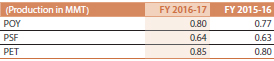
RIL polyester production during the year increased by 4% y-o-y with gains in PET production, mainly from its new plant at Dahej.
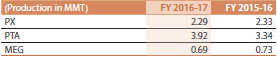
RIL’s overall fibre intermediates production increased by 7% y-o-y with significant gains in PTA production with the ramp-up of new capacity at Dahej.
During the year, RIL commissioned new PX project in phased manner at Jamnagar, Gujarat. The plant is built with crystallisation technology which is highly energy efficient and environment friendly. With the commissioning of the new PX capacity, RIL became the world’s second largest PX producer. With commissioning of these new capacities across polyester chain, Reliance has consolidated its position as world’s largest integrated polyester company.
RIL’s Malaysian operations improved performance through emphasis on premium markets. Malaysian free trade agreement with Turkey helped to position the products at premium over Asia prices. Enhanced textile operations helped capture higher value addition within the system, while non-traditional markets were developed for better price realisation. PTA supplies were concentrated near production site to enhance profitability through optimal logistics cost.
The research and development at Reliance endeavours to partner with its customers in developing products and services that bring smiles on the faces of end-consumers and adds value to life. Since chemistry is the foundation of Reliance Petrochemicals, Reliance refers to this journey as ‘Chemistry for Smiles’. To put this in practice, RIL has adopted the business-tobusiness- to-consumer (b2b2c) model to address the needs of the whole range of customers.

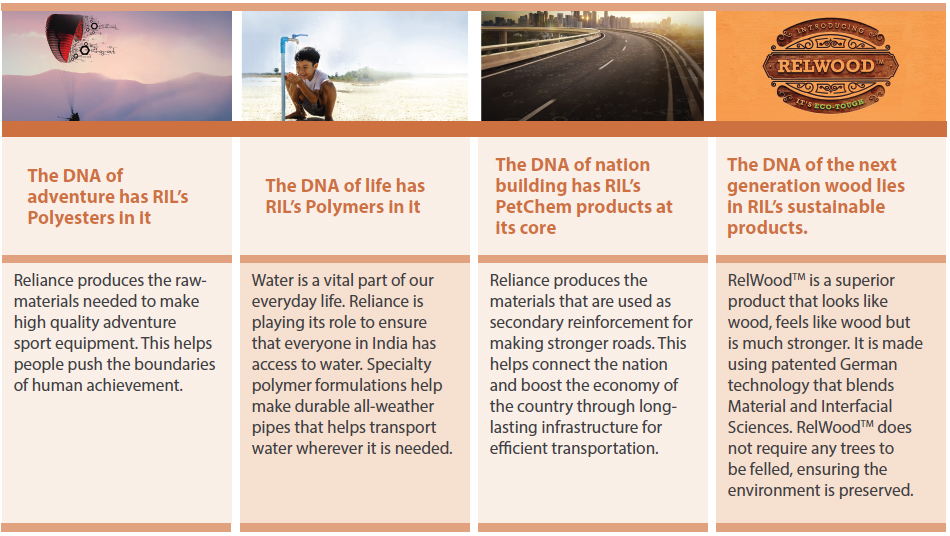
Reliance has continued to add new products to its range of deliverables to customers.
POLYMERS
POLYESTERS
Reliance strives to remain competitive and agile in a dynamic world. It has developed various new and innovative products based on its deep understanding of changing consumer needs.
ELASTOMERS
Reliance is the only company in world offering three different types of High Cis Polybutadiene rubbers manufactured using different Ziegler Natta catalysts: Cobalt, Nickel, and Neodymium.
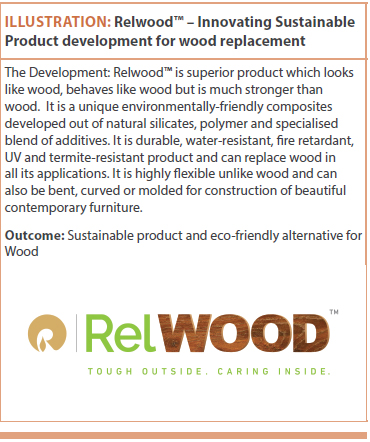
Unique NdBR grade Cisamer T 700 has been successfully manufactured and is being commercialised. This product is being tested/ used by industries for low rolling resistance tires/conveyor belt applications besides being used as a replacement for other PBR.
CAPEX AND GROWTH PLAN
DIGITISATION
Reliance has strengthened the customer supply interface on digital platform, empowered customers and channel partners through e-Commerce transactions on smart devices. Digitisation has facilitated information sharing on mobility platforms and sales force enablement on e-CRM mobile applications for efficient operations and effective customer engagement. To enhance agility, productivity and efficiency of service levels, critical business approvals have been moved to mobility platforms.
Reliance has also embraced automation and paperless operations by implementing solutions like digitally signed invoices, ePOD (Electronic Proof of Delivery), auto service certification for transporters and automation of credit and debit notes for customers and Electronic Data Interchange (EDI) with shipping lines. Along with this, the Company has undertaken digitisation of supply chain planning processes to make petrochemical value chain Responsive, Demand Driven with "Quantified" Decision Making. This is to maximise integrated value across businesses to improve contribution and enable minimum human intervention for order processing. Digitisation of pricing was implemented to enable system based policy driven pricing leading to harmonised pricing cascade across petrochemical business.
For mitigating the cyber security risk due to proliferation of assets, business expansion and focus on B2C, Reliance has placed strong emphasis on information security. In the area of fleet risk management, a machine learning solution on Vehicle Tracking System was implemented by Reliance for distribution safety of liquids as well as solids.
Effective incorporation of digitisation has indeed provided visibility to segment and sector level leadership through dashboards on key business parameters to steer business effectively.

With the view to promote community development, the petrochemical locations of RIL undertook community initiatives in and around the areas of operation. The focus areas included education, health and safety initiatives, women and youth empowerment and other community development programmes.
P. M. S. PRASAD
AJAY KHANDELWAL
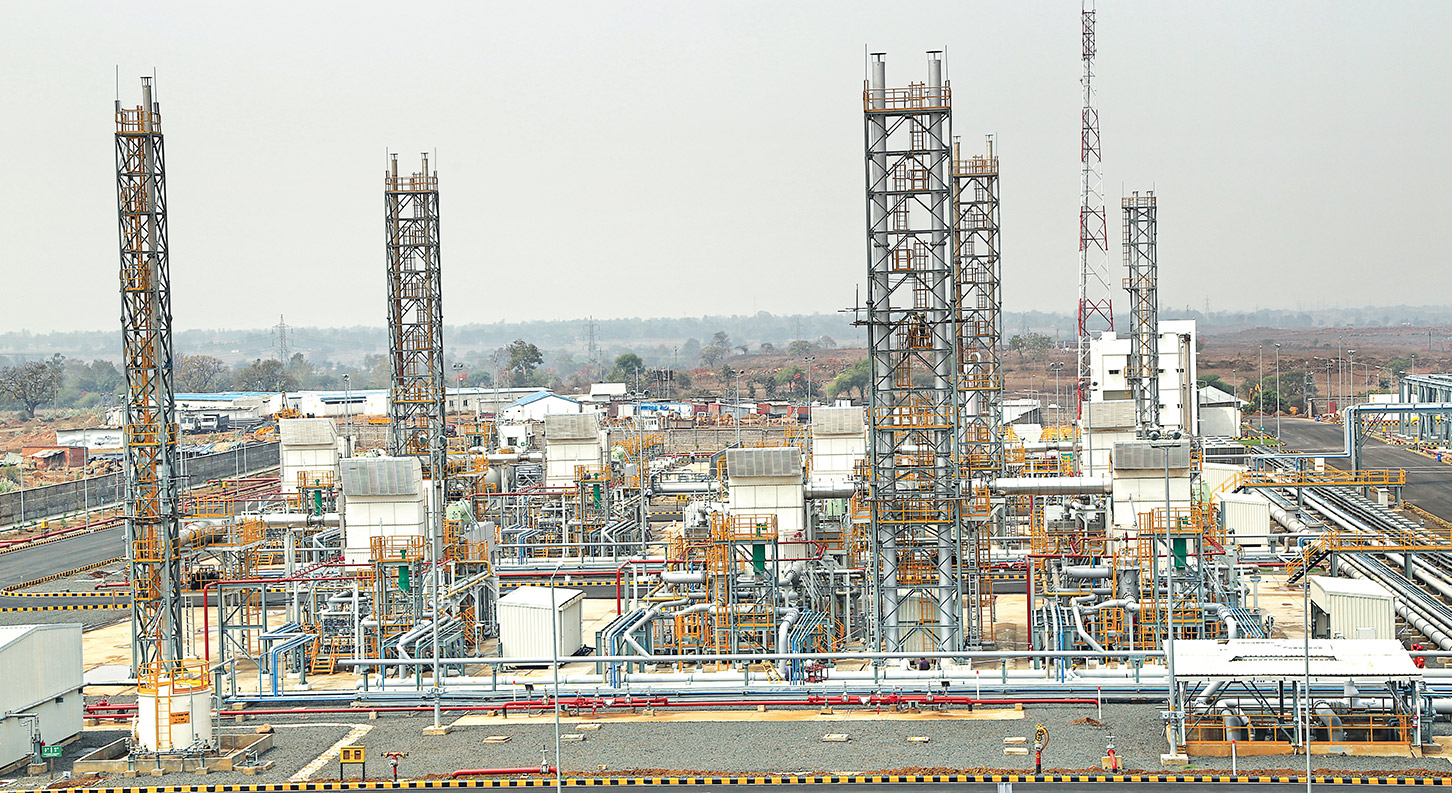
2016-17 was a significant year for RIL’s oil and gas business with the commencement of Commercial production from the Coal Bed Methane (CBM) block in Sohagpur (West), Madhya Pradesh. The CBM project is India's largest surface hydrocarbon project. With the commissioning of the CBM fields, RIL is set to become one of India’s largest producer of Unconventional natural gas. The new policy for marketing and pricing of CBM notified by the Government of India has provided a major boost to the country’s CBM Sector.
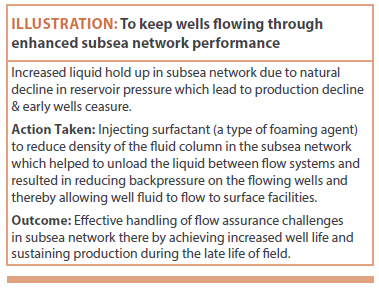
"Keeping Wells Flowing" has been the maxim for Reliance KG D6 fields. With the use of innovative production management techniques, RIL has been successful at extending the life of wells and ensuring field uptime at par with global industry benchmarks.
In the prevailing weak commodity price environment, Reliance's focus has been to preserve value in the Shale Gas business through high grading of the portfolio and reducing operating costs.
Materiality in
unconventional
hydrocarbon business
With the commissioning of the Sohagpur Blocks in Madhya Pradesh, Reliance is set to become among the largest producer of unconventional natural gas in India.
Material presence in US Shale Gas in Marcellus and Eagleford Plays through 3 Joint Ventures.
Significant
infrastructure on the
east coast
KG D6 fields commissioned in 2008 are India’s first and till date only producing green-field Deepwater oil & gas production facility.
Monetisation of remaining discovered resources will utilise the existing infrastructure.
Safety
Over 9 years of safe operation, with safety record amongst the best in the world since commencement of production in Deep-water block KG-D6.
Partnerships
Partnerships with global majors in conventional as well as unconventional hydrocarbon plays.
Partnership with BP combining RIL’s project execution expertise and BP’s deep water exploration and development capabilities.
2016 was an eventful year for the global oil & gas industry. Crude prices hit the lowest levels since 2003. Brent averaged US$44.8/bbl in 2016 as compared to US$54.3/bbl during the same period in 2015 and ranged from a low of US$27.1/bbl to a high of US$57.9/bbl. Average Gas prices at Henry Hub declined to US$2.5/million british thermal units.
Major factors which influenced price of crude in 2016 include oversupply, strengthening of US dollar, increase in US crude stock, and delayed production cut decision by OPEC. Fall in crude prices resulted in lower revenue realisation for oil exporting countries.
In light of the low prices in November 2016, OPEC announced its first cut in production since 2008 and the first deal including non-OPEC since 2001. Global oil prices recovered post the production cut announcement of OPEC/Non-OPEC.
Nearly US$620 billion of projects through 2020 are estimated to have been deferred or canceled as a result of the downturn, and the appetite for long-term and complex major capital projects has waned. Most of these projects are in deep-water, LNG and oil sands.
US MARKET
Commodity prices witnessed increased volatility on changed demand-supply dynamics and geo-political issues. Prices tested multi-year lows before stabilising at higher levels. The benchmark prices for West Texas Intermediate (WTI) crude oil dropped to a multi-year low of US$30.6/bbl in February 2016 and bounced back towards the end of CY 2016-17 on reduced supplies. Average price of WTI for the CY 2016 was US$43.3/bbl, a fall of 11% y-o-y. US Natural Gas prices remained volatile on growing supplies and storage overhang. Henry Hub (HH) prices remained range bound during the year (HH prices recovered from the low of US$1.5/Million British Thermal Units (MMbtu) in March 2016 to an average price of US$3.6/MMbtu in December 2016, led by improved domestic demand and higher exports.) Average HH was 8% lower y-o-y at US$2.46/MMbtu in CY 2016. Asian Liquefied Natural Gas (LNG) prices were also subdued with start-up of Australian LNG projects keeping the market well supplied.
BUSINESS AND COMPETITIVE POSITION
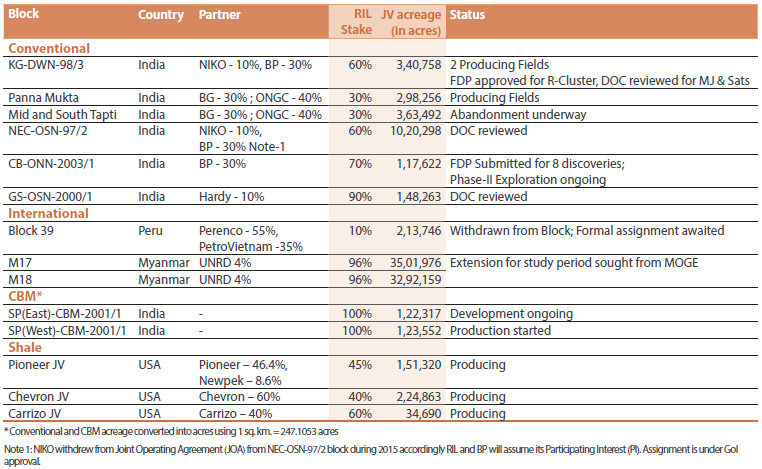
The Company’s oil and gas assets include KG D6, Panna-Mukta, Tapti and two Coal Bed Methane (CBM) blocks in addition to other domestic and international blocks. RIL also has three joint ventures in North American shale plays with Pioneer Natural Resources, Chevron and Carrizo.
OIL AND GAS PORTFOLIO
FINANCIAL PERFORMANCE – DOMESTIC*
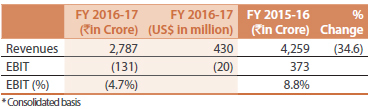
For FY 2016-17 revenues for the domestic oil and gas operations declined by 34.6% to `2,787 crore. This was largely on account of 23% decline in production and reduced gas price realisation. Consequently domestic upstream operations registered negative EBIT of (` 131) crore.
PRODUCTION PERFORMANCE
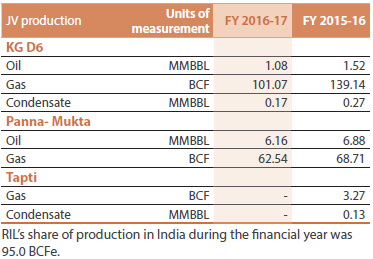
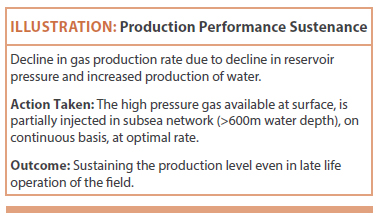
KG D6 gas production declined by 27% for the year to 101.1 BCF. Fall in production was mainly due to natural decline in the fields coupled with sand and water ingress. During the year, considerable efforts were put in to sustain well offtake points in D1D3 field to support production sustenance until next wave of projects and recovery maximisation. Additionally, RIL commissioned two additional offtake points in D26 (MA) post successful completion of side track activity. KG-D6 operations achieved field uptime of 100% which continues to be the global benchmark for deep water facilities.
Panna-Mukta field produced 6.2 million barrel of crude, a reduction of 10% on y-o-y basis and 62.5 BCF of natural gas, a reduction of 9% on y-o-y basis. The fall in production is owing to natural decline in the field, shut in of wells due to integrity issues and unplanned shutdown on wellhead platforms for riser remedial work. Despite multiple asset integrity issues, the major gains in production were achieved due to better and sustained production from MA & MB wells, better production optimisation and sustained production from work-over wells.
KG-D6
In the near term, RIL’s focus is to maintain wells flowing in its KG-D6 block. This involves continuous field management optimisation to sustain well count and manage network. RIL will continue to minimise operating cost without compromising reliability and sustainability of field operations. As part of the early monetisation of existing discovered resources in KG D6 Block, efforts are underway to leverage the deflation in markets for optimising capex for future development. The contracting process is underway for R-Cluster development with optionality for use in MJ and Satellite development. RIL’s focus is to obtain approvals for the development of projects. RIL aims to sustain production until future projects are commissioned, while leveraging current market downturn to achieve lowest cost for future projects.
PANNA-MUKTA
Panna-Mukta is a major contributor to the RIL’s upstream business. The PSC for this block is scheduled to expire in December 2019. The JV partners are exploring options to extend the contract period in line with the Production Sharing Contract extension policy announced by the Government of India. The JV partners have been working towards mitigating asset integrity issues due to aging of the facilities.
TAPTI
During the year, the JV partners completed the process of handing over Tapti facilities consisting of three platforms to ONGC. The plug and abandonment of wells and decommissioning of associated facilities are already under progress.
CBM (SOHAGPUR EAST AND SOHAGPUR WEST)
RIL’s CBM project is country’s first large-scale unconventional natural gas project. The scale of the project brings its own set of execution challenges, primary among them are lack of infrastructure and challenging terrain.
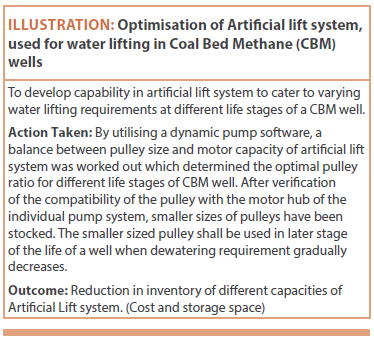
RIL has completed Phase 1 of the project which included drilling and completion of more than 200 wells (spread over 450 sq. km.). Phase 1 required setting up of 2 gas gathering stations along with 8 water gathering stations for collection and processing of CBM Gas and water respectively. RIL has laid India’s largest High Density Poly Ethylene gas gathering network to connect these wells with the gathering stations. RIL’s CBM project is probably the largest surface footprint project in E&P sector in India.
RIL has commenced commercial production from its Coal Bed Methane (CBM) block SP (West)–CBM–2001/1 in March 2017 and is currently supplying CBM for commissioning the Shahdol Phulpur Pipeline. The production from RIL’s Sohagpur CBM fields will gradually ramp-up in next 15-18 months making RIL as one of the largest unconventional natural gas producer in India.
SHAHDOL-PHULPUR GAS PIPELINE PROJECT
Reliance Gas Pipeline Limited, a subsidiary of RIL, has completed the pipeline laying work for the entire 302 km Shahdol-Phulpur Pipeline from Shahdol (MP) to Phulpur (UP). With this new pipeline network the CBM Gas fields are now connected with the Indian Gas Grid providing access to end consumers.
For the development of alternate sources of natural gas including Coal Bed Methane, GoI notified marketing and pricing freedom to the Coal Bed Methane (CBM) on 11th April 2017. The reform measure allows CBM producers to sell the CBM at Arm's Length Price in the domestic market through a fully transparent and competitive bidding process with the objective of obtaining best possible prices. The New Domestic Gas Pricing Guidelines, 2014 and the Gas Utilisation Policy shall not be applicable to CBM and it also permits producers to sell gas to any affiliate, in the event contractor cannot identify any buyer. RIL has published a Notice Inviting Offer in leading national dailies and on its website, calling for the bids from the prospective customers to off-take CBM produced.
BACKGROUND
CY 2016 was yet another year of tough market conditions for the Global Oil & Gas sector in general and for the North American Shale players in particular. CY 2016 prices were at lowest levels in a decade; which coupled with higher price differentials resulted in weak realisations across the industry. The Industry responded effectively with remarkable cuts in capital spending and leveraged weak services markets. Prices recovered only during second half of the year for both oil and the gas. In the local markets of Texas region, gas and oil differentials were low leading to better price realisation, but in the North East US market, gas basis differentials remained high due to midstream constraints. Expansion of pipeline capacity in the region has been slower than anticipated.
BUSINESS PERFORMANCE
The Company effectively dealt with macro headwinds. Development activity was slowed down and capex needs were kept at minimum levels. Focus was on conserving cash, without losing optionality on resources. Further, relentless focus was given on improving operational efficiencies and reducing costs, by leveraging weak market conditions. This was supplemented with variable production strategy in Marcellus JVs towards safeguarding returns in low price environment.
Zero drilling strategy was continued at Carrizo JV and at the Chevron JV. Activity at the Pioneer JV was brought down from 5 rigs at the start of the year to zero rig operations by end of Q1 CY 2016. The forced “no rig activity” during CY 2016 allowed JV partners and RIL to spend considerable effort to optimise forward development plans that will be implemented starting in 2017. Significant progress was made in pad optimisation with Chevron and in improving well designs with Pioneer. Operational trends remained strong across JVs, with improving costs and declining Capex. Reliance’s aggregate capital investments across JVs stood at around US$200 MM during CY 2016, reflecting a fall of 78% y-o-y.
Outlook for CY 2017 is more constructive compared to CY 2016. Industry fundamentals have improved as characterised by better demand supply conditions (also helped by OPEC slow down). This should augur well for prices going forward. The Company is, however, taking a cautious approach to development ramp-up and remains focused on conserving cash and retaining optionality. Reliance is pursuing reduced activity levels even in CY 2017. Zero rigs are in operation across Marcellus JVs, but is ensuring preparedness for ramp up when market conditions improve. At the Pioneer JV, partners are focused on pilot testing new development approach. Thrust remains on preserving long-term value through high-grading of development and land portfolio, well cost reduction, optimisation of well spacing and completions for enhanced recoveries.
OPERATIONAL PERFORMANCE
The joint ventures drilled 26 wells and put 42 wells on production, taking cumulative number of producing wells to 1,088 by the end of CY 2016. Drilling and completion activities were completely stopped in Pioneer JV at the end of Q1 CY 2016. At Chevron JV, there was no drilling activity, but the JV completed Drilled Uncompleted ("DUC") wells.
Gross JV production aggregated at ~1.07 BCFe/d for all 3 JVs, down 15% y-o-y. Reliance’s share of production and sales were at 174.0 BCFe and 150 BCFe respectively in CY 2016, compared to 203.8 BCFe and 171 BCFe in CY 2015. This decline in volumes was largely due to slowdown in development activities adopted across JVs in view of challenging market conditions. As the Marcellus JV implemented variable production strategy for curtailing production to prevent uneconomic realisation, it also had an impact on volumes during the year.
FINANCIAL PERFORMANCE
Financial performance of the Shale Gas business was impacted by strong macro headwinds. WTI oil prices averaged 11% lower at US$43.3/bbl in CY 2016 while HH Gas prices averaged 8% lower at US$2.46/MMbtu during this period. Also, Gas and condensate Benchmark differentials remained high further impacting realisation. Despite Reliance implementing mitigating measure like proactive hedging while also focusing on export of Condensates that offer superior netbacks, the impact of weak prices was offset only partially. For the full year CY 2016, the realised price was US$2.43/Mcfe which was 19% lower than the average levels in 2015 there by impacting revenues, earnings and cash flows. Average unit realisation, observed declining trend during H1 CY16, however with prices recovering during Q4CY16, realisations were as high as US$2.85/Mcfe during Q4 CY16 vs. US$2.42/Mcfe in Q4 CY 2015.
Operational efficiencies and Opex trends remained encouraging across JVs. Tight control over costs and improvement in efficiencies helped achieve sequential improvement in lease operating costs and overheads. Absolute opex were lower by over 7% across JVs, but could offset the impact of lower prices only to some extent. Consequently, EBITDA of Shale gas assets dropped by over 61% y-o-y to US$117 million in CY 2016, reflecting lower realisation and volumes.
The Eagle Ford Shale JV with Pioneer faced significant challenges during 2016. Both production and realisations were down.
Due to downward trend in WTI, JV stopped all drilling and Completion activities by Q1 CY 2016. However during early 2016 JV pursued various cost reduction and efficiency improvement initiatives which included renegotiating services contracts which brought down the drilling and completions cost substantially. Time off from Drilling and completion activities was effectively utilised to analyse performance of producing wells closely and identify areas of improvement. Learnings from this analysis is being utilised in optimising forward development strategy for 2017. Pilot testing of new well designs and spacing is planned in 2017 with 1 rig being mobilised end of Q1 CY 2017. Thrust on further reducing well costs continues.
JV put only 18 wells online during CY 2016, thus the Producing well count to 630 at the year-end, as compared to 612 well at the end of CY 2015. Gross JV production was 29% down 181 Bcfe compared to 256 Bcfe in CY 2015, while Reliance share of net sales volume was 24% down at 72.9 Bcfe, compared to 96.5 Bcfe in CY 2015. Production and sales volumes declined on account of sharply lower development activity and natural production decline. However, the share of liquids improved slightly from 64.6% to 65.2% in CY 2016, as the JV decided to restart ethane extraction from the Natural Gas Liquid (NGL) stream on account of improved price realisation. Ethane extraction helped in recovering loss due to lower prices realised for gas to some extent.
JV pursued Zero Rig strategy in CY 2016 while it focused on completing some DUC wells. Remarkable reduction in operating costs and average well costs were key achievements during the year. JV delivered remarkable reduction reflecting increased execution efficiency on pads, water transportation and procurement gains. Thrust was on optimising forward development through pad optimisation and land portfolio optimisation efforts.
Producing well count improved to 376 at the year-end, as compared to 346 wells at the end of CY 2015. Gross JV production remained stable at 166 BCFe, despite slowdown in activity which is reflective of improved operational efficiency and strong well performance. Reliance share of Net Sales volume stood at 56.7 BCFe, compared to 56.5 BCFe in CY 2015.
JV is pursuing zero rig development while working towards 1st quartile on various performance parameters for 2017 and making well inventory robust and economical at lower gas prices.
In view of the prevailing challenging price environment in the North East region, the Carrizo JV had decided to defer development activities and stay focused on optimising production from existing wells in the Northeastern Pennsylvania region in 2015/2016. Hence the JV continued to pursue ‘zero development’ and ‘variable production’ strategy. JV managed volumes as a function of price/netback by shut-in of wells in low price scenarios, while maintaining well integrity.
However, during 2016 overall curtailment of production was lower than that in 2015 as realisations improved towards 2nd half of CY 2016. This was reflected in higher volumes achieved in Carrizo during CY 2016 as compared to 2015.
Gross JV production of 43 BCFe was 16% higher y-o-y, while Reliance share of net sales at 21 BCFe, reflected a 13% growth y-o-y.
Initial development activities in the Northeastern Pennsylvania (NEPA) region have matured and infill drilling in the NEPA region and potential development of acreages in the C-counties provides opportunity for future growth.
DOMESTIC GAS PRICING ARBITRATION
Following the continued delay on the part of the Government of India in notifying the gas price for the block KG-DWN-98/3 ('KG D6 Block') in accordance with the formula Government had approved, RIL, BP and NIKO issued a Notice of Arbitration on 9th May, 2014 to the Government of India, seeking declaration that the Contractor has the right to sell gas produced from KG D6 Block at approved competitively determined, arm’s length prices, and that the Government approved the price under the 'Domestic Natural Gas Pricing Guidelines 2014' notified on 10th January, 2014, in terms of the Production Sharing Contract ('PSC').
On 18th October, 2014, in supersession of its earlier notification of 10th January, 2014, the Government notified the New Domestic Natural Gas Price Guidelines 2014. In RIL's view, the methodology used for valuation of gas under these guidelines, does not reflect true arms-length market price of gas in India as required under the PSC signed with the Government.
RIL, BP and Niko have filed an application for appointment of the presiding arbitrator before the Supreme Court of India and the same is presently pending consideration.
KG D6 COST RECOVERY ARBITRATION
RIL sought Government’s confirmation that no action was being planned following news reports that the Government may curtail the Company’s entitlement to recover its costs on the basis of there being a shortfall in production from levels specified in the development plan. According to the Company, the PSC for KG D6 Block permits full ‘cost recovery’ of its costs of exploration, development and production from the value of petroleum produced from the KG D6 Block.
RIL on behalf of all Contractor constituents – BP and Niko served an arbitration notice on the Government on 23rd November, 2011 (‘Cost Recovery Arbitration‘). Parties have filed their respective pleadings before the Arbitral Tribunal and are in the process of completing the arbitration proceedings.
PUBLIC INTEREST LITIGATIONS
Three public interest litigations have been filed before the Hon’ble Supreme Court of India against the Company in relation to the production sharing contract for KG D6 Block seeking substantially similar reliefs in the nature of; (i) disallowance of cost recovery; (ii) quashing the Government’s decision to approve the certain gas price formula, and (iii) termination of PSC for KG D6 Block for Contractor’s failure to achieve the committed production. The Company has submitted that the underlying issues in the PILs are already subject matter of Cost Recovery Arbitration and the Gas Price Arbitration. Petitioner in one of the PILs has recently filed an application for amendment of the petition, which is yet to be heard by the court.
PMT ARBITRATION
In December 2010, the Company and BG Exploration and Production India Limited (together, the ’Claimants‘) referred a number of disputes, differences and claims arising under two Production Sharing Contracts entered into in 1994 among the Claimants, Oil and Natural Gas Corporation Limited (ONCG) and the Government (the 'PSCs') to arbitration. The disputes relate to, among other things, the limits of cost recovery, profit sharing and audit and accounting provisions of the PSCs. The Government’s defense dated 31st January, 2012 raised certain jurisdictional objections and asserted a number of substantial counterclaims, including claims for underpayment of profits and failure to complete agreed work programmes. Following an initial merits hearing in May 2012, the Tribunal passed a number of final partial awards, largely in the Claimants’ favour.
Thereafter, the Tribunal by majority issued a final partial award ("FPA"), and separately, two dissenting opinions in the matter on 12 October 2016. Claimants have challenged certain parts of the FPA before the English Courts and the English court has initiated steps to effect service of the Challenge proceedings upon the Government.
Once award on merits becomes final and absolute, Parties will be heard by the Tribunal on the Cost Recovery Limit (CRL) increase request of the Claimants and quantum. Given the complexity of issues involved, the hearings on CRL increase and quantum are expected to take a few months to be heard leading to a final arbitral award on adjustments required to the Cost and Profit Petroleum due to the Parties.
YEMEN ARBITRATION
Considering the deteriorating security situation in Yemen, consortium of Reliance Exploration & Production DMCC ("Reliance") and Hood Energy Limited ("Hood") declared Force Majeure thereby suspending its obligations under the Production Sharing Agreements ("PSAs") for the Yemen blocks 34 and 37 and subsequently terminated the PSAs on account of continued Force Majeure. Yemen Government issued demands under the Letters of Credit ("LCs") established pursuant to the terms of the PSAs on account of alleged non-performance of PSA obligation. Reliance and Hood initiated Arbitration proceedings against Yemen Government under the terms of the PSAs and the arbitration hearings have been concluded in 2016 and the Parties are presently awaiting Tribunal's award.
DISPUTE WITH NTPC
NTPC had filed a suit for specific performance of a contract for supply of natural gas by RIL. The main issue in dispute is whether a valid, concluded and binding contract exists between the parties for supply of Natural Gas of 132 Trillion BTU annually for a period of 17 years. Cross examination of NTPC's witness has been completed and RIL’s fact witnesses is to be cross examined by NTPC.
GAS MIGRATION ARBITRATION
ONGC filed a Writ Petition before the Hon’ble Delhi High Court alleging that RIL, through wells located in proximity to the border of KGD6, has extracted gas from ONGC operated blocks KG DWN 98/2 (KGD5) and G4 PML. RIL and ONGC, in consultation with Director General of Hydrocarbons, appointed DeGolyer and MacNaughton (D&M) as an independent expert to ascertain whether there has been migration of gas across RIL and ONGC blocks. The Writ Petition was disposed of with a Direction to the Parties to cooperate with D&M in preparing its report and the Government to take decision (if any) on the said report. Following submission of its report by D&M, Government of India appointed a one man committee headed by Mr. Justice (Retd) AP Shah to examine the D&M report and make recommendations. Following the issue of the Shah Committee’s report, Government sent a Notice dated 4 November 2016 to the Contractor entities of Block KG-D6 demanding remittance of US$ 1.55 bn purportedly on account of alleged gas migration from ONGC’s blocks, to be paid within 30 days. RIL, on behalf of all constituents of the Contractor for Block KG-D6, filed a Notice of Arbitration on 11 November 2016 and the arbitration proceedings are presently underway.
During FY 2016-17, RIL undertook numerous need based activities to benefit the surrounding communities. RIL's contribution is mapped under the broad areas of education, health, social infrastructure development, environment, promotion of sports, response and relief operations in the event of natural disasters, etc.
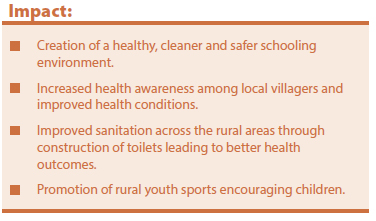

SUBRAMANIAM V.

BRIAN BADE
DAMODAR MALL

AKHILESH PRASAD
JOHN WILCOX
DARSHAN MEHTA
GOPALAKRISHNAN SANKAR
SUNIL NAYAK
KAUSHAL NEVREKAR
Reliance Retail has been one of the key catalysts in the growth of modern retail in India. With its pan India presence, Reliance Retail has attained a leadership position in the industry that is capable of delivering unmatched customer experience at a scale comparable to none.
Reliance Retail has once again delivered strong revenues and profits for the year. The performance is a reflection of strong business fundamentals and focused execution by a highly trained and capable team.
Reliance Retail continues to deliver its promise of trust to all its customers, suppliers and employees.
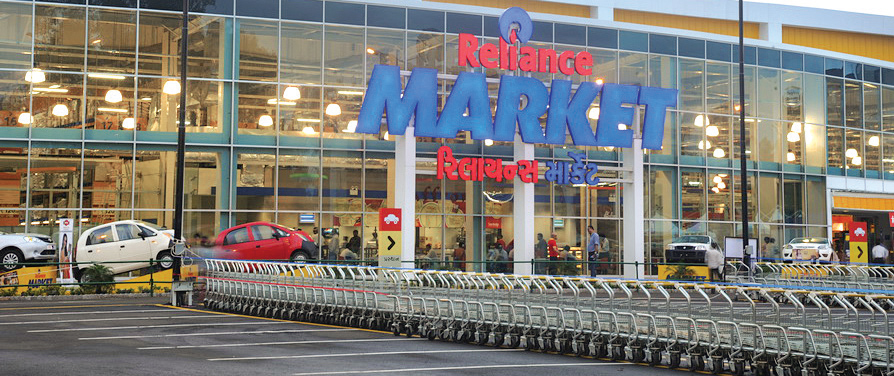
Indian retail landscape is witnessing a rapid change driven by strong economic growth, changing demographic profile, increasing disposable incomes, evolving consumer tastes and preferences. Reliance Retail is geared up well to withstand the dynamics of the evolving retail industry.
Multi-retail
concept 
Reliance Retail has adopted a multi-retail concept strategy to serve customers across diverse shopping needs.
Adaptive/
Responsive

Reliance Retail operates on a framework that fosters rapid adaptation to ever changing external environment whether it pertains to technology evolution, consumer experience or the way shopping habits are changing. This has helped Reliance Retail in maintaining its market leadership by anticipating and responding quickly to the ever evolving customer and market dynamics.
Partner of
choice 
Reliance Retail has emerged as the
partner of choice for International
brands and has established exclusive
partnerships with many revered
international brands.
State-of-the-art
infrastructure 
Reliance Retail has built robust and scalable infrastructure backed by cutting edge technology and strong processes to support smooth store operations.
Multi-channel
strategy

Reliance Retail has adopted multi-channel strategy and has integrated 'offline-online' models to truly differentiate the customer experience.
OPERATING STRATEGY
Reliance Retail is India’s largest retailer in terms of reach, scale and revenues. Deep insight into India’s economic, cultural and consumption diversity drives Reliance Retail’s vision in the retail universe. Reliance Retail business is being led by the following four strategic pillars:
Customer Centricity: Reliance Retail endeavours to offer rich customer shopping experience through wide product assortment, convenient shopping layout, trained store staff and hassle free checkouts. Keeping customers at the centre, Reliance Retail has embraced customer service as a way of life in everything it does to operate its business.
Own Brand Strategy: Reliance Retail continues to extend its portfolio of own brands across all consumption baskets. Reliance Retail offers superior quality through these brands through an active engagement with manufacturers at every stage starting from design and quality testing to final product rollout. Many of these own brands have grown in size and scale to compete with national and international brands.
Innovation: Reliance Retail has been swift in embracing latest technology across its stores and supporting infrastructure. Reliance Retail has built nimble yet scalable operations to enhance customer experience in the evolving digital era. Reliance Retail is gradually rolling out its innovative omni-commerce initiatives with multichannel sales approach that provides its customers with an integrated shopping experience.
Productivity and Efficiency: Reliance Retail operates on a highly process based approach so that the customers gets seamless experience every time they shop. Its highly trained people and robust processes ensure consistent execution resulting in superior productivity.

India continues to be one of the fastest growing major economies globally with GDP growth rate of 7.1% in FY 2016-17. Government continues to lay focus on structural reforms, infrastructure development, agricultural and rural development, removal of labour regulations and improve ease of doing business.
The year 2016-17, marked several momentous economic policy decisions. The passage of the constitutional amendment for implementation of the Goods and Services Tax (GST), and the demonetisation of highest denomination notes were the two key measures taken during the year. GST is anticipated to have positive impact on almost all aspects of business operations in the country. The reform is expected to benefit GDP growth rate as well as simplify taxation structure in the country among other benefits.
With income levels improving, Indian Retail landscape has witnessed numerous changes over the last decade – consumer demand is shifting, shopping preferences are evolving and high degree of technology adoption is taking place which are pushing up the Indian Retail sector into a new growth orbit. By 2020, Indian retail market is projected to reach US$1.3 trillion from US$672 billion in 2016 growing at a CAGR of 17%1.
Organised retail is estimated at US$ 60 billion (~9% of the total retail market) as of 2016 and is projected to reach US$180 billion (contributing 14% of the total retail market) by 2020 growing at a CAGR of 25%2. In contrast to retailers in advanced economies who are facing growth challenges with saturated home markets and tough macro-economic conditions, Indian retail scenario remains positive with retailers registering healthy growth across categories and formats. Sustained economic growth, rising income levels, growing aspirations, increased awareness and technology adaptation continues to drive consumption in India.
2016 was a challenging year for many e-commerce players who witnessed course correction both in terms of the market approach and valuations. With lower funding, falling valuations and pressure from investors, the e-commerce space is now seen shifting its focus from achieving higher Gross Merchandise Value (GMV) to achieving profitability and sustainability. E-commerce players across the board are re-looking at their model to bring in more efficiencies, rationalise discounting, and shifting portfolio mix in favour of high-margin categories. E-commerce as a channel is expected to expand steadily in the coming years.
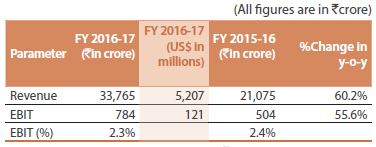
Reliance Retail achieved a turnover of `33,765 crore in FY 2016-17 as against `21,075 crore during the previous year, registering a strong growth of 60.2%. The business delivered record profits during the year with an EBIT of `784 crore as against `504 crore in the previous year.
Reliance Retail added 371 stores during the year. It operated 3,616 stores across 702 cities with an area of over 13.5 million square feet. In addition to the retail stores, Reliance Retail operated 448 fuel outlets as on 31st March, 2017.
From basic daily necessities like milk, fruits and vegetables to monthly household needs; from everyday fashion to high-end fashion; from Jewellery to footwear; from mobile phones to high end gadgets, Reliance Retail touches millions of Indian consumers every day through its retail stores.
Reliance Retail continues to be the leading grocery retailer in India offering fresh fruits and vegetables, dairy, processed food, FMCG and other items of daily use through its network of Reliance Fresh, Reliance Smart and Reliance Market stores.
Reliance Fresh & Smart stores operates on three core promises of 'Fresh Hamesha, Available Hamesha and Savings Hamesha'. Focused towards serving day to day needs of consumers, Reliance Fresh and Smart stores are one-stop-shop for fresh shopping, fresh savings and fresh happiness.
Reliance Smart, a destination store with simpler and stronger value proposition to customers was launched in the fourth quarter of the previous financial year. It has received an overwhelming response from customers since its launch. Reliance Retail during the year has extended the ‘Reliance Smart’ store concept to more regions and operates 77 stores as on 31st March, 2017.
Reliance Market is the largest cash and carry chain in the country. Reliance Market continues to extend its store network and operates 41 stores across 38 cities and 13 states in India. Reliance Market derives its competitive strengths from its operating model of 'buy for less' – 'operate for less' – 'sell for less'. These guiding principles drive decisions relating to assortment, value proposition and in-store shopping experience for its customers. Reliance Market is patronised by over 2.5 million registered members across the country. During the year, Reliance Market reported a robust same store sales growth making it one of the fastest growing cash and carry chains in the country.
Reliance Retail continued to extend its own brand portfolio in key categories and launched new products in laundry detergents, dish wash detergents, specialty tea, jams and breakfast cereals categories.
Reliance Retail operates the largest consumer electronics store chain in India through a network of 1,996 Reliance Digital and Jio stores having presence in over 700 cities across India.
Reliance Digital offers over 200 national and international brands offering the widest assortment of products spanning across Audio & Video products, Digital Cameras, Durables like Air Conditioners, Refrigerators, Washing Machines, Microwave Ovens, Water Purifiers, Kitchen and Home Appliances, Gaming Consoles & Games, Computers, Laptops, Tablets & Peripherals, Mobile and Fixed line instruments as well as a wide range of accessories and new-age gadgets across all major product categories.
Reliance Digital has uniquely positioned itself on personalising customer experience by offering solutions rather than products.
Reliance Digital witnessed robust growth across all categories aided by strategic planning, targeted promotions, differentiated assortment and an engaging store experience. These stores are supported by robust supply chain and unmatched service capabilities brought by ResQ.
ResQ is a full–fledged service organisation and is India’s first multi–product, multi–brand and multi–location service network that provides solutions encompassing end–to–end product life cycle requirements for the entire range of CDIT products and other value-added services.
Reliance Retail through Reliance Jio Stores, a small store concept, operates the largest retail chain for mobility and communications products in India. The chain offers a wide choice of products from national and international brands at competitive prices. In addition, Reliance Retail through Jio Stores has been successful in address the challenge of limited physical space and operates on a connected store model.
Addressing the large market opportunity in the 4G mobile device market, Reliance Retail has built the largest distribution reach for mobility devices in India. It encompasses over 5,00,000 independent retail partners that are serviced by trained sales specialists, integrated supply chain and a network of distributors and service centres.
During the year, Reliance Retail through its distribution network sold nearly 10 million 4G LYF handsets, Jiofi devices and partner brand handsets.
Indian fashion and lifestyle category is witnessing a paradigm shift with rapid adaptation of latest fashion trends by consumers. Increasing disposable incomes, exposure to urban trends through TV content and social media and, rising working women population are driving changes in the consumer purchase behavior across income segments.

Reliance Retail is India's leading fashion & lifestyle retailer serving customers across various segments and operating economy, mid segment and luxury fashion stores. Reliance Retail has fully integrated operations encompassing designing, fabric sourcing and contract manufacturing giving it a complete control over the fashion value chain enabling it to offer the most fashionable clothes to its customers in a most efficient way.
Reliance Trends is the largest value fashion retailer in India. Reliance Trends added 73 new stores during the year and now operates 344 stores across 177 cities. Reliance Trends continued to expand its retail presence by opening store in Tier-2, Tier -3 cities.
During the year, Reliance Trends witnessed a strong same store sales growth aided by differentiated assortment, strategic planning backed by robust design and sourcing infrastructure.
Reliance Retail expanded its women’s wear fashion offering by launching Trends Woman, a store concept that offers a warm, welcoming and exclusive shopping space to shoppers looking for trendy, high-fashion and well-curated collections of Indian wear.
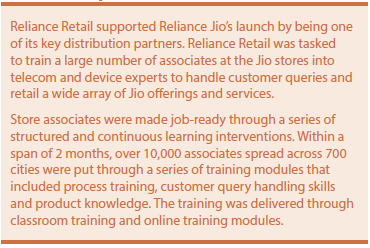
Reliance Footprint, a specialty footwear retail chain offers footwear and accessories through a range of private label brands along with national and international brands. Reliance Footprint operates 255 stores, making it a leading national multi–brand family footwear chain.
Reliance Jewels is India’s leading fine jewellery retail chain. With its first store opening in 2007, Reliance Jewels today extends its reach to 36 cities with 52 stores across India. At Reliance Jewels, customers are assured of the widest range, stunning designs, guaranteed purity & quality and a pleasant shopping experience. The product collection hosts an extensive range starting from traditional gold jewellery including Kundan, Polki, Filigree and Temple that showcases the legendary design and craftsmanship of various parts of India right up to contemporary diamond jewellery & solitaires.
Reliance Retail has a portfolio of over 40 international brands that spans across the entire spectrum of luxury, bridge to luxury, high–premium and high–street lifestyle. Reliance Retail operates more than 431 stores for international brands and continues to partner with new and revered international brands. During the year, Reliance Brands signed a Joint Venture agreement with world’s second oldest luxury brand Bally, a luxury brand with rich heritage, Swiss quality and a contemporary design ethos. It also entered into a long-term master franchise agreement with Netherlands based fashion brand Scotch & Soda.
Reliance Retail entered into an exclusive long-term partnership with ‘Flormar’, Turkey’s leading beauty and color cosmetics brand and a part of Yves Rocher Group, France.
Reliance Retail expanded the network of fuel outlets by re-commissioning 142 fuel outlets during the year and now operates 448 fuel outlets. The “RSP discount scheme” launched for a limited period during 4th quarter saw overwhelming response across India and helped recover volumes lost during the demonetisation period.
Reliance Retail's relentless focus on building a robust supply chain infrastructure has helped in scaling its operations. Reliance Retail served millions of customers through its network of 3,616 stores spread across the length and breadth of the country. To efficiently manage operations of such scale, Reliance Retail operates state-of-the-art warehousing infrastructure spread over 5.6 million square feet and equipped to handle a large variety of products ranging from fresh produce with low shelf life to fragile consumer electronics; from footwear to toys, from fashion accessories to apparel and much more.
During the year Reliance Retail commissioned a new state-ofthe- art warehousing facility of 4,00,000 square feet in Tumkur, Karnataka. The facility is one of its kind and has capability to deliver 2x throughput vis-à-vis existing facilities while optimising on cost and delivery efficiencies.
Reliance Retail operates over 100 distribution centres nationally and has a fleet of more than 1,000 trucks giving it the ability to service stores within 24-48 hours in any part of the country.
To support the e-commerce initiatives, Reliance Retail has made investments in building capabilities to handle picking, packing, and shipping single items and small volume orders directly to consumers.
As part of Reliance Retail 2.0 initiatives, AJIO extended its offering by launching men’s wear, fashion tech and kid’s wear categories and rolled out various features such as IMPS, EMI, automated refunds and much more to enhance customer experience. The website offers over 59,000 options across clothing, footwear, accessories. Gaining popularity and strong customer response with high repeat purchases, AJIO is further expected to grow at fast pace leveraging on JIOs capabilities. AJIO is backed by a strong supply chain that facilitates deliveries to over 9,000 pin codes across the country with continuing expansion in delivery reach.
Reliance Retail became the first organised retail chain in India to support Unified Payment Interface (UPI)-based payments. The service was launched in March 2017 at over 200 stores comprising of Reliance Fresh, Reliance Smart, Reliance Digital and others in Mumbai. Progressively, the facility would be rolled-out to other Reliance Retail stores across the country.
In India, the organised retail currently accounts for approx. 9% of the overall retail industry. This provides a significant growth opportunity for organised retailers in the country. Reliance Retail remains committed to extending the benefits of modern retail to every Indian consumer. The Company will further fortify its leadership position with a ubiquitous coverage across India through a blend of retail stores and online channels.
Reliance Retail stores have actively pursued opportunities to reach out and connect with neighboring communities. As part of Karta initiative, Reliance Retail endeavors to be a positive agent of change and development in the communities and areas where it is present. Reliance Retail stores have initiated a large number of community events throughout the year that has helped earn goodwill in the neighborhoods and also improve teamwork amongst store colleagues. To generate maximum impact, a large number of initiatives were executed at the store level. Some of the activities included:
Reliance Retail actively engages in training and employing differently abled resources at its stores. During the year, over 400 differently abled individuals were trained and employed across various job roles.
In addition to above, Reliance Retail in association with Reliance Foundation has carried out numerous initiatives towards rural development and alternative livelihood development projects.
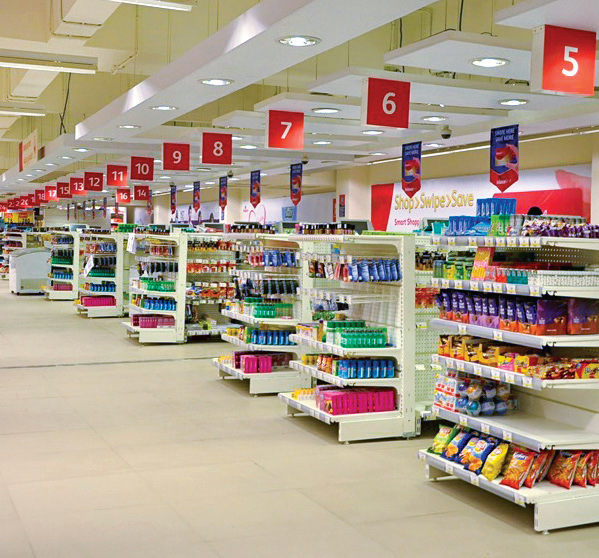

SANJAY MASHRUWALA
MATHEW OOMMEN
PANKAJ PAWAR

KIRAN THOMAS
HARISH SHAH
Jio has changed the nature of mobile services in India (arguably globally too), redefining benchmarks, setting new milestones, inspiring unprecedented adoption, usage and service metrics that are better than the best globally, while ushering in a truly converged digital service.
100 million subscribers on-boarded in 170 days
Value creation through abundant data capacity
Simplest tariff structure
While Jio continues to co-create digital eco-system and expand it's network with a coverage target of 95% of India's population (from current 75%), Jio reiterate it's promise to shape the future of India through transformative, quality and affordable access of end to end digital services for every Indian and making digital India vision a reality.
100 million Reliance Jio the fastest company to reach 100 million subscribers
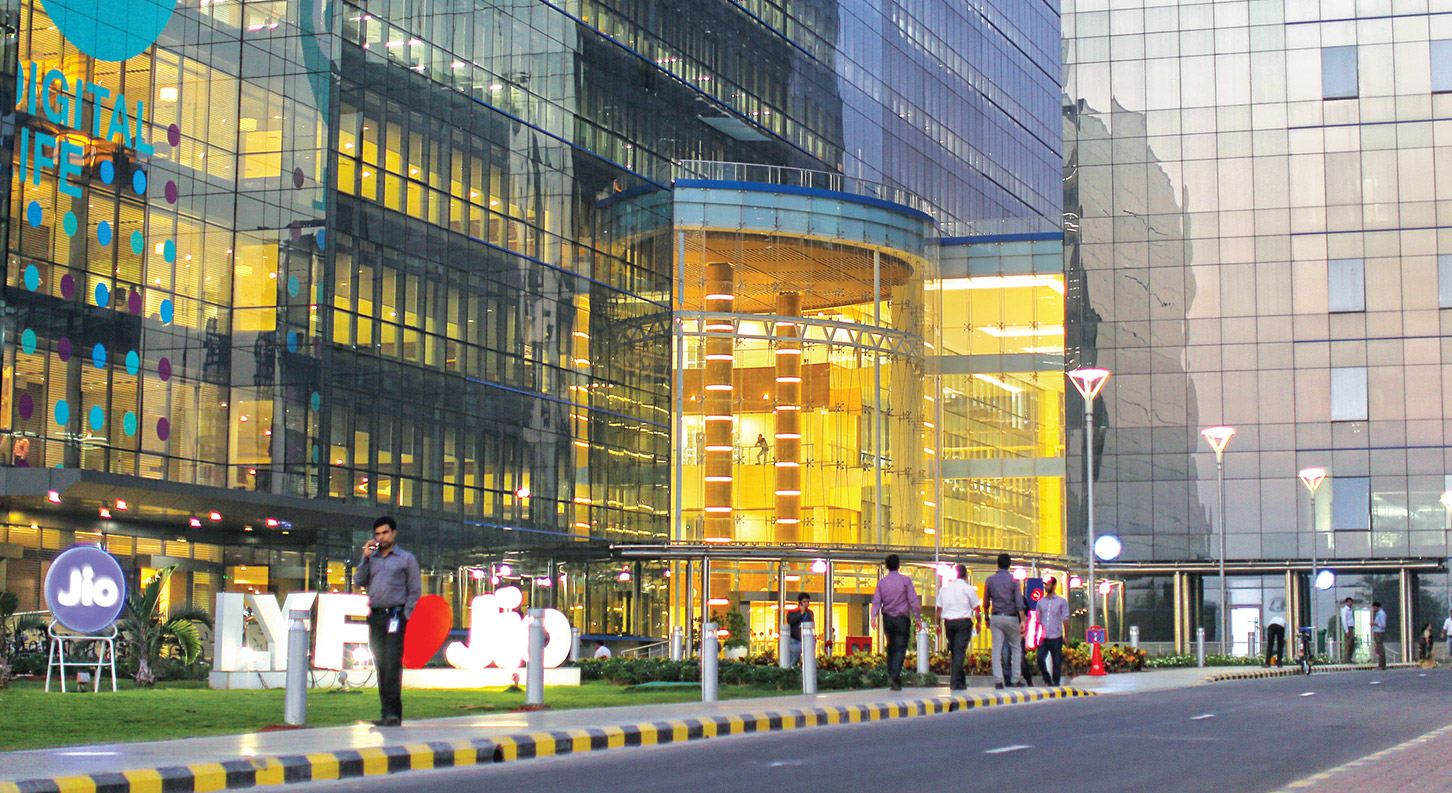
Coverage
Coverage refers to anytime, anywhere mobile broadband access. With Jio’s launch, current mobile broadband coverage in India has shot up to 75% on par with US. Jio continues to expand its network with aim of full Indian population coverage and target of over 95% within the next one year. This coverage will be backed by the largest network of spectrum, tower and fiber assets, thus providing huge capacity.

Data
Data consumption per
consumer in India is far
below the global average.
Jio's network is engineered
with abundant capacity
to serve every Indian. Jio’s
customer base of 100+
million today on an average
already consume 10GB/
month/user. This is highest
per capita mobile data
consumption in world.

Quality
Quality of broadband
services hitherto in India
were below par international
standards. Jio's vision is to
offer speed that are multiple
times faster than the current
average speed offered in the
market, backed by its state-of-
the-art future proof all
IP network and world-class
customer service quality.

Affordability
Affordability is key to success of the digital revolution. Jio has developed its network at an extremely efficient cost base coupled with significant operating efficiencies. These efficiencies are enabling it to offer services at a very competitive cost compared to others. Jio has introduced One India simplified tariff plans with truly free voice and lowest data rates in the world.

Digitisation and data consumption were hitherto subdued because of inadequate investment in infrastructure, lack of credible competitive environment coupled with steep pricing. Jio’s entry not only unlocked existent latent demand, but also consumption patterns leading to exponential increase in per capita data consumption.
This latent demand for data consumption in India is evident on Jio’s network traffic (Jio is now world's largest Mobile data carrier) and it is expected to bring a paradigm shift in the Indian telecom industry.
Jio's fundamental belief and conviction in the potential of the market is also underlined by studies and estimates of leading global consulting firms. Excerpts from some of these studies are outlined below:
The large potential, in terms of underserved addressable market backed by compelling value propositions continues to provide a substantial opportunity for Jio to leverage on its head start in building India’s digital eco-system. Jio is well positioned to address this opportunity with its investment in network infrastructure that has given India one of the most powerful and unmatched video networks in the world.
LINKING OPPORTUNITY AND STRATEGY TO EXECUTION
Jio is present in all 29 states of India with direct physical presence in more than 18,000 urban and rural towns and over 2,00,000 villages. Jio has built the most sophisticated, efficient and largest LTE network in the country. Jio already has the largest fiber network in the country and highest amount of spectrum deployed for LTE services in the industry. The spectrum holding and network infrastructure strengthens coverage and data availability.
JYOTINDRA THACKER
JAGBIR SINGH
ANISH SHAH
"Jio has set up a next generation future proof all IP network which is amongst the best in the world. Jio’s all IP future proof network has latest advanced features such as Software Defined Networking (SDN) and Network Functions Virtualisation (NFV).
Jio's key service objective is to provide anytime, anywhere access to innovative applications and high-speed internet services, and is committed to India’s global leadership in the digital economy through investments and co-creation of best in class technology, continuous innovation and development of product and service platforms for ultimate customer experience.
Jio's ultimate aim is to connect Digital India and Digital Bharat till the last mile and provide the benefits of digitisation to every town and village."
World's largest migration from free to paid services
Jio has deployed LTE using both Time Division Duplex (LTE-TDD) and Frequency Division Duplex (LTE-FDD) technology for its wireless broadband services. LTE technology has evolved significantly in the last few years, with increased efficiency of network equipment, availability of device eco-systems, and compatibility across bands. Jio continues to benefit from these advances in LTE technology.
Jio's network is specifically designed to carry multimedia content, including music and video, thereby enabling a rich customer experience.
Jio's deployment of LTE, FTTH and Wi-Fi will make high speed broadband access widely available to customers in India. This type of broadband access network offers high capacity, low latency services at an affordable price, a first for most Indian customers.
Jio has become the largest network globally in terms of data carried and contributed to India becoming the leading country in the world for mobile data usage, with more than 100 Cr GB of data traffic per month and 200 Cr voice and video minutes a day.
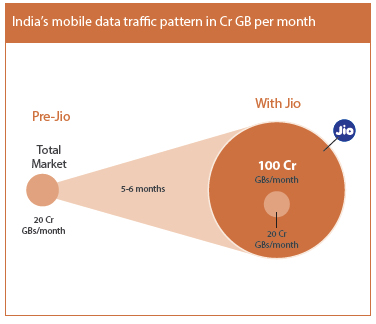
Jio's network is the largest 4G network in India and literally present in every city, town and most of the villages of the country with more than double the number of 4G base stations when compared to those of all the other Indian operators put together.
Jio continues to expand its current LTE network coverage foot print and is also deploying Fiber-to-the-home (FTTH) technology for wire-line broadband and Carrier-Wi-Fi technologies for broadband via public hotspots.
By the end of 2017, the Jio's network will be present in almost all the cities, towns and villages covering over 95% of India's population.
In addition to LTE and its future versions, Jio will continue to evaluate and deploy other technologies, both wireless and wire line, to offer comprehensive broadband solutions to consumers, enterprises, small businesses, government and other entities.
INNOVATION LED DEPLOYMENT
Jio's next generation network is amongst the best in the world. The network has advanced features such as Software Defined Networking (SDN) and Network Functions Virtualisation (NFV). It is ready for future evolution of technology including transition to 5G with minimal additional capital expenditure in the network. Jio has filed 54 patents for the path-breaking initiatives it has been pioneering.
Jio has over 1,00,000 radiating sites, which is significantly more than what any other operator had at its launch and already positions Jio as one of the largest network operators in the country. Fiber is the critical backbone on which a telecom service provider is able to provide high end services to consumers. In addition to fiber backhaul, extensive last mile fiber connectivity is being rolled out to address the fiber to the home potential.
RJIL's Singapore subsidiary is also key consortium partner in a multi-terabit capacity international network, a new state of-the-art 8,100 km cable system, the Bay of Bengal Gateway (BBG). BBG provides direct connectivity to South East Asia and the Middle East, then onward to Europe, Africa and Far East Asia through seamless interconnection with existing cable systems. This strategically important undersea cable landing facility in Chennai is owned by the RJIL, provides a high-speed, high capacity, low latency route connecting India to the rest of the world.
With respect to sales and distribution, Jio has about half a million activation outlets and close to a million recharge outlets at launch. This is in addition to the digital channels that Jio has for seamless activation and recharge facilities for customers. The outlets have real time access to over 1,050 Jio offices set-up across the country.
LICENSE AND SPECTRUM HOLDING
During the year, RJIL participated in spectrum auction and acquired 269.2 MHz of spectrum across different bands for `13,672 crore.
RJIL's total spectrum footprint with this stands at 1,108 MHz (uplink + downlink) across three spectrum bands namely 800 MHz, 1800 MHz and 2300 MHz band across each of the 22 circles with an average life of over 16 years. All of this spectrum is liberalised and can be used for rolling out any technology.
In addition, RJIL has entered into agreement with Reliance Communication Limited (RCOM) for sharing of spectrum in the 800 MHz band across 21 circles.
RJIL network is engineered for seamless services delivery using LTE technology in 800 MHz, 1800 MHz and 2300 MHz bands through an integrated ecosystem. The combined spectrum footprint across frequency bands provides significant network capacity and deep in-building coverage.
PARTNERSHIPS
Value chain presence: Jio, along with business partners, is focused on making all the components of the digital value chain available to customers. To deliver such end-to-end solutions, Jio continues to partner and collaborate with technology developers, service providers, infrastructure providers, application partners and device manufacturers.
Infrastructure service providers: Jio has entered into master service agreements with leading telecom infrastructure companies such as Reliance Infratel Ltd, Indus Towers Ltd, Viom Networks Ltd, ATC India Tower Corporation Pvt Ltd, GTL Infrastructure Ltd, Ascend Telecom Infrastructure Pvt Ltd, Tower Vision India Pvt Ltd, RailTel Corporation of India Ltd, BSNL and MTNL to have access to the passive infrastructure set-up by these companies. Such infrastructure is being used where required.
Jio also has agreements with RCOM for the purpose of sharing fiber and economising on overall use of fiber and other passive infrastructure.
In addition to the partnered assets, RJIL has also built its own network of towers and optic fiber to supplement its partners’ tower and optic fiber infrastructure.
DEVICES
Jio has been actively involved in developing the ecosystem for India’s LTE phones, working with renowned Original Equipment Manufacturers (OEMs), Original Design Manufacturers (ODMs) and chipset vendors on end-to-end device design and engineering. With the launch of LYF brand of devices by Reliance Retail Limited and several launches by other leading OEMs, it is expected that almost all the smartphones sold in the coming months will be VoLTE enabled.
Jio is ensuring tight integration of these devices with its network infrastructure, platforms and applications portfolio to ensure seamless experience to customers.
LIFESTYLE APPLICATIONS (APP)
Jio's all IP-centric network is enabling content focused services, including VoLTE with the ability to offer rich, multimedia communication and digital services as well as high quality voice calling from and to other telecom networks and video calling as well. Jio’s network is specifically designed to carry multimedia content, including music and video, thereby enabling a rich customer experience. In addition to LTE and its future versions, Jio will continue to evaluate and deploy other technologies, both wireless and wire line, to offer comprehensive broadband solutions to consumers, small businesses, enterprises, government and other entities.
Jio's customers have access to a large suite of digital services which will enrich their experience:
Jio commenced its services in September, 2016: Jio’s service commencement outlines five fundamental pillars of the Jio ecosystem: (i) The best quality broadband network with the highest capacity; (ii) A world of affordable, cutting-edge devices; (iii) Compelling applications and content; (iv) Superior digital service experiences; and (v) Affordable and simple tariffs.
Industry redefining tariff simplicity and transparent principles: In a path breaking practice, Jio has introduced simplified tariff structure with less than 20 plans as against the 22,000+ tariff plans prevailing in the country today. The plans are consistent across India, rather than circle specific plans and are designed to fit every budget. The mantra is simple, easy to understand with no fine print and ambiguous associated conditions. In all the tariff plans, voice services (Local calls, STD and National Roaming) will be offered free of cost to all its subscribers always.
Jio Prime Membership Programme for founder members: As a token of its gratitude, the first 100 million plus Jio subscribers were offered special ‘Jio Prime Membership’ programme which comes with several special benefits. Jio Prime Members will be able to enjoy unlimited benefits of Jio services till 31st March, 2018 for a nominal, one-time enrolment fee of just `99/- coupled with the most competitive monthly tariff plan in the industry starting at `303/- per month. The programme was designed to also enable Jio Prime Members to enjoy the full bouquet of Jio’s applications on complimentary basis till 31st March, 2018. In addition, there will be many other attractive deals and offers from both Jio and its partners that the Jio Prime Members will enjoy under this programme.
The Prime Membership programme was a resounding success with 72 million plus customer subscriptions by 31st March, 2017, reflecting profound trust in Jio’s service quality and offerings while enabling a smooth migration path from complimentary services to paid services.
Everyday More Value Offer: In an industry first, Jio in addition to its own market leading tariff plans, will also offer its customers the option to choose the highest selling tariff plan of any of the other leading Indian telecom operator, but with 20% more data than what the other operator provides. With this, Jio will ensure that consumers do not have to ever suffer from ‘data anxiety’ and remain assured of the best value for the price paid in a hyper competitive market.
Since commencement Jio has changed the nature of mobile services in India. With its customer-friendly pricing and services, Jio has shown that India can be a major market for mobile broadband services. Jio's success can be attributed to several factors, which includes its ecosystem approach, spectrum holdings, superior technology, pan-India network, consumer centric pricing, suite of digital services and applications, services and marketing and device availability.
In this transformative journey Jio reaffirms its commitment to 'Digital India' vision and its ultimate objective of providing anytime, anywhere access to innovative and empowering digital content, applications and services, thereby propelling India into global leadership in the digital economy.
As part of Corporate Social Responsibility and Urban Renewal efforts, Reliance Jio has taken up Green initiatives to enhance quality of life for all in India’s rapidly growing urban areas. It is working with local municipalities to adopt existing public parks, green strips and open grounds and develop them into next generation public spaces for the benefit of the citizens.
RAHUL JOSHI
"Network18 aims to be at the zenith of providing cutting edge news and quality content to the demanding new-age viewer; and create unparalleled reach in the process.
The media industry in India is vibrant and evolving; with the emergence of new formats and services and rapidly-changing business models. Network18 aspires to be at the forefront of this change. Digital is a focus area for Network18 and its strength in linear media provides an edge, helping the Company leapfrog to be a channel-agnostic provider of top-drawer content."
CNBC TV18 had 86% market share during annual budget speech
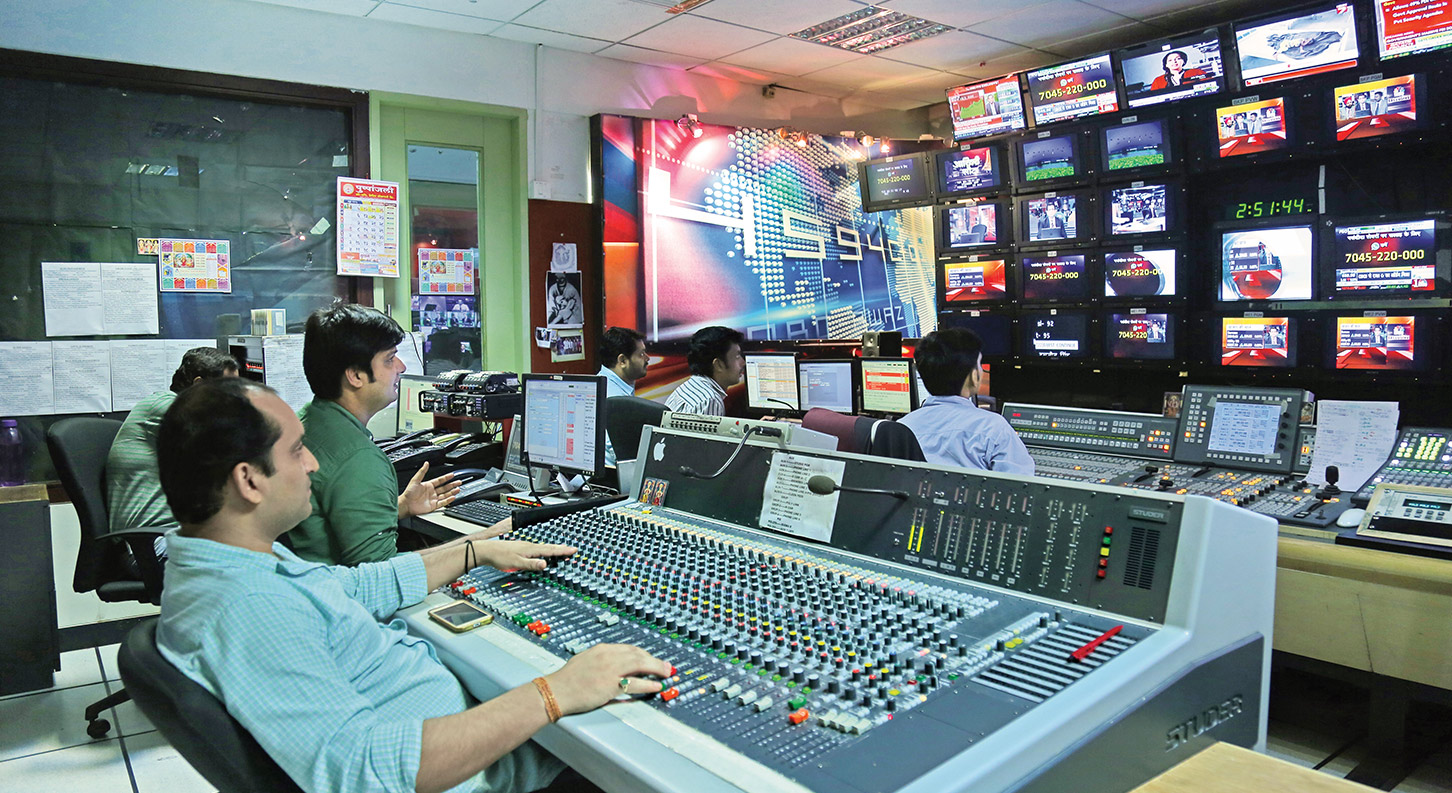
Network18 is a media and entertainment powerhouse with its foothold in television, Internet, filmed entertainment, digital business, magazines, mobile content and allied businesses. Network18’s operating model is driven by its zeal to provide consumers with the best-in-class media and entertainment products that set new benchmarks in creative excellence, fair journalism and audience engagement.
Channel-agnostic
approach 
The multi-platform consumer of today is more active, aware and assertive, with strong opinions on key issues. Network18 harnesses the power of the digitally empowered consumer in chalking out its product strategy for content creation across all platforms.
Reach for
impact 
Through its continued investments into regional (vernacular) and digital platforms, Network18 aims to create unparalleled reach. This shall enable tapping of the underserved segments of India’s diverse populace.
Thought
leadership 
Steered by a professional and experienced team, Network18 constantly strives to host thought leadership – on air, online and onground, deriving leadership not only through consumption numbers but also by facilitating the development of new ideas and emerging thought processes.
Network
synergy 
Network18 comprises leading television channels, digital and mobile properties and publications in all key media genres. This facilitates cross-promotion and cross-pollination of content and expertise across its network, thereby enabling enhanced advertising and subscription revenue generation.
Strategic
collaborations 
Network18 has a track record of building successful strategic alliances with nationally as well as globally reputed names in the media industry, such as Viacom in entertainment, CNN in English general news and CNBC in business news, A+E Networks in factual entertainment and Forbes in the business magazine genre.
Brand
excellence 
At Network18, the focus is on driving the highest standards of creative excellence by fostering a culture of innovation to build new content formats across platforms, thereby creating strong brands across diverse media.
The year was a period of flux for the Media & Entertainment (M&E) industry, and a tale of two halves. Strong growth witnessed in first half of the year (H1) due to positive momentum in channel launches and increased connectivity saw a sharp deceleration in later half of the year (H2), as advertisers’ scaled back marketing spends temporarily. Growth is expected to be back on track in the current year, as underlying trends on rising content consumption and economic growth remain robust.
The Indian M&E industry is expected to grow at a 13.9% CAGR to reach `2,419 billion by 2021, from its estimated size of `1,262 billion in 2016, due to positive demographic trends, improving connectivity driving reach, and availability of segmented content offerings. (Source: KPMG in India analysis, 2017).
GROWTH DRIVERS
The high quality content and digital services provided by the Network18 group dovetails with the launch of the Jio telecom platform; underscoring an ecosystem approach to digital outreach to the new-age Indian.
It is expected that by 2020, the ratio of digital cable subscribers to DTH subscribers will be 53:47, with 90 million digital cable subscribers and 79 million DTH subscribers.
With all key telecom companies in India broadening their 4G offering and gaining consumer acceptance through falling data prices, the uptake in online video consumption is growing fast. Further, the reach of telecom providers is much wider than traditional cable/DTH can offer.
BARC India is the only government registered TV ratings service in India, which released individual viewer ratings in June 2015 and rural viewership data from October 2015; thus covering India more holistically. Further, BARC has also announced a phased roll-out of Digital measurement platform ‘EKAM’ recently, which will help track the hithertounmonitored digital content consumption.
FINANCIAL OVERVIEW
Network18 improved its market-standing and continued investing for growth in what was a challenging year for the media industry. The operating revenues on a consolidated basis stood at `1,491 crore, down by 2.4% from `1,527 crore in FY 2015-16.
Sustained investments into new businesses and entry into more regional markets impacted the financial performance. FY 2016-17 EBIT was negative at (`201) crore on a consolidated basis as compared to `173 crore in the previous year.
OPERATIONAL OVERVIEW
News
Business News constitutes CNBC TV18 and CNBC Awaaz – No.1 in English and Hindi business news genre respectively, and CNBC Bajar- first Gujarati business news channel.
Highlights of the year: CNBC TV18 had 86% market-share during the annual budget-speech.
General News includes CNN News 18 and News18 India.
Highlights of the year: CNN-IBN underwent a complete revamp on April 18, 2016 and rebranded itself as CNN-News18; revealing a new logo, look and philosophy. The exclusive interview with Hon'ble Prime Minister Narendra Modi in September 2016 was a landmark achievement for the channel. Hindi News channel IBN7 was also re-launched as News18 India.
Regional News includes ETV News Channels and IBN Lokmat.
Highlights of the year: Three channels launched - namely News18 Kerala, News18 Tamil Nadu and News18 Assam/N.E. IBN Lokmat bagged the prestigious 'Ramnath Goenka Excellence in Journalism Awards'.
Hindi General Entertainment includes Colors, Rishtey, MTV India - the No.1 youth channel, MTV Beats and MTV Indiesworld’s largest platform for independent sub-cultures.
Highlights of the year: MTV and Nescafe partnered to launch a film-making challenge on MTV Nescafe Labs.
English Entertainment has VH1- the No. 1 channel in its genre, Comedy Central - India’s 1st 24-hour English comedy channel, and Colors Infinity, an English entertainment channel.
Highlights of the year: VH1 was the live TV streaming partner for Global Citizen Festival India.
Kids Entertainment constitutes of Nickelodeon - the No. 1 channel in the Kids category, Sonic, Nick Jr./Teen Nick and Nick HD+.
Highlights of the year: Nickelodeon school contact program reached out to nearly 500 schools across multiple cities in the country.
Regional Entertainment: The Network18 group has rebranded all of the acquired regional entertainment channels of ETV (now part of the Viacom18 stable) under the common umbrella brand of Colors. These 5 channels in Kannada, Bangla, Marathi, Gujarati and Oriya mirror the cultural ethos and richness of the respective regions through unique content and provide the group with a thrust into vernacular entertainment which is the growth engine of the future.
Highlight of the year: A second Kannada entertainment channel "Colors Super" was launched.
Infotainment: HistoryTV18 is a leading factual entertainment channel. Lifestyle channel fyiTV18 was launched.
Highlights of the year: Launched local tent poles this year with- 'Man Vs Job' which showcased some of India’s most unconventional and interesting occupations.

Film business includes Viacom18 Motion Pictures.
Highlights of the year: Its productions "Force2" and "Motu- Patlu–King of Kings" were well received by the audience.
Digital Content includes Moneycontrol.com - Leader in the finance category, Firstpost.com - India’s first and the biggest digital-only newsroom, OTT video platform VOOT, and regional news destination News18.com.
Highlights of the year: Viacom18’s digital video destination VOOT was rated one of the top apps of 2016 on the Google PlayStore.
Digital Commerce includes HomeShop18 and Bookmyshow.
Highlights of the year: Bookmyshow was the ticketing partner for big sport events like India Super League (ISL) 2016 and India vs England Test cricket series, apart from prestigious global citizen festival where top British rock band Coldplay performed.
It has a portfolio of highly reputed publications comprising 'Forbes India', 'Overdrive', 'Better Photography' and 'Better Interiors'.
Highlights of the year: Launched 'W Power Trailblazers' and '30 under 30' lists.
India's M&E industry is interestingly poised, with tailwinds of distribution bottlenecks easing (via cable-digitisation and the advent of 4G). A reviving economy and an improved understanding and reach into India’s vast consumer market make the space an exciting one.
Network18 aims to be a one-stop-shop of broadcast and digital touch points with India’s increasingly aspirational populace. Creation and curation of high quality content and cutting-edge news continues to be the focus. The coming year will see further impetus on deepening its presence in regional and digital – to align with the two platforms of future growth identified – vernacular content and digital delivery.
Moneycontrol is one of the first platforms in the country to be available on Facebook Messenger in a bot-sized package, allowing users to chat with Moneycontrol to get the latest updates on Indian stocks and market news.
Post re-launch as News18.com (an umbrella brand for general news), initiatives like ‘iVideos’ for original HD videos, ‘Immersive’ long format content, ‘Power Circuit’ for political buzz news, 360 degree/vertical tech and auto videos, showcase endeavours to continuously innovate on content format and features.
Firstpost pioneered a four-hour live digicast – an amalgamation of broadcast television, web streaming and Facebook Live – of the assembly election results of 5 states. Facebook recognised Firstpost as one of the most innovative users of FB Live in India and abroad.
At Network18, the business priorities co-exist with social commitments to drive holistic development of people and communities. It seeks to touch and transform people’s lives by promoting healthcare and education and deepen its social engagements.
Through the umbrella of Reliance Foundation, the Network18 group conducted a health outreach programme in Mumbai, where Static Medical Units for primary and preventive healthcare (including diagnostics) were established.
A programme named “Young Champs” was also run by the group in Mumbai. It was aimed at providing training to sports persons to promote nationally recognised sports in rural areas.
Programmes like 'Where is my Home?' (Highlighting issues of home-buyers affected by project delays), 'Going Green' (environmental problems) and 'March on Women!' (Women’s issues in India) aimed to create social awareness and potentially find some solutions through enhancing dialogue amongst stakeholders.

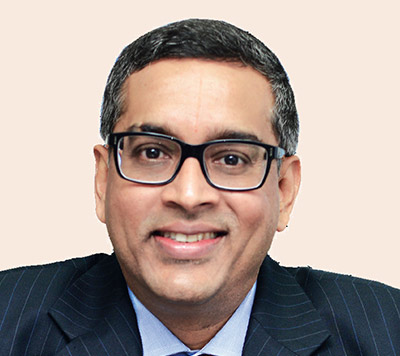
SRIKANTH VENKATACHARI
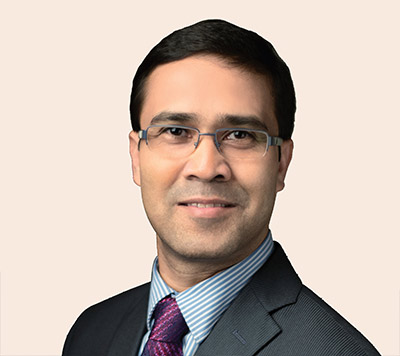
SOUMYO DUTTA
"Reliance continues to be a pioneer in innovative structured financing. It has been actively pursuing digital solutions in the form of SWIFT messaging, digitisation of cross border trade, big data, electronic bond platform and robotic process automation . Reliance raises capital at extremely competitive rates and attempts to diversify the resource base across product types, geographies, maturities and currency mix. Reliance also looks to continuously deliver shareholder value by reducing cost of its borrowings. Reliance has been able to fund its biggest ever capex program by using a judicious mix of various financing instruments and optimisation of its working capital cycle. Reliance has successfully retained its credit rating of two notches above India sovereign by S&P and one notch above sovereign by Moody’s throughout the capex cycle."
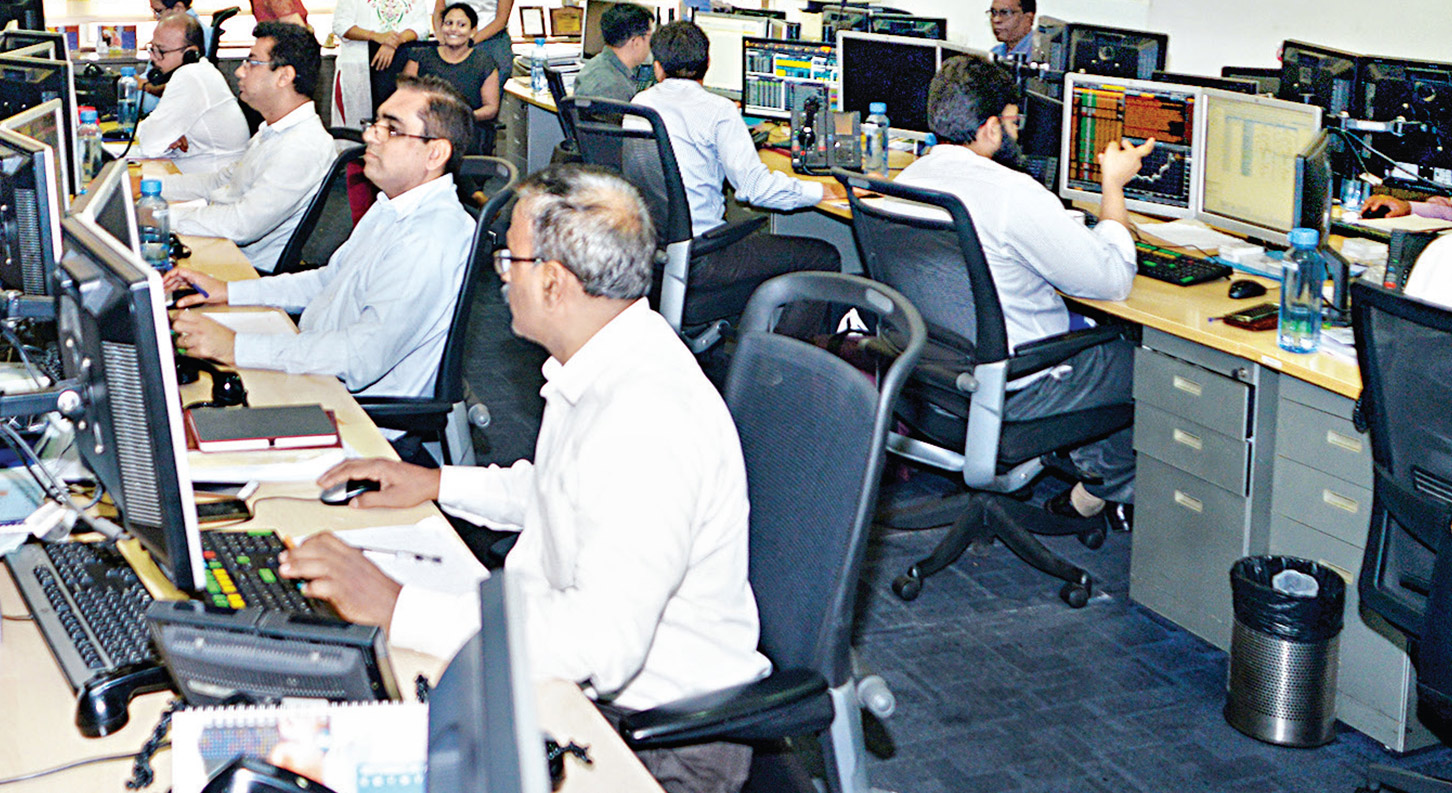
Reliance adheres to conservative financial policies and maintains significant cash balances in order to be able to complete projects on a timely basis, capitalise on opportunities, attract world-class project partners and carry out capital investment programs through business cycles.
Reliance has achieved a diversified capital structure using a mix of different instrument classes and financial products across maturities and currencies. As a pioneer in debt markets and the largest offshore borrower from India, Reliance has excellent access to global capital markets and enjoys strong relationships with more than 100 banks and financial institutions. It is also one of the largest corporate user of Export Credit Agencies (ECA) backed financing globally which gives it the ability to raise long-term resources from global financial markets at very competitive rates.
The endeavor is to optimise the cost and tenor of the borrowing and diversify concentration risk across different instruments, types of investors, geographies and currencies.
During FY 2016-17, Reliance has successfully refinanced longterm financing of US$1.75 billion syndicated loan and US$550 million club loan/ bilateral loans aggregating to US$2.3 billion resulting in substantial interest savings over the remaining life of these loans. Of these, US$1.75 billion syndicated loan saw an initial participation from 18 banks. This was further syndicated to additional 13 banks taking the total number to 31 banks. This deal saw the largest amount of syndication in any facility for Reliance since 2007.
FINANCING FOR ETHANE PROJECT
In October 2016, US$ 572 million financing was tied up to partially finance six state-of-the-art Very Large Ethane Carriers (VLECs) – the vessels being first of their type and size globally. These carriers transport Ethane imported from the United States to provide feedstock security to existing crackers at Dahej, Hazira and Nagothane.
This financing deal carries a door-to-door tenor of 12 years and comprises of US$286 million tranche insured by Korea Trade Insurance Corporation (K-Sure). This deal got a “Better than Sovereign Rating” from K-sure and is one of the most well structured and innovative financing deal done by the Group. This deal has won five global awards, the details of which are listed in Awards and Accolades section.
U.S. EX-IM BANK GUARANTEED NOTES
During FY 2016-17, Reliance continued to be the only private sector energy company globally to issue notes guaranteed by the Export- Import Bank of the United States (“Ex-Im Bank”). In October 2016, Reliance priced US$184 million 1.87% Ex-Im Bank guaranteed notes due 2026 which replaced a floating rate liability with a fixed rate liability. This was the lowest coupon achieved for a US$ denominated Ex-Im Bank guaranteed Note with similar average life in recent years.
Further, in December, 2016, Reliance priced US$205 million 2.444% Ex-Im Bank guaranteed notes due 2026 - the first ever Ex-Im Bank Direct Loan facility transfer to an Ex-Im Bank guaranteed capital markets offering.
FINANCING IN SUBSIDIARIES
During FY 2016-17, Reliance Jio Infocomm Limited (RJIL) raised financing from its shareholders, banks and other institutions to finance its ongoing capital expenditure.
RJIL issued secured long-term INR non-convertible debentures aggregating to `5,000 crore comprising of `3,000 crore debentures with maturity of three years and `2,000 crore debentures with maturity of five years. RJIL was the first issuer outside the financial services industry in India to raise funds digitally through the EBP (Electronic Debt Bidding Platform) route in June 2016.
Apart from tying up debt financing from multiple financial institutions, RJIL has the approval to raise up to `45,000 crore by way of issuance of Non-Cumulative Optionally Convertible Preference Shares (OCPS) to its existing equity shareholders on rights basis in order to strengthen its capital structure and fund ongoing capital expenditure. RJIL has raised `15,000 crore out of OCPS Series II and `18,660 crore out of OCPS Series III.
During FY 2016-17, Reliance Sibur Elastomers Pvt. Ltd (RSEPL) tied up a US$330 million term loan from commercial banks. This 10 year financing was the longest tenor US$ denominated loan raised in Asia (ex Japan) in the last 10 years.
During FY 2016-17, Reliance and its subsidiaries tied up facilities across various financing products and maturities. The table below shows debt levels for the year ended March, 2017 and March, 2016 for Reliance on a consolidated basis.
The consolidated net debt level has increased during the year, as it drew down on funding to finance the ongoing capital expenditure for its refining, petrochemical and telecom businesses.
Reliance's financial discipline and prudence is reflected in the strong credit ratings ascribed by rating agencies. The table below depicts the credit rating profile :
RATINGS DEFINITIONS:
S&P BBB+: An obligation rated ‘BBB’ exhibits adequate protection parameters. However, adverse economic conditions or changing circumstances are more likely to lead to a weakened capacity of the obligor to meet its financial commitment on the obligation.
Moody’s Baa2: Obligations rated Baa are judged to be medium-grade and subject to moderate credit risk and as such may possess certain speculative characteristics.
CRISIL AAA: Instruments with this rating are considered to have the highest degree of safety regarding timely servicing of financial obligations. Such instruments carry lowest credit risk.
Ind AAA: Instruments with this rating are considered to have the highest degree of safety regarding timely servicing of financial obligation. Such instruments carry lowest credit risk.
Reliance has strong focus on effective management of its cash flows that creates a strong buffer to deal with unexpected calls on liquidity and ensures that all business and financial commitments are met on time.
Sources of liquidity include operating cash flows, committed fund and non-fund based lines from banks and a high quality liquid investment portfolio.
The working capital requirement across the group is met through a range of financing arrangements including Buyers Credit, Suppliers Credit, Working Capital Demand Loan and Packing Credit. Active management of receivables through post shipment financing and forfaiting is also undertaken to manage short term working capital financing requirement.
The "cash to cash cycle" is tightly monitored in order to have smooth and continuous business operations with optimal working capital structure.
Reliance invests in highly rated securities and has a welldiversified portfolio. It has a mix of directly managed and indirectly deployed portfolio through Mutual Funds. Investment portfolio is designed to provide a stable return by efficient allocation to various asset classes. A constant review, careful and swift calibration of duration of Fixed Income portfolio helped deliver superior returns and alpha over comparable benchmarks. The investment portfolio is monitored and operated under a prudent risk management framework.
During FY 2016-17, Reliance and its subsidiaries won the following awards for its innovative financing –
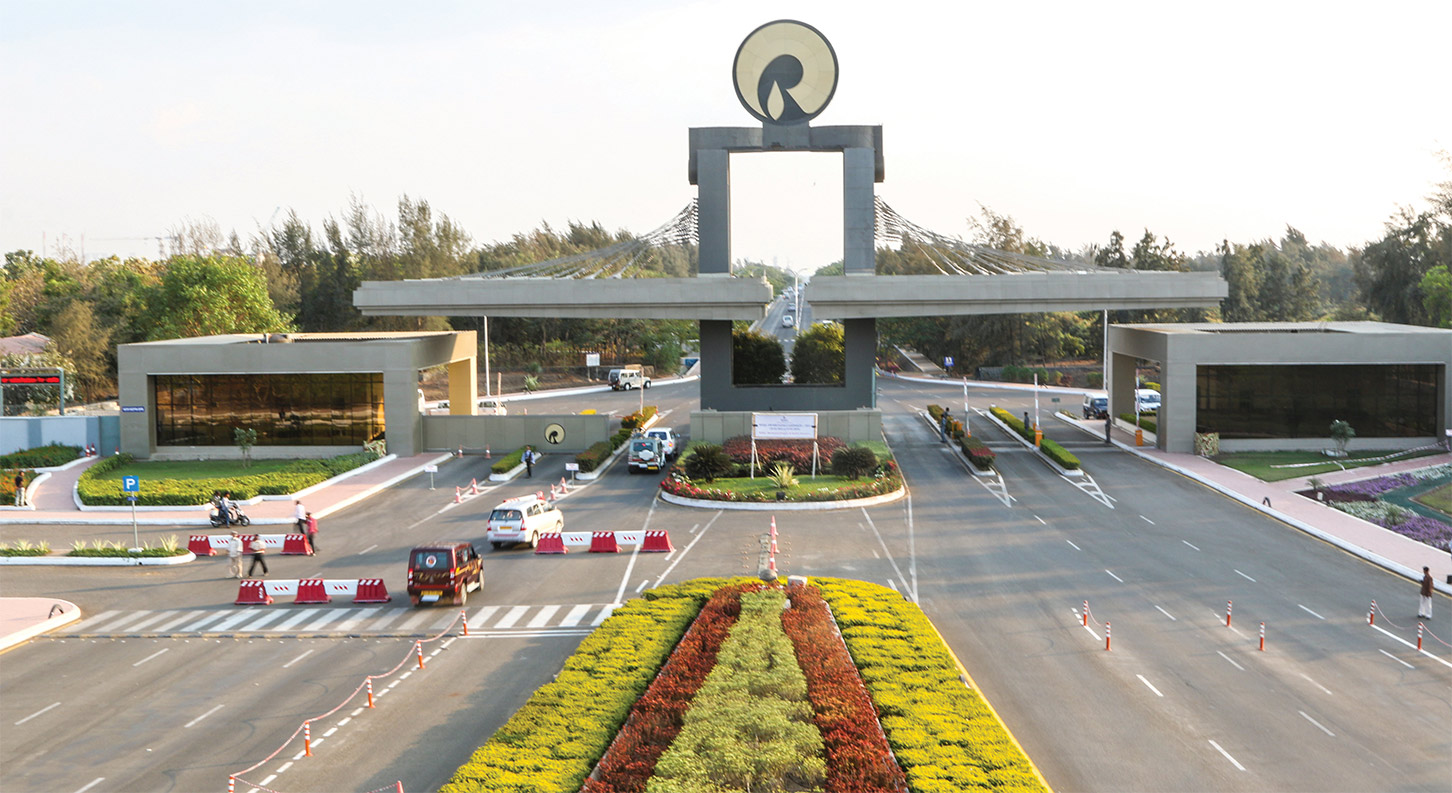
Reliance recognises the necessity to integrate and effectively manage environmental, financial and social considerations into its business decisions. A robust business strategy and sound risk management system are essential for an organisation to mitigate its economic, environmental and social risks. The Company has reached up to this scale on the strength of the 4 enablers which help the Company to sustain its growth, reinforcing Reliance's fundamental philosophy – ‘Growth is Life’. The three enablers are:
Reliance's Group Strategic Framework sets out its strategy, financial framework and risk management and establishes the goals of Reliance. It also describes the strategic intent of Reliance and the expectations and boundaries within which each of its businesses must operate and thereby providing guidance for each of the businesses - both established and emerging. The setting of clear and effective business objectives for the group is a key aspect of the system of internal control. Reliance drives growth, value, innovation and transformation in society by leveraging its existing know-how and asset base and investing in opportunities strategic to its existing businesses and those of the future.
Refer page no. 24 & 25 of Corporate Overview for a quick view into the strategic framework and outcome for Reliance.
Reliance believes in the interconnectedness of the impacts.
To enhance Reliance’s value creation and creation of a
competitive business model, the Company has adopted
the six capitals postulated as part of the International
Integrated Reporting Council’s (IIRC)
The Company's financial performance is inherently linked to its optimum usage of natural resources and healthy relationships with internal as well as external stakeholders. While RIL’s operations work towards achieving a high level of profitability, there is a great impetus on the personal and professional development of its human capital as well. The Company is incessantly working towards bringing about technological disruptions which prove to be the game changer in their individual industries. While these innovative solutions ensure fast paced growth, they also help in reducing the operational footprint. The Company ensures the efficient and optimal utilisation of its assets to gain a competitive advantage while also taking care of the communities where it operates. RIL leverages digital technology and smart manufacturing applications to create innovative solutions for business functions. The Company’s integrated approach to value creation encapsulates its commitment to a sustainable future.
The Integrated Report demonstrates RIL's continued involvement to integrate six capitals (Natural, Human, Intellectual, Manufactured, Financial and Social and Relationship) throughout the organisation and create value for the benefit of its stakeholders.
Reliance recognises that effective risk management is crucial to its continued profitability and the long-term sustainability of its businesses. The strategic aims and activities undertaken at Reliance for risk and governance are as follows:
Group Strategic Framework establishes the goals of RIL. It also describes the strategic intent of RIL and the expectations and boundaries within which each RIL business must operate.
PAWAN KUMAR KAPIL
PARAMJIT SINGH
SURINDER SAINI
"Reliance lives by its vision of creating value through sustainable measures and ensures that the ethos of environmental conservation are a part of its operational philosophy. Every location works towards minimising its environmental footprint and strives to be in harmony with the ecosystem that it operates in. RIL believes that timely and sufficient availability of natural resources is an imperative for continuity of its business operations."
Natural capital refers to the planet's stock of water, land, air, and renewable and non-renewable resources. To ensure a robust environment management system, Reliance focuses on the five areas depicted below:
RIL has instituted an Environment Policy in accordance with the principles of environmental management. RIL has constituted an ‘Environmental Compliance Review Committee’ at each manufacturing location that reviews environmental performance every quarter, with the aim to go beyond compliance. Reliance’s refinery and petrochemical units have installed and commissioned on-line analysers for monitoring emissions and discharges which are connected to PCB servers. All the manufacturing sites have adopted ‘Integrated Management System’ complying with Environment (ISO- 14001), Quality (ISO-9001) and Occupational Health and Safety Management (OHSAS-18001) Systems. As a part of capacity building, people were trained on topics such as noise and air dispersion modelling and life cycle assessment studies. To spread environmental awareness, the ‘World Environment Day’, ‘Earth Day’, ‘World Water Day’, ‘International Day for the Preservation of Ozone Layer’, among others were celebrated across sites with suitable programmes.
EMISSION REDUCTIONS THROUGH CLEAN TECHNOLOGY
RIL has taken decisive steps to improve energy efficiency in its operations, thereby reducing greenhouse gas emission. A dedicated team works relentlessly to identify and implement energy conservation initiatives, resource optimisation and renewable energy projects at all RIL’s manufacturing sites. The Company’s initiatives on clean technology, Energy efficiency and renewable energy include:
RIL has registered eight CDM projects with the United Nations Framework Convention on Climate Change (UNFCCC). These projects are related to energy efficiency, use of renewable energy and cleaner fuels. The Company has built in-house capacity to develop CDM projects and obtain the registration and issuance of the same in the form of Certified Emission Reductions (CERs) from the UNFCCC.
RIL is working towards reducing the carbon intensity of its energy mix by implementing energy and carbon reduction initiatives.
RIL regularly monitors emissions as it is a part of its environmental management plan. In addition to greenhouse gas emissions, the Company closely monitors the emissions of Total Particulate Matter (TPM), Oxides of Sulphur (SOx) and Oxides of Nitrogen (NOx). RIL has implemented various initiatives for emissions reduction in FY 2016-17.
RIL seeks to maximise water efficiency in its processes by implementing numerous water conservation initiatives. In the arid areas of Jamnagar, a substantial quantity of water required for the refinery is obtained by desalination of sea water thereby saving the fresh water resources. RIL's sites continue to make process modifications to enhance water recycling and reuse.
RIL ensures responsible disposal of waste generated by partnering with various agencies to encourage end-of-life recycling and reuse. The Environment policy at RIL encourages the manufacturing divisions to take appropriate measures to prevent environmental incidences and maximise recycle to reduce waste generated and disposed.
The waste generated is converted into a useful ‘bio-manure’ by vermi-composting method, thereby reducing the load of waste disposal. The wastewater generated from the manufacturing plants is treated and used for green-belt development, thereby minimising effluent discharge.
Reliance has implemented the catalytic hydrothermal liquefaction technology to convert waste plastics, such as HDPE, PP, PBR, SBR and natural rubber to crude oil equivalent. This has resulted in reduction of waste generation from the process.
Reliance undertakes adequate measures to prevent spills during handling and transportation of materials. The Company monitors spills at all its manufacturing divisions through an online incident reporting system. Additionally, it has a robust system to prevent operational spills. There has not been any major accident giving rise to significant spills at Reliance’s facilities since its inception.
RIL conducts environment impact assessments for all new and expansion projects and engages external experts to undertake periodic monitoring of its impacts on biodiversity. In FY 2016-17, a site specific Biodiversity Assessment study was completed at Hazira Manufacturing Division.
To promote biodiversity, more than 1.38 crore saplings have been planted across all RIL sites and other intervention areas till date. RIL has also added 5,129 acres of green belt, a contribution from all manufacturing divisions since inception.
Through a unique partnership with Ministry of Environment and Forests, Government of India and Gujarat Ecological Commission, RIL is involved in setting up the National Centre for Marine Biodiversity (NCMB) - India's first Centre of Excellence for the study of India's coastal biodiversity at Jamnagar.
In order to increase material efficiency, RIL has taken various measures such as converting waste to organic manure and biogas generation, recycling of used oil, slop oil and oily sludge, recycling of waste PET bottles in its operations and spent catalysts through authorised re-processors.
RIL’s refineries have continued to remain in top quartile performance based on Solomon’s energy intensity index. Key strengths as per Solomon study are energy efficiency, operational availability and utilised processing complexity. Operational availability is defined as the percentage of time, a unit or facility available to operate in its intended manner. Higher Utilised Processing Complexity (UPC) generally increases Gross Refining Margin (GRM). With the completion of Gasification plant, Paraxylene plant, ROGC plant and associated units, Reliance’s Jamnagar will be among the highest conversion refineries globally, with no ‘bottom-of-the-barrel’ products.
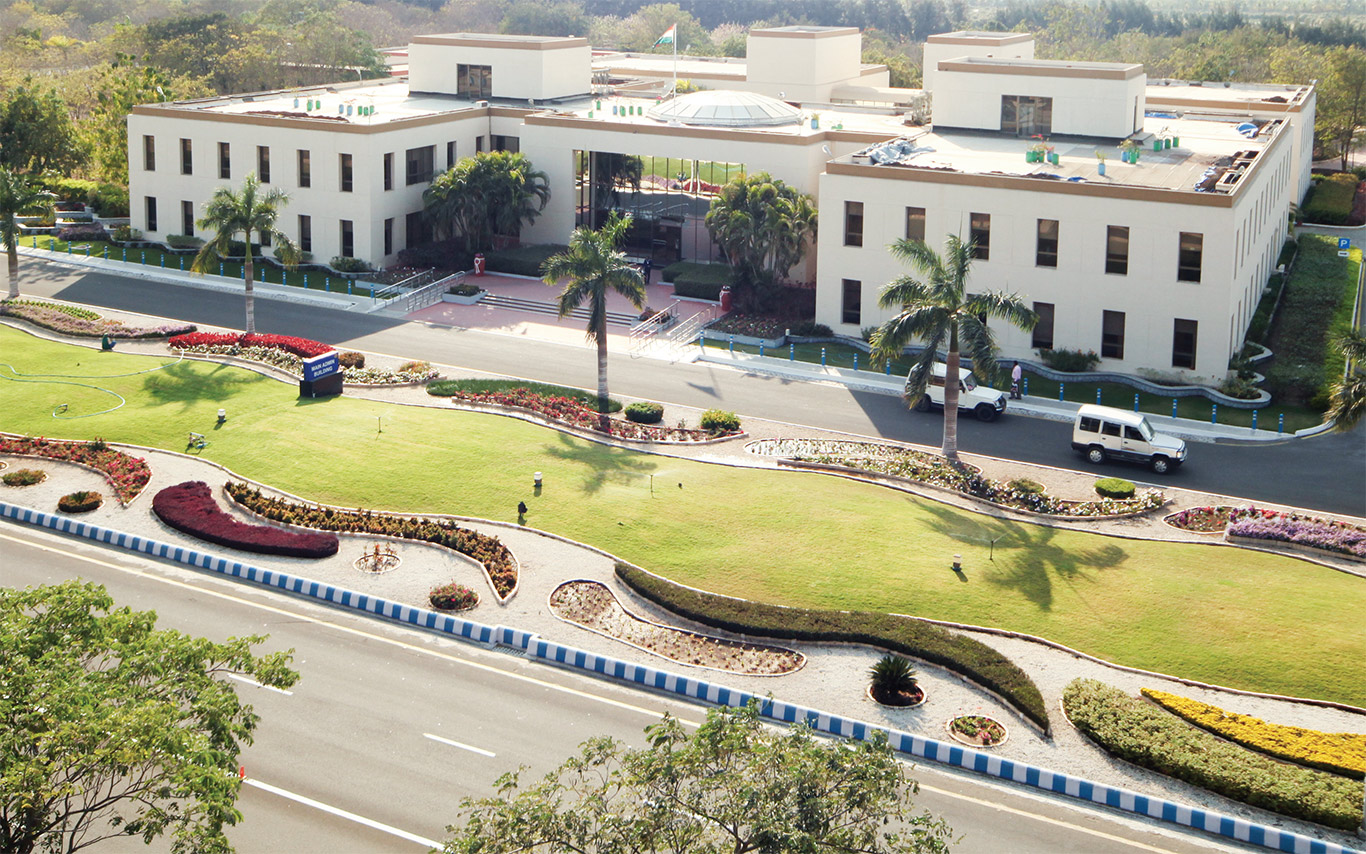
The Company's intent is to ensure minimisation of environmental impact through mitigation and offset initiatives. While positive impacts like enhanced renewable portfolio and enhanced water and waste recycling help RIL offset negative impacts, mitigation of unavoidable impacts is carried out through advanced technological interventions such as clean technologies and investment in pollution control equipment.
CONTINUOUS IMPROVEMENT OVER 5 YEARS (MANUFACTURING LOCATIONS)
HITAL R. MESWANI
ASHWANI PRASHARA
"The values and behaviours at RIL have inculcated a deeper sense of connect and engagement for its people. Reliance fosters a culture that is performance oriented, promotes rewards for results and helps its people grow. RIL’s workforce is one of the most critical resources for the Company and it is working tirelessly to foster a growth driven culture. Over the last couple of years the Company has brought about a major transformation in its approach towards human resource management through the R-HR transformation journey. The focus is on development of employees at professional and personal levels using a pioneering, integrated approach to provide world-class HR service delivery to all its employees. The Community development initiatives seek to promote equitable economic growth and ensure a more sustainable, inclusive and people centric development. RIL has enhanced its existing systems and processes to capture the overall impact on community through various media and initiatives."
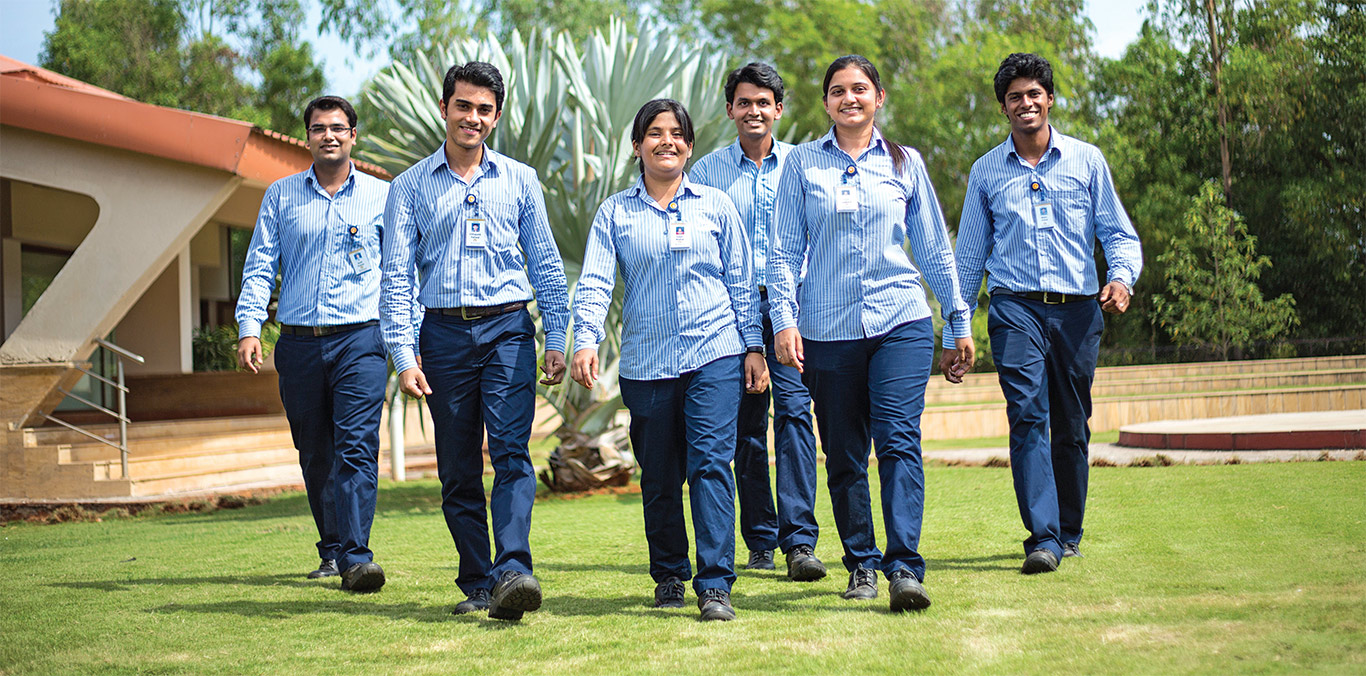
The Reliance Group is one of the biggest private sector employers in the country that has created employment for more than 1.40 lakh individuals. Through Jio, employment opportunities were created directly and indirectly for more than 50 lakh people. Reliance continues to maintain a progressive people environment, where purpose driven talent is attracted, engaged and motivated by a consistent, meritocratic HR framework.
RIL’s expansion into diversified segments requires special skill sets. RIL’s entrepreneurial culture is aimed to encourage the young generation to play a vital role in the organisation's growth.
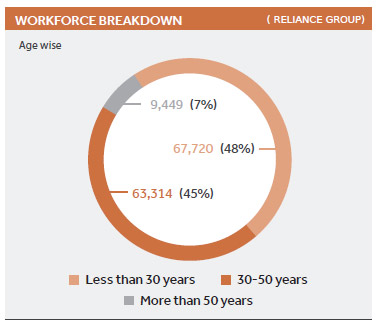
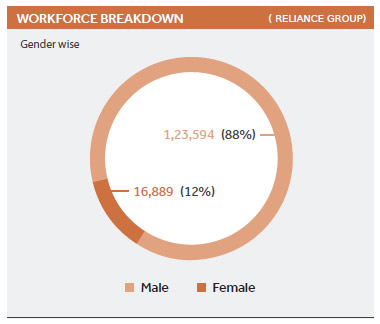
RIL nurtures its people by placing great emphasis on learning and development, career progression and employee welfare. In its journey to become a learning organisation, Reliance has been immensely focused on developing individual and organisational learning agility. The organisation has taken big steps to focus its learning investment on developing the technical, functional and leadership capabilities needed to drive future business growth. Reliance has taken big strides in enhancing accessibility of training programmes and maximising organisational performance through business aligned investments, enhancing connectedness and automation. Through R-University, Reliance has accredited 13 academies and streamlined governance through Group Learning Council, Reliance University Council and Academy Council.
The Company continues to develop top talent from its people by ensuring easy access to innovative and relevant learning. A key pillar of the learning strategy at Reliance is the democratisation, digitisation and fostering of a learning culture. Reliance strengthened the collaborative learning culture by inculcating next generation Social Media technologies. RIL launched the Digital J3, a device agnostic Video and Text blogging platform, for employees to record and share their learning experience, ask questions, and start discussions with peers across Reliance. Over 23,000 employees used the various social learning platforms, viewed more than 5.5 lakh pages, and created 171 video blogs and more than 500 text blogs.
Reliance aims to nurture talent and potential leaders at all levels of career development to provide a robust pipeline of new age leaders for tomorrow. For the FY 2016-17, 16 senior leaders have been identified for the step up program to shoulder larger roles at group leadership levels.
Additionally, FY 2016-17 witnessed the successful launch of second edition of the flagship Career Acceleration Program (CAP) which identifies and develops young talented professionals with a high potential. Of the 46 participants of CAP 2016 batch, 21 have been given the platform to progress their careers either through promotions or job enhancements.
In FY 2016-17, Reliance imparted 76+ lakh man-hours of training to its people across the group. Other than permanent employees, contract staff were also covered through various training programs.
The strategic learning partnerships with professional organisations like Skillsoft, Corporate Executive Board, among others and with renowned business thinkers like Josh Bersin and Gary Hamel have provided its employees access to worldclass opportunities to learn and enhance their professional and personal skills.
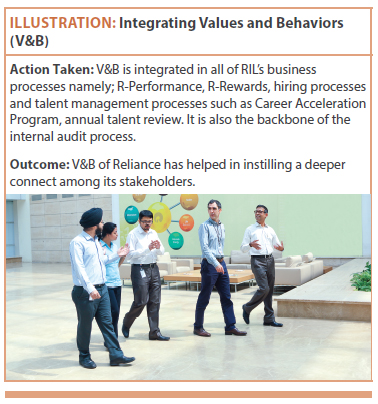
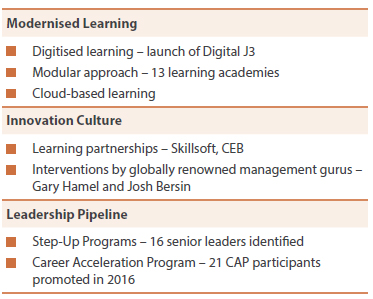
In FY 2016-17, a GST Awareness Campaign was driven through the social learning platform and was provided to 19000+ employees, to build knowledge around Goods and Services Tax and how it impacts citizens of India and the businesses at Reliance.
To encourage employees to experience broad range of learning modes, Reliance launched a culture building initiative called SPECTRUM covering 18000+ employees which manifested in the organisation witnessing a significant increase in learning hours contributed by the digital channel.
Reliance has sown the seeds for Player – Coach Culture by initiation of INSPIRE program. The program has leaders across the organisation coming forward to teach, share experiences, mentor and coach the new generation to exhibit their commitment towards learning.
As part of its Learning Strategy, Reliance is now focused on enabling full cycle/self-paced/ongoing capability development through anytime, anywhere access to personalised, on-demand learning resources. One of the key focus areas for Reliance is to enable self-driven career management and dynamic development needs identification (independent of organisation structure) followed by driving in-role excellence and enabling self-review of desired vs existing state using a comprehensive talent construct encompassing capabilities, qualifications, experiences, traits and drivers.
Reliance is making significant progress in Learning Analytics and Evaluation to gather specific insights from integrated systems to enable a seamless learning experience for the learner and the learning management for the organisation.
Reliance recognises and respects different cultures, national origin, race, religion and sexual orientation. Reliance focuses on three aspects of diversity: gender diversity, multigenerational diversity and inclusivity.
The Company promotes equal opportunity for all its employees and employs people from 21 nationalities including 95 foreign nationals in the leadership team. Employee strength as on 31st March, 2017 for RIL is 24,167 which includes 1,226 female employees. RIL supports and creates awareness on employing differently abled employees. The total number of permanent employees with disabilities as on 31st March 2017 was 71.
Reliance is committed to building a system that encourages the development of future leaders from within the folds of the Company. Dedicated to special needs of women in the workforce, the Company has laid emphasis on implementing next-generation policies like 6 month’s maternity leave followed by 6 month’s part-time working to help new mothers balance child-care priorities with work. RIL has undertaken pro-active measures such as 24x7 toll-free helpline for women, reserved parking for expectant mothers, self-defense workshop among others. R-Aadya is a common platform for women employees to connect, converse and collaborate. The program is designed to give them opportunities through its 4 pillars which include providing mentorship conversations, leadership interactions, forums and conferences and trainings and workshops (Classroom and E-learnings).
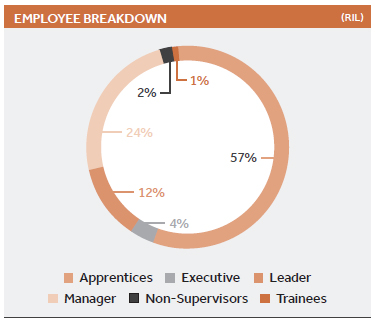
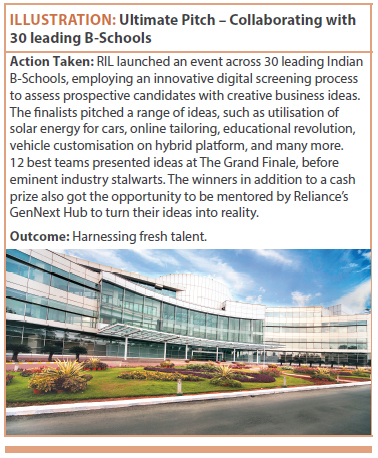
Reliance's state of the art facilities provide a healthy working environment for its employees. Periodic medical examinations are carried out for all the employees and their spouses. Health score is generated through Health Management System (HMS) for each individual. Round the clock emergency medical services are provided to all Reliance employees and their family members across the country through strategic tie–ups with multi-specialty hospitals. Occupational Health Centres (OHC) located at each of the manufacturing locations and corporate office offers preventive, promotive, curative and rehabilitative health services.
"Reliance Employee and Family Emergency Response Services (REFERS)" offers round-the-clock assistance in case of any medical, accident, fire and security exigencies to employees and their family. "R-Swasthya", creates a culture where its employees choose to live healthier lifestyles. Reliance promotes wellness culture among employees and family members. It organises Good Health and Health improvement awards across all its locations. JioHealthHub, an IT-enabled platform, simplifies management of health records by enabling the users to upload medical data and maintain a medical profile. Additionally, RIL owns web based Health Management System (HMS), which is a robust databank containing health records of all the employees.
Task Based Health Risk Assessment (TBHRA) is a unique program which has given focused approach to evaluate the effect of occupational hazards on individuals specific to their tasks and also provide exposure data linked to each employee or group of employees during medical surveillance. The Company undertook an ambitious work life balance (mental health program) Project "WISH" across all locations with a focus on emotional health.
RIL started the 'Change Agents for Safety Health and Environment' (CASHe) programme more than a decade ago. Over the years, the CASHe programme has evolved into a movement encompassing the entire enterprise with thousands of improvement projects. The programme has been instrumental in creating a culture of implementing health, safety and environment projects on a priority basis. The program has helped in reducing Health and Safety risks across the Company and over 1500 projects have been identified and control measures implemented till date.
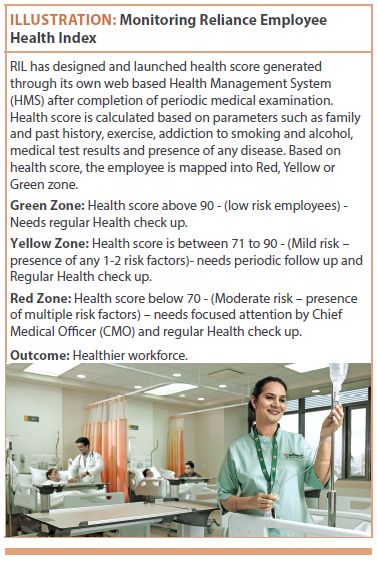
The Company's OHCs are equipped with state-of-the-art diagnostic and therapeutic equipment. They are recognised by highly reputed agencies including the Joint Commission International (JCI), National Accreditation Board for Hospitals, and National Accreditation Board for Laboratories (NABL) among others.
Reliance has achieved the first Platinum healthy workplaces award from the Arogya World India Trust in collaboration with Public Health Foundation of India.
During the FY 2016-17, RIL invested `367.4 crores on HSE initiatives.
The Company’s commitment towards providing a healthy and safe work environment to its employees, contractors, and all the visitors forms the foundation of its safety processes. Reliance’s ultimate goal is to establish a zero accident work environment. A fully equipped and well-qualified HSE organisation is in place at all locations providing necessary governance, documentation and HSE assurance. To support its HSE organisation, Reliance is supported by a Centre of Excellence at the Corporate, which brings in subject matter expertise in various fields of HSE, apart from governance. RIL has implemented ‘Learning from Incidents’ across its sites to interpret incidents and make improvements in the existing practices. A team of qualified specialists provides recommendations and the action plan is monitored through a comprehensive and robust tracking system to ensure complete adoptability of the plan. Delivering safe, compliant and reliable operations leads to a sustainable competitive advantage.
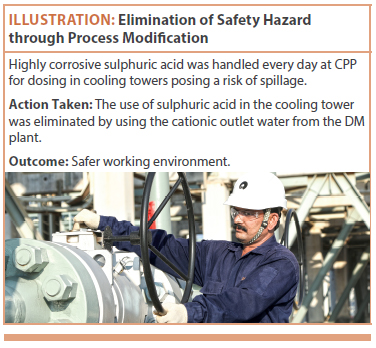
The Company’s Code of Conduct ensures that all its employees, suppliers and vendors are required to respect human rights of not only each other, but also of the community in which it operates. As RIL grows, it needs to ensure that ethics and compliance remain the foundation of its business practices. RIL has instituted a set of policies, codes, and guidelines to govern its employees. This mechanism includes directors, senior executives, officers, employees (whether permanent, fixedterm or temporary), and third parties including suppliers and business partners associated with RIL. The well-defined policy lists tenets on ethical business conduct, definitions and the framework for reporting concerns.
An Ethics and Compliance Task Force has been established which oversees and monitors implementation of ethical business practices within Reliance. It comprises of the Reliance Group Head of HR, General Counsel, Group Controller and Group Company Secretary. The Company has various grievance redressal channels to deal with issues related to ethics and noncompliance.
All the Company’s units maintain 100% compliance with local and national laws, regarding ethics and human rights. Reliance also takes into account global standards and strives to comply with all global norms on human rights, including the principles outlined in the United Nation’s Universal Declaration of Human Rights. RIL has formed Internal Complaints Committees at all of its operational locations where employees can register their complaints against sexual harassment. This is supported by the Anti-Sexual Harassment Policy which ensures a free and fair enquiry process with clear timelines for resolution. All employees are sensitised on these topics through structured training programmes. No cases of child labour, forced labour, involuntary labour, sexual harassment and discriminatory employment were reported during the period.
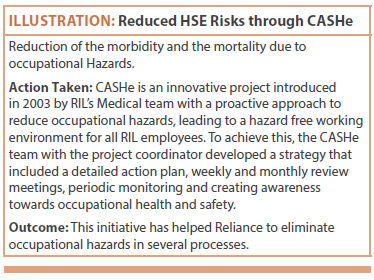
The Company has recognised employee unions and associations at various sites, which encourage the employees to participate freely in constructive dialogue with the management. Almost 100% of its non-supervisory permanent employees at its manufacturing locations are covered under the collective bargaining agreements with trade unions which also comply with the local and national laws.
Leadership behavioural change begins with a clear definition of what is expected from RIL's leaders. RIL has a defined Leadership Expectations (LEs) framework applicable to all senior level and group level leaders. LEs serve as a consistent guiding compass in how RIL operates, how it leads effectively, how it makes decisions and what it judges to be important. A shift in the profile of RIL's leaders is taking place, as it progresses on embedding LEs. Reliance is working on creating awareness about Leadership Expectations through R-Radio interviews and blogs of leaders in which they share about their own personal experiences on four different components of Leadership Expectations i.e. Act Decisively, Deliver Results, Value Expertise and Inspire People. RIL is also conducting targeted workshops to create role models at leadership levels. RIL's new behavioural learning interventions under “The Learning Curve” and leadership development programs are based on its Leadership Expectations framework.
Leadership connect with employees through multiple channels like Leadership Talk, webcasts, governance meetings. R-VOICE is a fully confidential employee feedback survey to gain actionable insights into making the Company a great place to work. It is a platform to understand the employee sentiment on leadership support, manager support, work environment, and performance and benefits. As a result, Reliance’s Leadership Support score in the survey has increased to 84% which is 9% points above global benchmark. The engagement scores have shown a steady improvement in the last 3 years with highest improvement observed in leadership support scores in the areas of vision communication and leadership trust. Peer recognition programme – “R-Sammaan” encourages individuals to acknowledge the contributions from their colleagues. Large scale events such as ‘Bring Your Family to Work’ week and ‘Reliance Founder’s Day’ are lasting memories for its employees. Business Today recognised Reliance as one of the top 25 best companies to work in India. Reliance is moving away from the ‘structured workspace’ concept and fast embracing a collaborative and inclusive open office concept, for which RIL has won the Herman Miller-REACH award in 2016.
In pursuit of excellence, RIL has defined world-class HR practices through its R-HR Transformation journey. Reliance has transformed as an organisation in terms of its policies, processes and systems. FY 2016-17 evidenced the first year of operations post RIL's HR Transformation initiatives where-in it continued to improve, streamline and integrate its processes while embarking on a journey of digitisation and automation. At RIL, autonomous, self-sufficient teams were created for handling responsibility for specific business outcomes to drive employee empowerment and smooth decision making. This inculcated a culture of meritocracy, transparency, empowerment and entrepreneurship across the organisation.
HR Platform is a pioneering HR service which leverages microservices architecture to provide seamless and real-time delivery and resolution of business requirements.
Human Resources – Governance, Integration, Risk and Assurance Team, focusses on strategically driving key people-focused transformational initiatives across Reliance. It establishes governance and related management assurance processes. It facilitates in adoption of progressive HR policies and institutionalising governance meetings – from team level to the highest governing body.
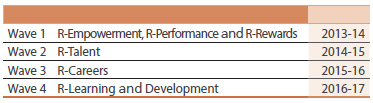
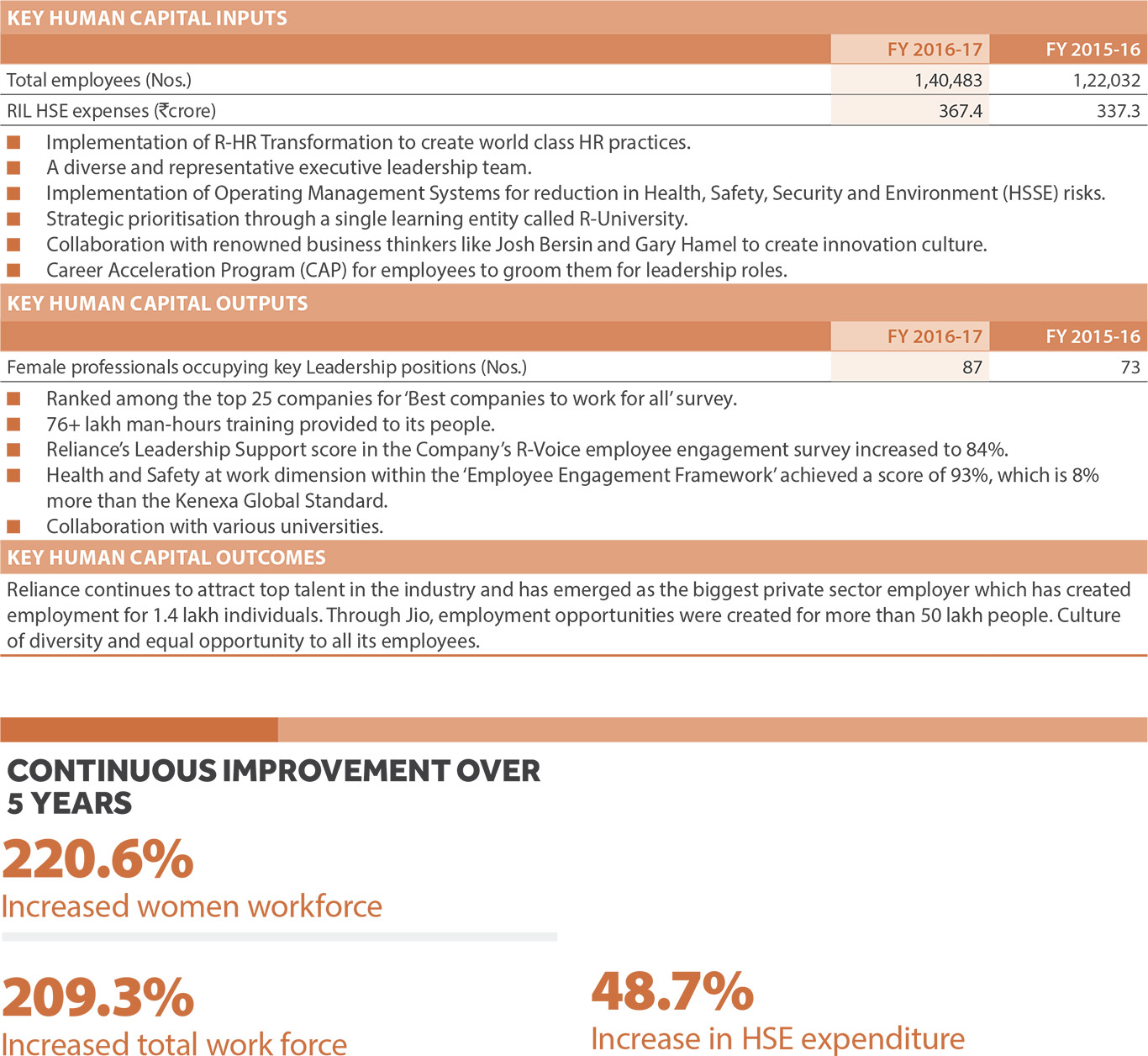
HITAL R. MESWANI
AJIT SAPRE
DR. J. V. KELKAR
GERARD DENAZELLE
SUKETU VAKIL
"RIL has leveraged its competitive advantage emanating from its world class assets at its operations. RIL’s transition from a smart buyer of technology to a fast customiser of technology and a flagship developer through largely inhouse developed technology has helped the Company create significant value. A strong focus on development of novel and proprietary technological progressions have prodded RIL on a path of accelerated growth and improved profitability."
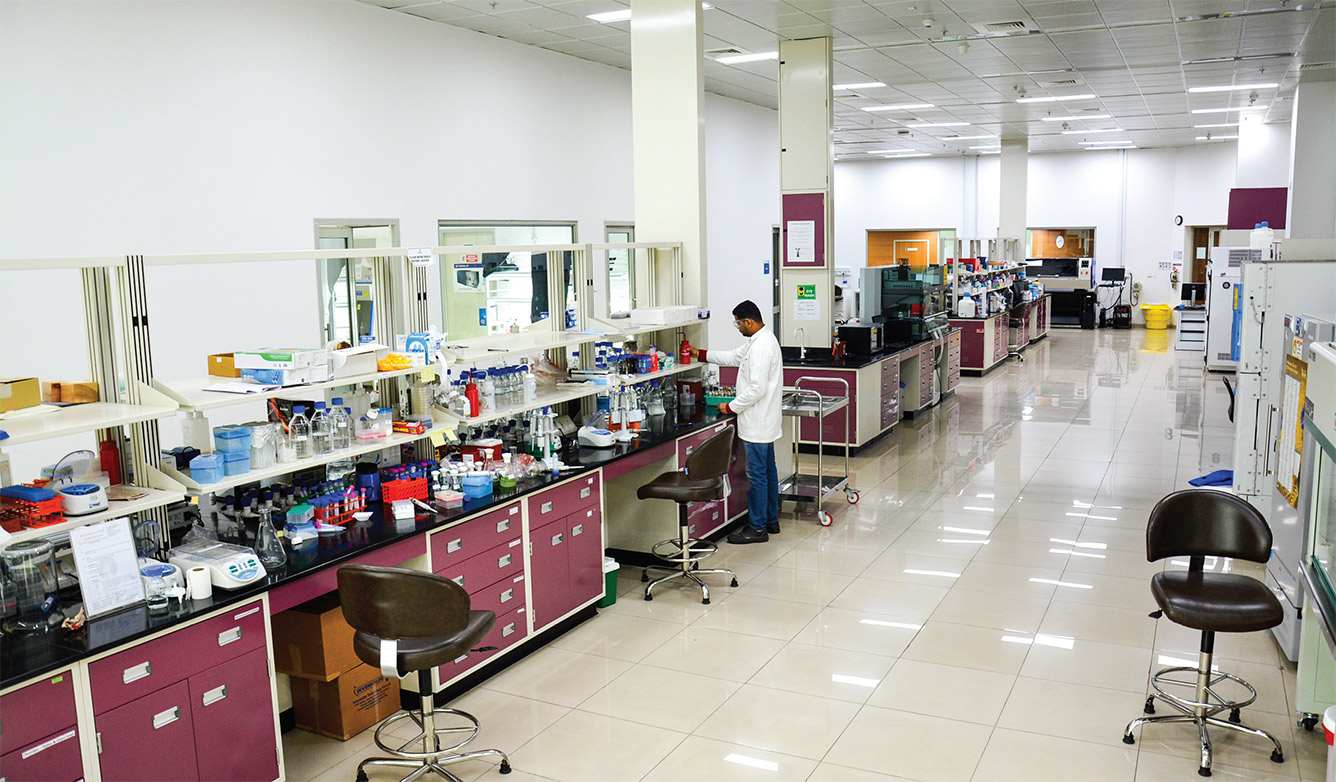
R&D MEGA TRENDS
There is an increasing focus on renewables and a low carbon economy. The demand for advance materials is increasing and the commodity chemicals are giving way to high performance specialty polymers and chemicals. It is evident that intelligent nano materials and bio materials will transform the society. Digitisation and advance analytics will enable maximisation of value from existing operations.
RIL shall develop innovative products, processes and catalysts to increase and sustain the profitability and growth of Reliance in a compliant, safe and reliable manner. To achieve this mission, RIL has transitioned from a smart buyer of technology to a fast customiser of technology and a flagship developer through largely in-house developed technology that creates a significant value. R&D enables the innovation based growth agenda for Reliance.
R&D is governed and operated by a well-defined set of teams, viz., Strategic teams, Leadership teams and Functional excellence teams.
The R&D function at Reliance has two distinct themes
The entire R&D organisation enthusiastically embraces Reliance’s Values, Behaviors and Code of Conduct. Risk management is an integral component of the strategic framework. R&D has also implemented initiatives such as New Product Development and Introduction (NPDI), Stage-Gate, Electronic lab notebook etc. to formally manage innovation.
Some of the focus areas in the Company’s breakthrough R&D are as mentioned below:
BIOFUELS AND BIOCHEMICALS (ALGAE TO OIL):
Through its Algae to Oil initiative that converts sun’s energy & CO2 to Hydrocarbons, RIL is exploring multidisciplinary biology and engineering scientific streams in order to create a safe and sustainable source of biofuels, biochemicals and nutritional products. RIL has developed some of the world’s most innovative algae cultivation systems, which the Company is using for its path-breaking research. Algae bio-crude would not only help reduce India’s dependence on energy import, but also fortify the rural economy by creating jobs. Demonstration facilities have been commissioned in both open pond and photo-bioreactor (PBR) systems at RIL's world-class algae development and demonstration facility near Jamnagar.
RIL has set a landmark in biofuels industry by commissioning the world’s largest Hydrothermal Liquefaction (HTL) demonstration unit at R&D Biofuels site at Gagwa.
BIODIESEL (JATROPHA)
RIL has made significant progress in the development of high yielding Jatropha hybrids. The hybrids will be ready for field testing in the subsequent year. RIL is also partnering with global leaders in hybrid development and evaluation with an objective of setting together best technology available worldwide. If the technology development is successful, it will help create a resource to enable production of biodiesel, helping address energy security needs for India.
FUEL CELL
Work is underway to develop Polymer Electrolyte Membrane (PEM) fuel cell. RIL is the sole industry partner in the New Millennium Indian Technology Leadership Initiative (NMITLI) project with the Council of Scientific and Industrial Research (CSIR) on indigenous PEM fuel cell technology development.
A 3 kilowatt electric capacity fuel cell has been successfully demonstrated. Based on this technology, a complete fuel cell based system prototype, meeting the technical and cost targets, is being developed and tested in field applications for eventual deployment.
COAL BED METHANE (CBM)
Work is underway to develop a technology to produce methane from underground coal reserves which will help to increase production of coal-bed methane. The Bio CBM process is targeted at converting unminable coal to methane, a fuel that can improve our country’s energy security. The unminable coal, if not redeemed for its value in the form of methane production, would be a waste of natural resources.
Various simulation studies have been undertaken to understand the effect of coal field parameters. Commercially viable productivity of methane has been demonstrated in the lab scale using a nutrient rich medium. Further optimisation to bring down the cost is underway.
Reliance has emerged as a world class developer of new and sustainable technologies in alignment with global mega trends with its R&D Group leading the way. Some of the key initiatives in this direction are as mentioned below:
POLYPROPYLENE (PP) GRADES USING RELIANCE PROPRIETARY IN HOUSE DEVELOPED CATALYST TECHNOLOGY
RIL has achieved the development and commercialisation of RIL proprietary precursor RELSTM and catalyst RELCATTM for polymerisation of propylene to produce different grades of PP required for different market sectors in record time. The development is protected with more than 40 patents filed and granted globally.
This in-house technology development has placed RIL and India in the global league of catalyst technology owners.
VALUE ADDITION TO REFINERY SULPHUR
RIL has developed an innovative sulphur based fertiliser RelFarmS that is more efficient in crop yield compared to conventional sulphur fertilisers and can effectively remediate sodic soils making them usable for agriculture. RIL has developed a proprietary sulphur based additive “RelBitS” for producing sulphur extend asphalt for road pavement application. Replacement of 20-30% of bitumen with RelBitS helps to improve the quality of a road in terms of mechanical strength, corrosion and water resistance, marshal stability, fatigue, resilient modulus etc.
MULTI ZONE CATALYTIC CRACKING (MCC) PROCESS
MCC is a new process developed for direct cracking of crude along with other distress streams for maximising propylene, ethylene and Benzene, Toluene and Xylene (BTX) yields. This technology combines several processes in a single riser platform which is unique and first time in the world, leading to reduction in cost of production of olefins. MCC technology development demonstrates the fundamental transformation of RIL from technology in-licensor to flagship developer of world class refining technologies. RIL has been granted patents in USA, Australia and Singapore.
ENHANCED PROPYLENE RECOVERY TECHNOLOGY (EPR) IN FLUIDISED CATALYTIC CRACKING (FCC)
RIL has developed and implemented an innovative and unique process which has enhanced recovery of propylene and LPG from the fuel gas at minimal additional operating cost. The EPR process can be implemented in both existing as well as grass-root FCC units, particularly in high capacity and high severity units. The process has been patented worldwide and has received multiple awards namely Petrofed, International Chamber of Commerce (ICC), and Indian Institute of Chemical Engineers (IIChe).
R&D at RIL gives a lot of emphasis on HSE, few examples of R&D initiatives focusing on HSE are mentioned below:
A. RIL’S LOW COST CO2 CAPTURE PROCESS
Capturing industrial CO2 emissions is a key to sustainability and environmental protection. RIL has developed an innovative fluid bed process that can capture CO2 from flue gas and other industrial emissions at a 70% lower operating cost than existing amine systems. This technology makes it practical to produce chemicals from CO2 and also provides feedstock for biological systems such as algae based products.
B. REPLACEMENT OF ASBESTOS FIBRE IN CEMENT ROOF SHEET PRODUCT BY USING SHORTCUT POLYESTER FIBRE
Asbestos is a naturally occurring mineral found in underground rock formations. Mining of Asbestos in banned in India due to accompanying health hazards, but its usage is not. Thus, the industry depends on 100% imports. RIL is working on replacement of Asbestos fiber in cement roofing sheets which are used for sheds and poor people’s huts, with the application of cost effective new engineered Recron® 3s fibers. They also have a better affinity with cement and improves the working performance.
Till date, 30% Asbestos fiber replacement is proved successfully and further research is being carried out to develop the product for replacement of 100% Asbestos. This project will reduce the overall imports of the Asbestos in the country.
R&D REFINING
The key focus areas for R&D in Refining domain are coking, hydro processing, Fluidised Catalytic Cracking (FCC), reforming, crude processing, reliability improvement and process optimisation, based on molecular level characterisation and models. The Company is also venturing into new areas like biomass gasification, value addition/utilisation of refinery byproduct sulphur and nanotechnology-based applications besides conventional refining areas. The Company is also looking into areas like syngas conversion to chemicals and value addition of refinery by-product streams like metal recovery from slate.
R&D PETROCHEMICALS
Reliance Petrochemicals R&D supports aromatic complexes, olefin crackers, polymers, fibre intermediates, LAB, polyester and effluent treatment. The focus areas include:
ADVANCE PROCESS CONTROL (APC) & REAL TIME OPTIMISATION (RTO)
At Reliance, there is a strong focus on improving and optimising process units continuously by minimising process variations, increasing unit throughput, optimsing yield and minimising utility consumption through APC and RTO applications. With a strong APC/RTO team, which does in-house implementation (from concept to commissioning) and maintenance, RIL ensures improved stability, reliability and profitability of the process units in a sustainable manner. RIL has close to 200 APC/RTO applications running continuously in 66 different units of Refinery, Petrochemical and Polymer plants optimising and utilising assets to the full potential.
R&D JIO
Jio envisages to usher in the era of "visuality", where video will replace voice as the new communication medium. It is future ready and can be upgraded as technologies advance to 5G, 6G and beyond. Jio has so far filed 54 global patents.
INFRASTRUCTURE
The state-of-the-art R&D department, headquartered in Navi Mumbai, is supported by regional R&D centres spread across India. The Company’s R&D centres are among the best equipped in the country for conducting high end interdisciplinary research.
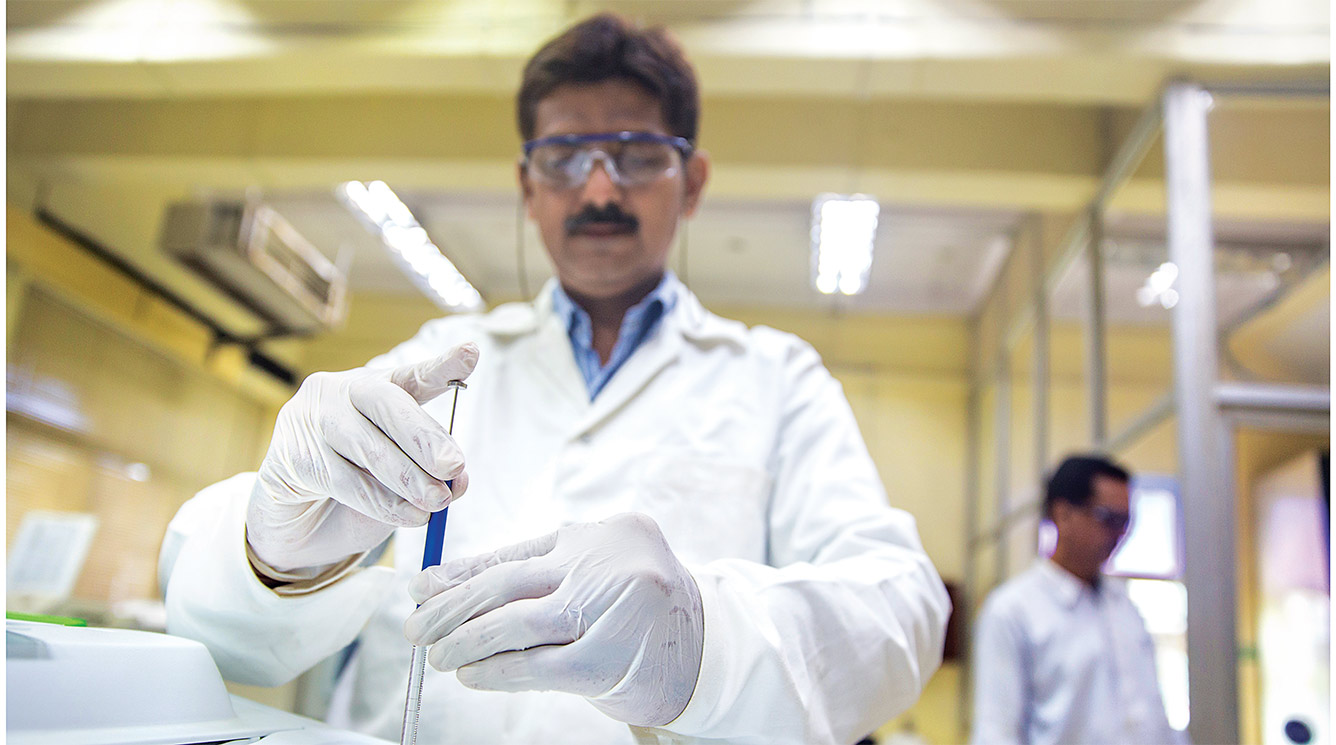
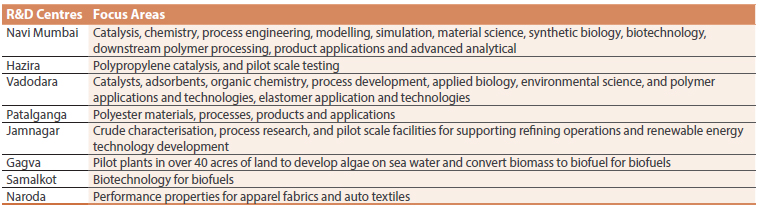
COLLABORATION
Reliance continues to actively collaborate with various reputed institutes/partners in India and overseas. Some of Reliance’s prominent collaborators are: University of Helsinki (Finland), Pacific Northwest National Laboratory, ICGEB(New Delhi), Bharathidasan University, Ruia college, Ghent University (Belgium), Monash University (Australia), KAUST (Saudi Arabia), NUS (Singapore), KIER (South Korea), Ben-Gurion University of the Negev (Israel), IIP Dehradun, IIT Mumbai, IIT Kharagpur, IIT Chennai, NCL Pune, Florida State University, University of Massachusetts Amherst, University of Delaware, Penn State University, Kansas State University, University of Alabama, Stanford University and Massachusetts Institute of Technology among others.
R&D PERSONNEL
RIL runs initiatives and campus recruitment drives across universities and colleges to attract fresh talent and the next generations of engineers and scientists. To support RIL’s research and development activity, RIL has a highly talented pool of 900+ scientists, technologists and engineers from reputed Indian and international institutes, few of them are listed below:
Some of these scientists are having membership or fellowship in reputed bodies viz. IIChe, NBRI & FANE among others.
INTERNAL CROWD SOURCING
The R&D Social platform enables the researchers to blog their ideas and seek feedback from an internal community similar to social networking exploiting efficient digital technology platforms.
Reliance has emerged as an active patent filer in recent years. The company is continuing its efforts towards building a cohesive, comprehensive and business-aligned patent portfolio. In FY 2016-17, a total of 60 patents were granted to Reliance. Reliance has qualified in the Asia IP Elite, a selected club featuring companies from Asia Pacific region which emphasise on integrating intellectual property with commercial decision making. This recognition has been granted by the publisher of "Intellectual Asset Management", a leading Europe-based bi-monthly magazine.
R&D is continuously developing and implementing fit-forpurpose management systems, work processes and tools for achieving technical excellence. It also aims to create a high performance environment for people to innovate and contribute towards organisation & individual growth. Few of the examples of digitisation and process centric initiatives are mentioned below:
A) NEW PRODUCT DEVELOPMENT & INTRODUCTION (NPDI)
RIL has implemented a SAP based tool to manage R&D projects using a structured stage gate based methodology. This is an end to end digital process chain from "Concept to Commercialisation".
B) ELECTRONIC LABORATORY NOTEBOOK (ELN)
RIL has implemented best in class Electronic Laboratory Notebook (ELN) which is seamlessly integrated with Laboratory Information Management System (LIMS) as part of R&D digitisation initiatives to establish a robust and reliable laboratory execution systems. ELN user interface is entirely flexible and can be tailored by creating experiment templates that allow the scientist to easily enter information as well as directly capture results from interfaced analytical instruments and barcode systems for sample lifecycle management.
C) INTELLECTUAL PROPERTY MANAGEMENT SYSTEM (IPMS)
R&D at RIL has implemented an enterprise wide Intellectual Property Portfolio Management application from product leaders “Thomson Reuters” for centralisation of patent filing which enables focused patent filing to build a strong patent portfolio. It helps in having a centralised repository for various stakeholders input/decision, simplifying patent maintenance and audit of patents.
At Reliance, innovation is a way of life that allows the Company to create real, sustainable value for all its stakeholders. Reliance considers innovation from an organisational point of view – not just from a product, process or R&D point of view.
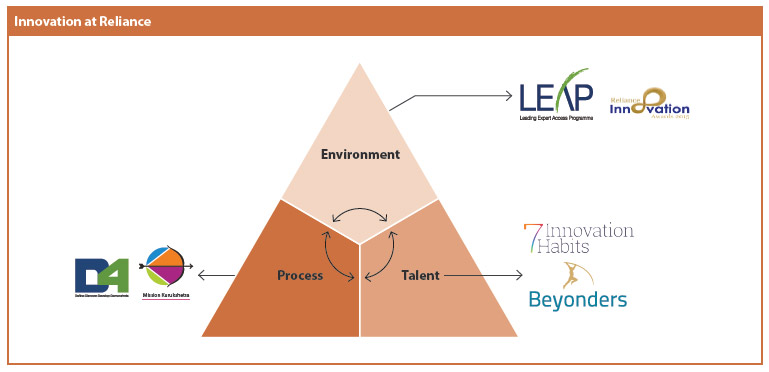
The Reliance Innovation Council (RIC) is a unique corporate entity that was established in 2008. These global thought leaders and iconic personalities fold the future in and lay out an innovation agenda for the organisation.
Mr. Mukesh D. Ambani, Chairman and Managing Director of Reliance, is also an RIC member. Besides being on many prestigious boards, he was recently elected a Foreign Member of the prestigious US National Academy of Engineering.
Dr. Raghunath A. Mashelkar is the Chairman of the RIC, an eminent scientist and the President of Global Research Alliance.
For his various contributions to India, he has been honoured with Padma Vibhushan, the second highest civilian honour bestowed in India.
Prof. George M. Whitesides is a Professor at Harvard University and among the world’s foremost chemist. He is also a co-founder of companies with a combined market capitalisation of over US$30 billion.
Prof. Jean-Marie Lehn is a professor at the College de France in Paris, who was awarded the Nobel Prize in Chemistry in 1987 for his studies on the chemical basis of ‘molecular recognition’.
Over the years his work has led to the definition of a new field of chemistry.
Prof. Robert Grubbs is a professor at Caltech, and received the 2005 Nobel Prize in Chemistry for his work in the field of olefin metathesis.
Dr. William A. Haseltine is chairman of Haseltine Global Health LLC, a virtual pharmaceutical company. He is also well-known for his pioneering work in cancer and HIV/AIDS.
Prof. Gary Hamel is one of the world’s most influential business
thinkers and renowned business strategy expert.
Follow Reliance Innovation on Twitter: @RILInnovation
The Reliance Innovation Leadership Centre (RIL-C) was set up to serve the innovation vision of the Company. RIL-C and the Company’s leadership implement Reliance’s innovation agenda by deploying the best and next innovation practices.
HITAL R. MESWANI
PAWAN KUMAR KAPIL
B NARAYAN
PARAMJIT SINGH
SURINDER SAINI

DEEPAK DATTA
RAVINDER BATRA
A. SRINAGESH
MANOJ CHOUTHAI
"Every day, advances in manufacturing technologies make factories smarter, safer and more environmentally sustainable. At RIL, Reliance Management System is the key to realise the Company’s strategic goals and targets in the areas of Reliability and Enterprise Asset Management.
Reliance leverages digital technology in the area of advanced analytics to create innovative solutions for value added business functions. Its investment in mega projects and extremely diverse and complex supply chain ensure improved energy efficiency and reduced operating and maintenance cost."
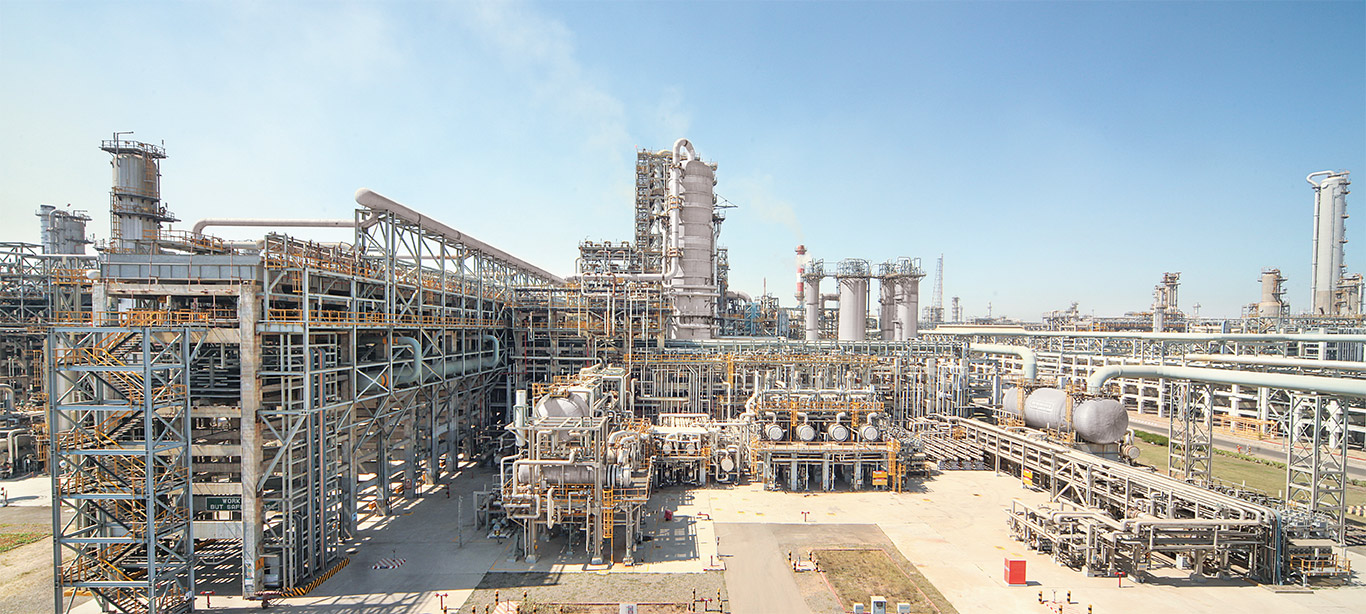
RIL is a forerunner in the oil and gas industry for adopting stateof- the-art technologies and smart manufacturing processes in its value chain. Smart manufacturing comprises of intelligent analysis of real time data and tracking of various operating processes. Smart manufacturing technology also aids the Company to improve its performance in terms of integrity, reliability and effectiveness of business operations.
With the availability of vast amount of operation data and big data technologies, RIL initiated the development and implementation of Industrial Internet of things (IIoT) based solutions for realisation of “last mile” of optimisation across its manufacturing facilities. These are targeted through continuous and strategic improvement initiatives.
RIL leverages Smart manufacturing technology including:
1. Use of robotics for high risk jobs such as catalyst loading in
inert atmosphere
2. Use of drones for inspection of inaccessible positions such
as flare tips
3. Development and implementation of smart pressure
testing using intrinsically safe wireless, Highway
Addressable Remote Transducer (HART) communication
protocol. This smart monitoring of pressure testing
eliminates exposure risk in addition to the improvement of
the operational efficiency
4. Implementation of new technologies in Rotary/Inspection
and corrosion monitoring:
5. Development and implementation of IIoT based advanced predictive analytics solution to predict the future state of manufacturing viz. equipment, process health to take corrective/preventive actions for any future performance deterioration
At RIL, Smart manufacturing is known as RIL Secured Connected System (RILSCS). This is based on Real Time Insight into operations by Learning through advanced analytics to predict the future state established on the foundation of securely connected sensors and systems. The principles of RIL SCS are described in the adjacent diagram:
RIL is also developing a partner ecosystem to successfully implement smart manufacturing solutions. This includes the support of infrastructure available through RIL’s Jio network and Jio cloud. With this initiative, RIL not only optimises its own processes, but also contributes towards the inclusion of other small scale industries (SMEs) in the journey.
RIL's Jamnagar refineries are amongst the largest and most complex refining assets globally, with a Nelson Complexity Index of 12.7. Superior configuration of refineries provides following benefits to meet product specifications:
RIL has implemented several initiatives focusing on debottlenecking, capacity enhancement and yield improvement to enhance its competitive strength.
At Reliance Industries Limited (RIL), the IT function collaborates and partners with the business and functions in their quest for operational reliability, safety, innovation and co-creation of value and resilience. In the last 5 years, IT has transformed itself from a traditional service delivery unit to a trusted partner that systematically co-creates value with the business while driving continuous identification and adoption of game-changing and value-adding technologies.
The various IT processes are grouped into five high level
building blocks to cover the key activities of the function:
1. Perform IT Strategy/Planning
2. Manage Architecture & Design
3. Develop & Deliver IT Solutions
4. Run and Operate IT Infrastructure, Networks & Applications
5. Manage IT function
Together, these processes enable the IT function at RIL to aggressively automate and digitise processes that enable the RIL Business and Operating Model to:
In the short term, the IT function is driving towards establishing an end-to-end digital chain for key processes across Human Resources, Finance, Customer Relationship Management, Supply Chain & Logistics, and Inventory Optimisation.
RIL has a large portfolio of more than 1,800 applications being used across the various businesses of RIL, including world-class implementations like Meridium APM for asset performance management, GE SmartSignal for predictive maintenance, Honeywell Intuition Executive for process and performance monitoring, SAP HCM for hiring, onboarding and training, and Tableau for dashboards and visualisation.
True to RIL’s vision to be a "Cloud First, Mobile First" organisation, RIL employees can access transactional, analytical, and informational capability on their mobile devices thus improving productivity, response time, safety and operational reliability.
As cyber-security becomes a key focus area in this digital world, RIL has implemented state-of-the-art technology solutions to detect & prevent cyber threats by improving monitoring, intrusion detection capabilities. Towards the end, Reliance Retail has recently been re-certified to the Payment Card Industry Data Security Standard (PCI DSS) and the Petrochemicals business has also achieved ISO 27001 certification.
The scale of digital disruption is increasing exponentially, and there are several exciting technologies that promise to change the way of working at Reliance. The Company recognises opportunities in artificial intelligence, machine learning, big data analytics, the Industrial Internet of Things (IIoT), blockchain, 3D printing, virtual reality etc. and have been hard at work setting the stage to build institutional competencies in these areas.
The IIoT is expected to save US$1 trillion globally by 2022. RIL and General Electric (GE) have announced their intention to form a partnership to develop, market, sell, and support industrial applications on the GE Predix IIoT platform by leveraging RIL’s deep process and operational experience in the Hydrocarbons business and GE’s software and data science expertise. In addition, RIL is exploring collaborations with industry leaders like Honeywell, Siemens, Emerson, Schneider Electric, and others as RIL puts in place the building blocks for its long-term IIoT strategy and Digital Manufacturing platform.
RIL has a dedicated team of experienced data scientists who work closely with the business teams to identify existing problem areas and future opportunities where a data-driven approach can be applied to achieve new solutions and breakthroughs. RIL is exploring world-class platforms like SAP HANA, Hadoop, Cassandra, and others for its big data initiatives. RIL is also developing in-house expertise in programming languages like MATLAB, R, Python etc.
Machine learning (ML) is another promising area where RIL has built internal capabilities and competencies, and solutions are being developed in diverse areas like Employee Reimbursement Analysis, Fleet Risk Management, Vendor Invoice Analysis, Truck License Plate Identification, IT Incident Management etc. For the Petchem business, for example, the Company has applied ML techniques to large volumes of navigation data generated by trucks carrying RIL’s consignments to identify potential accident spots on common routes, create risk profiles for individual drivers as well as carriers, and improve journey time estimates.
3D printing has also been identified as a fast emerging technology which has the potential to add tremendous value to RIL. This IT enabled manufacturing technology will be an important component of the RIL Digital Manufacturing architecture. RIL has procured state-of-the-art printers for its employees to experiment and learn about this new technology platform while developing potential use cases for its application.
Safety is an integral part of RIL's culture, and RIL is launching several Smart Workforce initiatives which explore the use of sensor-equipped wearables like goggles, helmets, and suits to ensure worker safety and improve labour efficiency and utilisation.
RIL is striving to tap the potential of Virtual Reality (VR) through a Virtual Walkthrough Plant Environment, which creates an interactive 3D environment for training, testing, and process simulation for RIL's Field Operators, Maintenance Operators and other critical plant personnel.
At RIL the need to leverage both internal and external sources of information to identify and create value-generating opportunities has been recognised. RIL will shortly launch one such ‘Connected Intelligence’ initiative for its Refining & Marketing business, which is powered by the IBM Watson platform and uses natural language processing (NLP) techniques to gather market intelligence from online and offline sources to identify movements in the international oil markets.
The RIL IT organisation, through a combination of motivated and engaged talent and an eco-system of technology partners, is well positioned to enable the RIL digital journey.
RIL's businesses have an international presence through subsidiaries and associate companies, extending across North America, Australia, Europe, East Africa, Middle East and Asia. RIL has undertaken business activities in eight international locations on a standalone basis and more than 50 locations across India. In addition to serving Indian markets, RIL exported to 108 countries worldwide in FY 2016-17.
RIL’s activities span across production of oil and gas, petroleum refining and marketing, petrochemicals (polyester, fibre intermediates, plastics and chemicals), textiles, retail and telecommunication with the three key products being transportation fuels, polymers and polyester fibre. The products which incorporate social and environmental considerations incude:
Reliance reviews the environmental, health and safety impacts of its products continuously to ensure that they do not pose any risks to people and environment. The Company ensures uniformly high standard for product stewardship and go beyond regulatory legal requirements. In house capabilities were also built for noise and air dispersion modelling and Life Cycle Assessment (LCA) studies. For upcoming projects, RIL has accomplished identification of potential environmental risks and assessment through detailed environmental impact and risk identification studies. Some of the instances of product stewardship are listed below:
PRODUCT STEWARDSHIP IN REFINING AND MARKETING
The various initiatives undertaken at Refining and Marketing
are:
1. Improved capability to produce BS VI gasoline
specifications in DTA refinery
2. Enhancement of unit capacity for improving propylene
recovery
3. Upgradation of hardware facility to process opportunity
crudes
PRODUCT STEWARDSHIP IN PETROCHEMICALS
The various initiatives undertaken at Petrochemicals are:
1. Successfully used geotextiles and geogrids for stabilisation
of railway tracks in different regions
2. Use of mulch films for cotton cultivation which resulted in
better growth of plants and enhanced the productivity
3. Successful completion of research trials of Polypropylene
(PP) non-woven fruit covers on Litchi fruit which resulted in
25% increase in yield
1. Continuous efforts for development of variety of new
products such as Recron Linen, Sparkle linen used for
aesthetic linen appearance and Recron Kooltex for
moisture management used for active wears
2. Recron green gold is one of the green textile fibres, which
reduces its own carbon footprint by 28% over last two
years
3. Recron certified sleepless mobile pillow which supports
and comforts neck while traveling
RIL extended its co-branding for sewing threads and strengthened Recron®SHT to new partners.
PRODUCT STEWARDSHIP IN OIL AND GAS EXPLORATION AND PRODUCTION
Reliance E&P production team has adopted innovative approaches to increase recovery of oil and gas reserves by keeping the wells flowing at its Indian East Coast KG basin deep water offshore operation. Some examples of innovative approaches are:
1. Injecting surfactant into subsea producing wells,
facilitating well fluid to be carried up to the surface
2. High pressure gas injection (at depth of 600m) at sea bed
to assist well fluids flowing to surface
A number of these innovative approaches have been adopted for the first time at a water depth of 1100m by using remotely operated vehicles through a dedicated world-class multisupport vessel. It is worthwhile to mention that Reliance has also extended these expertise to the Indian Coast Guard in locating debris of an ill-fated Dornier aircraft which crashed into the sea.
PRODUCT STEWARDSHIP IN RETAIL
Reliance Retail, through Reliance Digital Mini stores, has been successful in bridging the physical space gap. Reliance Digital Express Mini through its omni-channel approach has built capabilities to offer Reliance Digital’s entire product assortment through an assisted sales model where customers can browse an expanded assortment of products, read product details, compare options, and make purchase decisions. The capability provides a ‘connected store’ experience to customers even in remote locations where Digital store may not be present. It also improves store productivity through better cross sell and upsell opportunities.
PRODUCT STEWARDSHIP IN JIO
Jio provides state-of-the-art digital services network for reliable (4th generation) fast internet connectivity, high-quality communication services and rich digital services. The Company has set up a next generation network which is amongst the best in the world. It is the only network conceived as a Mobile Video Network from the ground up and supporting Voice over LTE (VoLTE) technology. It is future ready and can be upgraded as technologies advance to 5G and beyond.
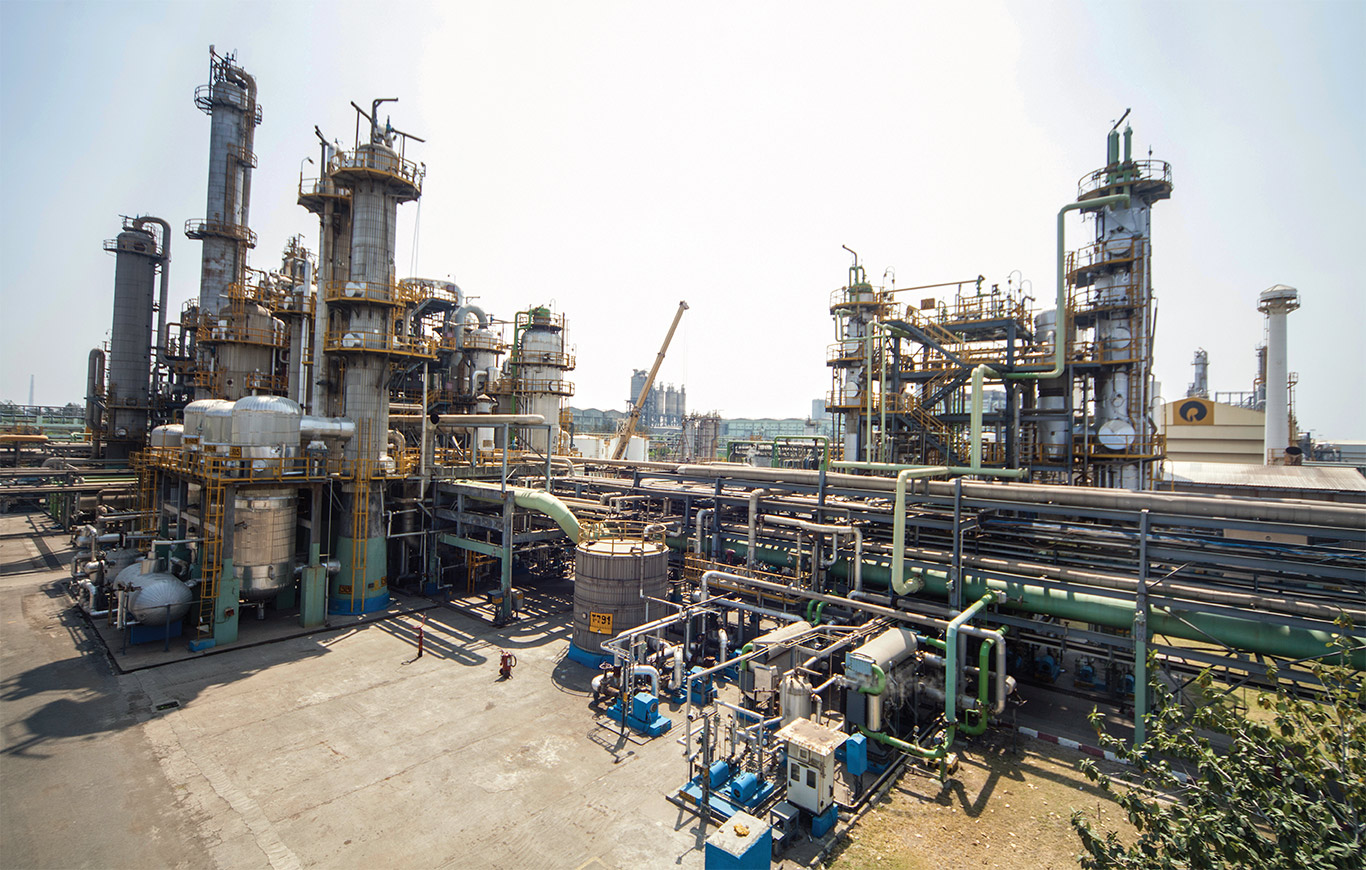
Reliance is dedicated towards accomplishment of partnering India’s economic growth and social development. Reliance is always focused on improving shareholder returns by maintaining an optimal capital structure. The Company has significantly enhanced its operational performance by establishing prudent risk management framework
During the year, Reliance added value of `1,01,957 crore including payment to the national exchequer aggregating to `51,399 crore. This contribution is used for developmental activities which help in building of a prosperous society. Additionally, large procurements made by Reliance for its regular business as well as for ongoing capex projects have a huge cascading impact – creating jobs and business opportunities for entire socio-economic spectrum. Please refer to (a) Financial review Page Nos. 62 & 63(b) Liquidity and Business Page Nos. 108 to 110 for better insights into financial capital.
P.M.S. PRASAD
JAGANNATHA KUMAR
“RIL’s ambition is to create more and more opportunities for the wider society to ensure sustainable and inclusive growth. The Company aims to take all its stakeholders into the fold while embarking on its growth agenda. While direct interventions are designed to benefit the local communities in a structured way, the Company also ensures that the voices of its other stakeholders such as customers and suppliers are factored in RIL’s decision making process. RIL collaborates with stakeholders across the value chain to create better opportunities for growth. The Company will continue to work with every strata of the economy to benefit the society, industry and ultimately, the nation.”
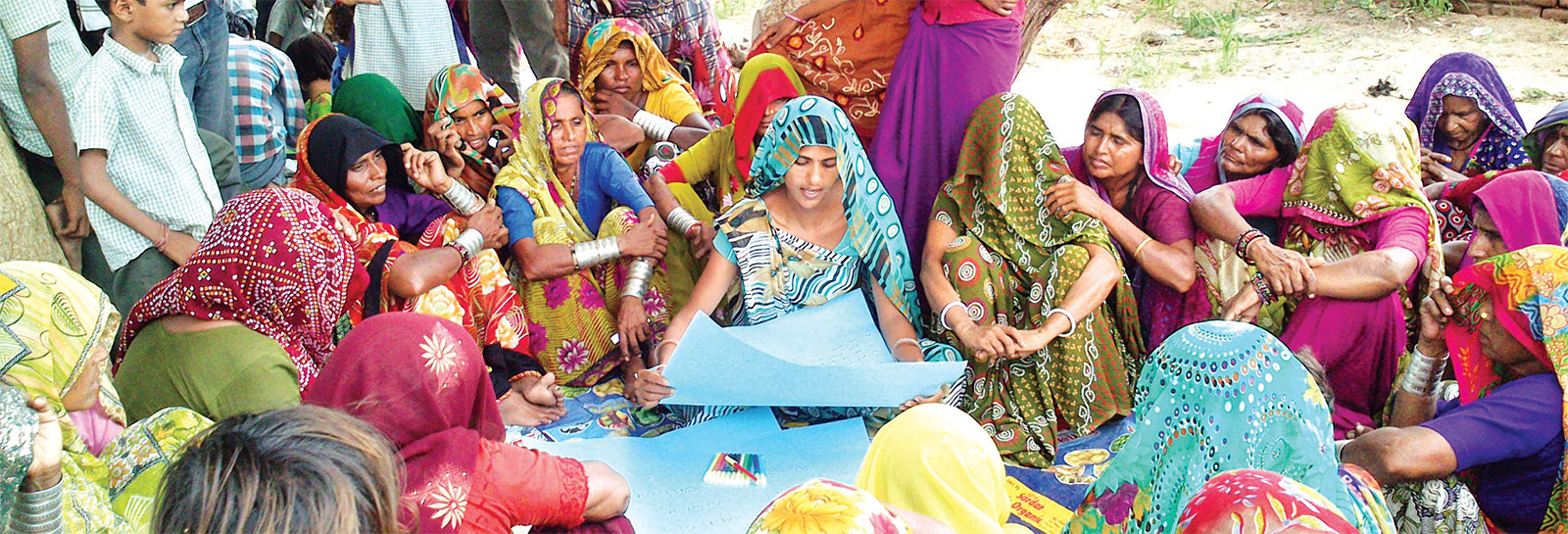
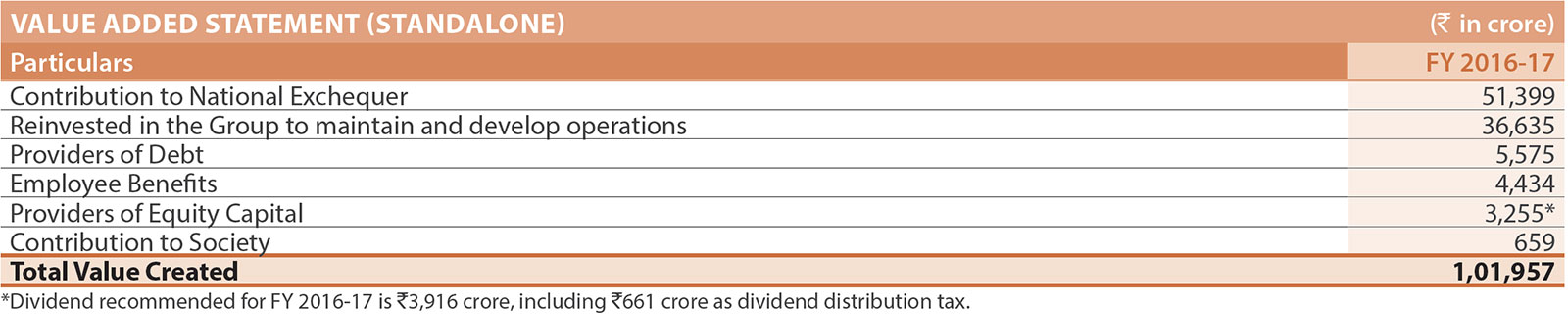
RIL has identified eight key stakeholders (Investors and Shareholders, Employees, Customers, Suppliers, Trade unions, Government and Regulatory authorities, Local community and NGOs) with whom the Company establishes strategic dialogues. For more details on identification of stakeholders, frequency of engagement and key priorities of stakeholders, refer to the RIL Sustainability Report FY 2015-16 at www.ril.com.
RIL’s Code of Conduct has a provision for all its stakeholders to freely share their concerns and grievances with the Company through a structured mechanism.
Reliance ensures that sustainability is embedded in its supply chain by engaging with supply chain partners on the sustainable growth path. The commitment towards environmental protection is extended to all its stakeholders including the suppliers by making continuous efforts to ensure that its supply chain partners adhere to and comply with the principles of compliance with laws and regulations, human rights, health and safety, environment protection and conservation, protection of confidentiality and intellectual property and business integrity.
Reliance conducts a rigorous screening process for registration, evaluation and performance management. The Company engages regularly with its supplier base in a structured feedback survey on all aspects viz. query, complaint redressal and HSE and Security.
RIL’s sustainable sourcing procedures focus on world class supplier base, contractor care, responsible care, and development of India’s engineering talent, innovation through supplier collaboration, green packaging and managing human rights across the supply chain. RIL has procured goods and services (non-crude/non-feedstock) worth over `14,341 crore from indigenous suppliers. Through sustained investment in mega projects and operations, RIL has developed India’s chemicals and engineering supplier base. The Company ensures that it engages local villagers and small businesses around its plants in a variety of productive employment, especially through vehicle hiring, material handling, housekeeping, wastehandling and horticulture contracts.
Sustainable sourcing at RIL aids social progress, economic development and reduces environmental impacts. RIL’s sustainable sourcing initiatives contribute to five strategic focus areas such as Energy Management, Environment Responsibility, Product Stewardship, Occupational Health and Safety and Social Institution Building.
The Company has adopted RC-14001 international environmental management system to effectively manage its activities like manufacturing, distribution and the use of chemicals in the products. For improving human health impacts and the protection of environment, the Company has sourced REACH (Registration, Evaluation, Authorisation and Restriction of Chemicals) compliant materials, and its requirements include that its Tier 1 suppliers also procure REACH-compliant materials. RIL ensures 100% compliance to statutory laws and regulations, and labour laws by its contractors.
RIL’s determination to reinforce local manufacturing, will help to bridge the gap between robust domestic consumption and constrained supply, thereby leading India to become selfsufficient.
Reliance endeavors to understand customer needs. The Company’s continuous effort to develop variety of products to meet the myriad of consumer needs positions Reliance as a reliable supplier. With customer centricity as a core value, Reliance Petrochemicals has started a journey of ‘Chemistry for Smiles’. The program endeavours to upgrade the supply chain to create a fully integrated, digitally enabled and best in class platform to deliver unmatched service levels and customer experience.
To understand the customer concerns and identify mitigation measures, RIL organised customer audits, customer surveys and call centres, direct feedback sessions from visiting managers/ plant personnel and factory visits for customers. In addition to this, the Company has a separate framework to deal with customer complaints. RIL conducts third-party mystery customer audits, customer satisfaction surveys and call centre evaluation studies. This has helped the Company to ensure periodic fulfilment of service delivery promise, conformance to internal norms and standards, identification of process improvement areas and understanding customer attitude and behaviour change to ascertain that needs are met at all stages.
In addition to compliance of product information and product labelling, RIL follows the Globally Harmonised System for classification of chemicals and preparation of Material Safety Data Sheets. RIL shares information with its customers on safe handling and use of products at the time of distribution.
Reliance Petro Retail secured 2nd rank on Customer Satisfaction (CSAT)Score in comparison with scores across key customer segments namely Fleet, Owner Driver & Passengers. RIL has taken necessary interventions like improving outlet infrastructure, training of DSMs, streamlining of processes, structures and other new initiatives related to fleet customers over the last 6-9 months. These initiatives will help RIL outperformed the competition and support to set new standards on customer satisfaction.
GenNext Hub, a Reliance Industries Limited (RIL) sponsored “Startup Scalerator Program”, has completed four editions of the program with 51 startups graduating from the Hub so far. Launched in 2014, GenNext Hub catalyses the startup ecosystem for a digital India. A Scalerator is an immersive process that helps startups scale up from a ‘minimum viable product’ to a ‘minimum viable company’ by providing them with hands-on mentoring and other critical resources that they need. During the four-month-long program, GenNext Hub organises workshops and mentoring sessions for these startups in the areas of customer development, business model, operations, product development, product roadmap, media coverage, pitching and fund raising. It also provides expertise in IP, legal, financial compliance, HR and other expertise. Startups also explore Proof of Concepts (PoC)s with RIL during the 4-month program.
CAPACITY BUILDING
The startup community in India will play a big role in achieving the “Digital India” objective. At GenNext Hub, the Company is catalysing this startup community by bringing together emerging entrepreneurs, business leaders, corporations, industry associations, academic institutes, media, and technology enablers. In this short period of time, GenNext Hub has engaged leaders from organisations such as Microsoft, NASSCOM, TiE, Amazon, Google, ICICI Bank, NVIDIA, India Angel Network, Nexus Venture Partners, CIO Angel Network, YourStory, Silicon Valley based Spinta Global Accelerator, Nishith Desai Associates, to support the startup growth. GenNext Hub also works closely with IITs, NITs and IIMs to identify highpotential entrepreneurs.
STARTUPS
In addition to the existing “Scalerator” program that involves technical and business mentoring, GenNext Hub will continue to catalyse the larger Indian startup ecosystem by providing a platform for VC-funded startups to explore synergistic opportunities with RIL business units.
Startups with a big vision need to build innovative world-class products. Through GenNext Hub, startups receive access to global technology leaders such as Microsoft, Amazon, Google, NVIDIA among others who provide access to infrastructure and product managers for hands-on technical mentoring to startups from GenNext Hub. GenNext Hub is a magnet that is attracting digital startups from India who are building disruptive businesses using artificial intelligence (A.I.), machine learning, analytics, mobility, payments, marketing and automation, smart home and home automation, robotics, drones and Internet of Things (IoT) consumer solutions. Some key verticals include retail, enterprise solutions, telecom, media & entertainment, education, healthcare, fin-tech, smart city, smart manufacturing, logistics, security, etc.
INVESTORS
GenNext Hub brings the best-curated startups and investors together through its Investor Access Program across the country aiding the growth of startups through easier access to capital. Already, GenNext Hub receives more than 50% of its applications from cities other than the major startup hubs like Mumbai, Delhi and Bangalore. Going forward, it will also strengthen its presence in other clusters of excellence to ensure that these startups get access to the critical resources that they need to grow their business.
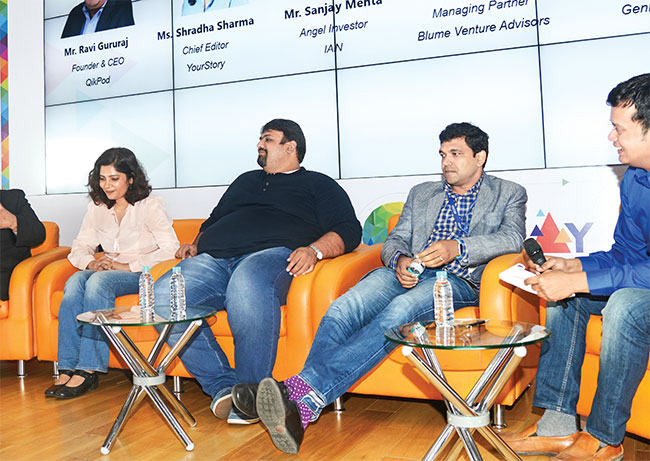
TALENT
GenNext Hub looks for passionate and technically gifted startup founders and nurture their talent to become pioneers in their respective fields. This is done through one-on-one mentoring sessions with high-profile mentors from the Reliance family and external mentor pool. Some of the alumni have gone on and received awards recognising their talents. Dhruvil Sanghvi (CEO, LogiNext) was listed among Forbes India 30 under 30 while Anurag Garg (CEO, Dattus) was listed among Forbes USA 30 under 30.
TECHNOLOGY & INNOVATION
GenNext Hub identifies startups which have an innovative product offering that gives them a natural advantage in the market. GenNext Hub backs entrepreneurs with deep technical know-how and capability, and helps them with business mentoring to ensure they build sustainable businesses. For example, from its cohort, DATTUS won 2016 MIRA award for the best new tech product (USA) while RecipeBook was featured in Google I/O 2016’s most innovative products. Headspin was featured as one of the 38 enterprise startups that will boom in 2017 by Business Insider. LogiNext continues to be a leader in the logistics space and bagged the prestigious 'Innovation in Data Science' at Aegis Graham Bell Awards. 9 out of 51 GenNext Hub startups won the Hot 100 Awards for technology in 2017.
TRUST
Finally, GenNext Hub is fostering a trust-based ecosystem to ensure a mutually win-win situation for all. As a startup platform, GenNext Hub is able to facilitate discussions and negotiations, and ensure that the right expectations are set between different stakeholders to ensure that start-ups are set up for success.
For more information, please visit www.gennexthub.com.
Situation: Indian financial system is undergoing its biggest ever tax reforms – GST. While Reliance rises up to this challenge, it also wants to enable millions of fellow citizen to rise up to the same challenge.
Action: Launched a unique platform – www.jiogst.com which provides high-quality knowledge content to users free of cost. This includes an Education Guide, FAQs, Expert Videos and Webinars on topical subjects of interest, News Updates, and the impact of GST on key sectors of the economy. A unique feature is the facility of: ‘Ask our Experts’ wherein any one can raise a GST query and is assured of a quality response from our experts within one working day. Reliance has also obtained an authorisation from GST Network to act as a GST Suvidha Provider (GSP) and will provide end-to-end services for GSTcompliances to community at large. The system envisages facility of online compliances and payment of taxes in a user-friendly manner. It is also being envisaged to provide the facility of preparation of digitised invoices for those who are unable to provide such invoices to their buyers.
Outcome on progress 1: Ability to form its compliances in a fully automated environment and has christened this project: “Driverless GST”. The Project will help automated determination of tax liability relying on algorithm based eligibility to tax credits, on the back of fully digitised input and output invoices.
Outcome in Progress 2: Facilitator in GST-compliance for its vendors and customers and also community at large, particularly small retailers and service providers.
RIL has its representation in several business and industrial associations such as The World Economic Forum, The American Chemistry Council (ACC), Indian Chemical Council (ICC), The Chemicals and Petroleum Manufacturers, Association (CPMA), Gulf Petrochemicals & Chemicals Association (GPCA), World Business Council for Sustainable Development (WBCSD), European Petrochemicals Association (EPCA), American Fuel & Petrochemical Manufacturers (AFPM), Association of Oil and Gas Operators in India (AOGO), Federation of Indian Chambers of Commerce and Industry (FICCI), Confederation of Indian Industry (CII), Associated Chambers of Commerce and Industry of India (ASSOCHAM) and Association of Synthetic Fibre Industry (ASFI), Synthetic and Rayon Export Promotion Council (SRTEPC), The Synthetic and Art Silk Mill’s Research Association (SASMIRA).
As a responsible producer of petrochemicals, RIL has collaborated with Indian Centre for Plastic in the Environment (ICPE) on a voluntary basis. RIL provides technical and financial support helping in the development of newer technologies and establishment of pilot projects for plastic-waste management, in cooperation with municipal authorities and the civil society. Producing Algae & Co-products for Energy (PACE) is a collaborative project with some of the top universities and research institutions in the US for developing and demonstrating algae, to produce energy and co-products.
HYDROCARBON
RIL and British Petroleum formed a transformational partnership in the oil and gas business in 2011. The partnership aims to combine BP's deep-water exploration and development capabilities with Reliance's exceptional project management and operational expertise.
RIL also has three joint ventures in North American shale plays with Pioneer Natural Resources, Chevron and Carrizo.
RETAIL
Reliance Retail has emerged as the partner of choice for International brands and has established exclusive partnerships with many revered international brands.
Reliance Retail has a portfolio of over 40 international brands that spans across the entire spectrum of luxury, bridge to luxury, high–premium and high–street lifestyle. Reliance Retail operates more than 370 stores for international brands and continues to partner with new and revered international brands.
JIO
Jio has entered into master service agreements with leading telecom infrastructure companies to have access to the passive infrastructure set-up by these companies. It also has agreements with RCOM for the purpose of sharing fiber and economising on overall use of fiber and other passive infrastructure. Jio, along with business partners, has focused on making all the components of the digital value chain available to customers.
As part of its long-term business strategy, the Company aims to contribute and deliver on the globally and nationally agreed upon development targets namely United Nation’s Sustainable Development Goals. Also, the Company’s CSR initiatives are in concordance with the Company’s Act, 2013 of Government of India. The Company has set up Reliance Foundation for implementing its CSR initiatives with a systematic approach for scale, impact and sustainability of its programmes. With these approaches, the CSR initiatives of Reliance have touched the lives of more than 12 million people across India. RIL has set up a Monitoring & Evaluation (M&E) framework aimed at measuring the outcome and impact of initiatives in a number of ways, by measuring change in the lives of the communities that it engages with.
For specific details refer to the Report on Corporate Social Responsibility Report Page No. 164 and Annexure II to the Board’s report.
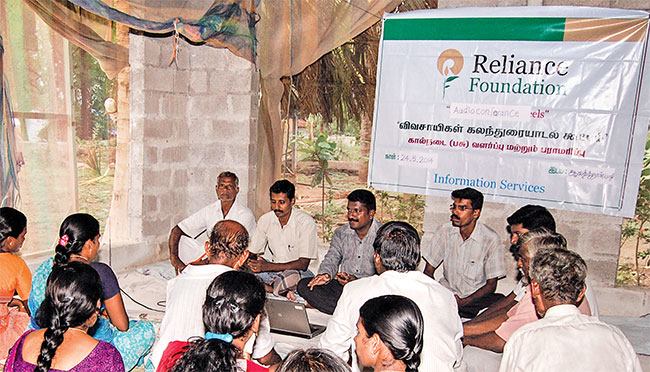
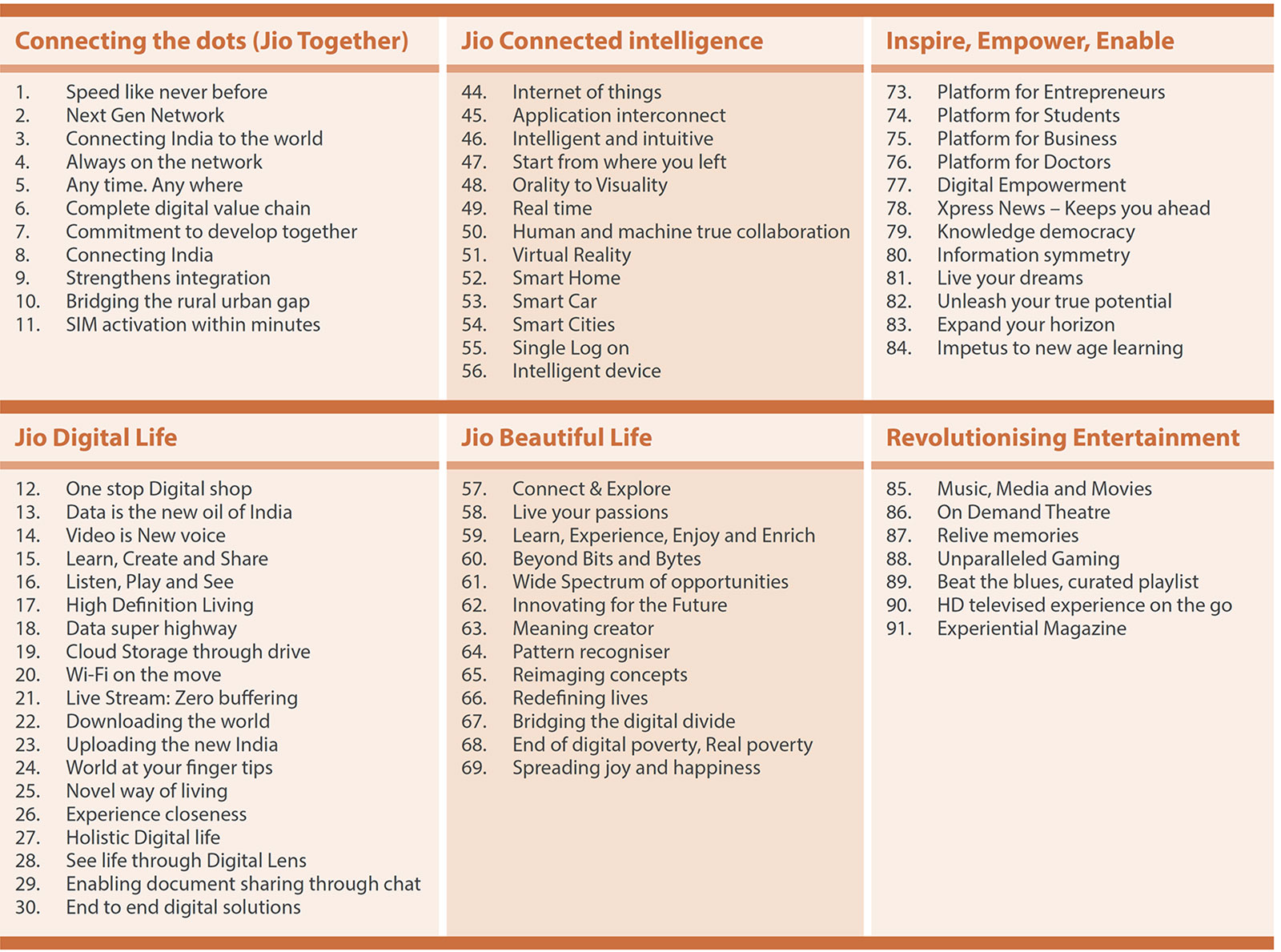
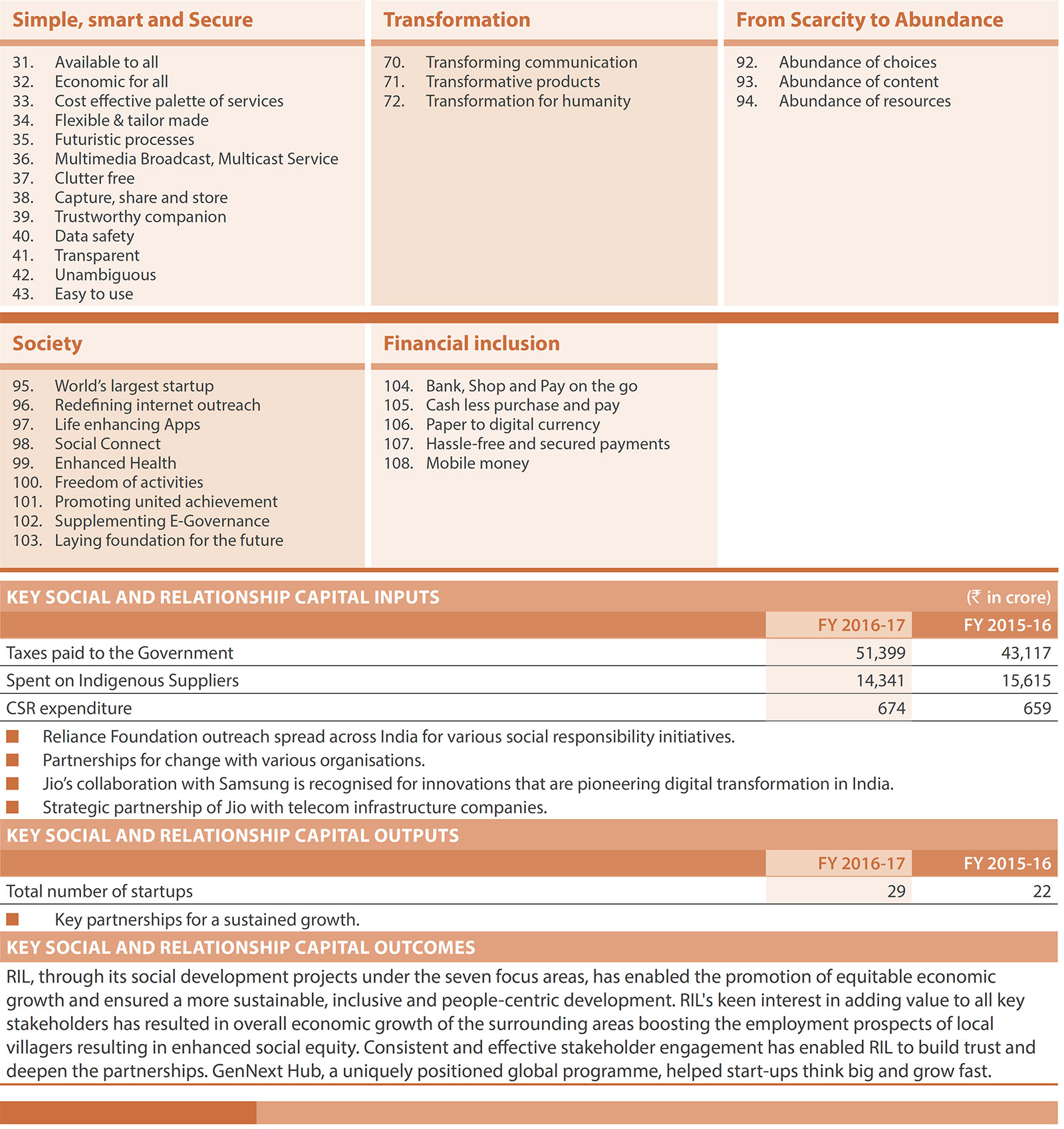
CONTINUOUS IMPROVEMENT OVER 5 YEARS
RIL publishes its Sustainability Report annually since FY 2004-05, based on Global Reporting Initiative’s (GRI) latest reporting guidelines. The Company has been publishing the sustainability report according to GRI G4 guidelines (including Oil and Gas sector disclosures) ‘In accordance – Comprehensive’ option since FY 2014-15. The Sustainability Reports published till date are available at http://www.ril.com/Sustainability/CorporateSustainability.aspx
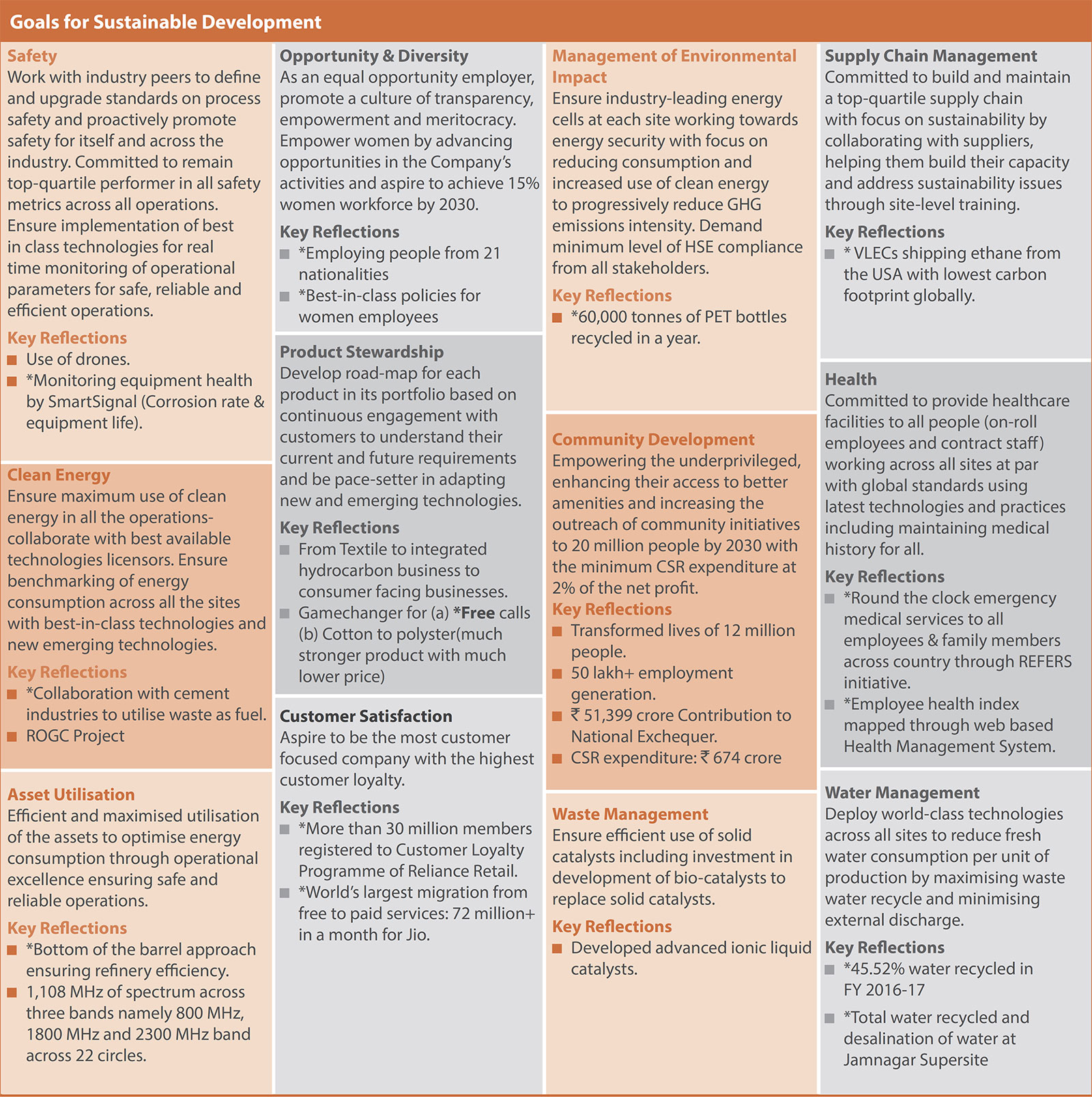
GRI Standards has been launched as a replacement of GRI G4 guidelines in October 2016. The GRI Standards are the first global standards for sustainability reporting. These standards will become mandatory for reporting effective on or after 1st July, 2018. Reliance was the pioneer in the Oil & Gas sector in publishing its first GRI G4 based sustainability report in FY 2014-15. Similarly, Reliance shall also be the pioneer in adoption of GRI Standards from FY 2016-17 in its sustainability reporting journey. Mapping of various sustainability topics in alignment with GRI standards identified as material to RIL has been provided as an Annexure to this report on Page Nos. 192-193
The reports were externally assured indicating highest level of comprehensive disclosures for GRI G4 reports. RIL is also a member of World Business Council of Sustainable Development (WBCSD) and Global Reporting Initiatives (GRI). WBCSD’s ‘Reporting matters’ has recognised RIL’s sustainability report as a leading example on aspect of reliability.
MATERIALITY ASSESSMENT
RIL has undertaken a detailed materiality exercise to identify topics that matter most to its business operations and stakeholders. RIL’s materiality assessment involves the process of identifying and assessing numerous potential economic, environmental and social topics that could affect its business and stakeholders and prioritise them into key material topics. RIL identifies its sustainability priorities through a structured process of materiality analysis. The materiality analysis process takes care of key concerns and priorities of all the relevant stakeholder groups. The process involves stakeholder engagement, peer benchmarking and alignment to risk framework and strategic priorities.
The identification of material issues has been largely aligned to risk management framework and its strategic approach based on the four areas: Strategic and Commercial risks, Safety and Operations, Compliance and Control and Financial risks. For more information on Materiality refer to the Sustainability Report FY 2015-16 page no. 46.
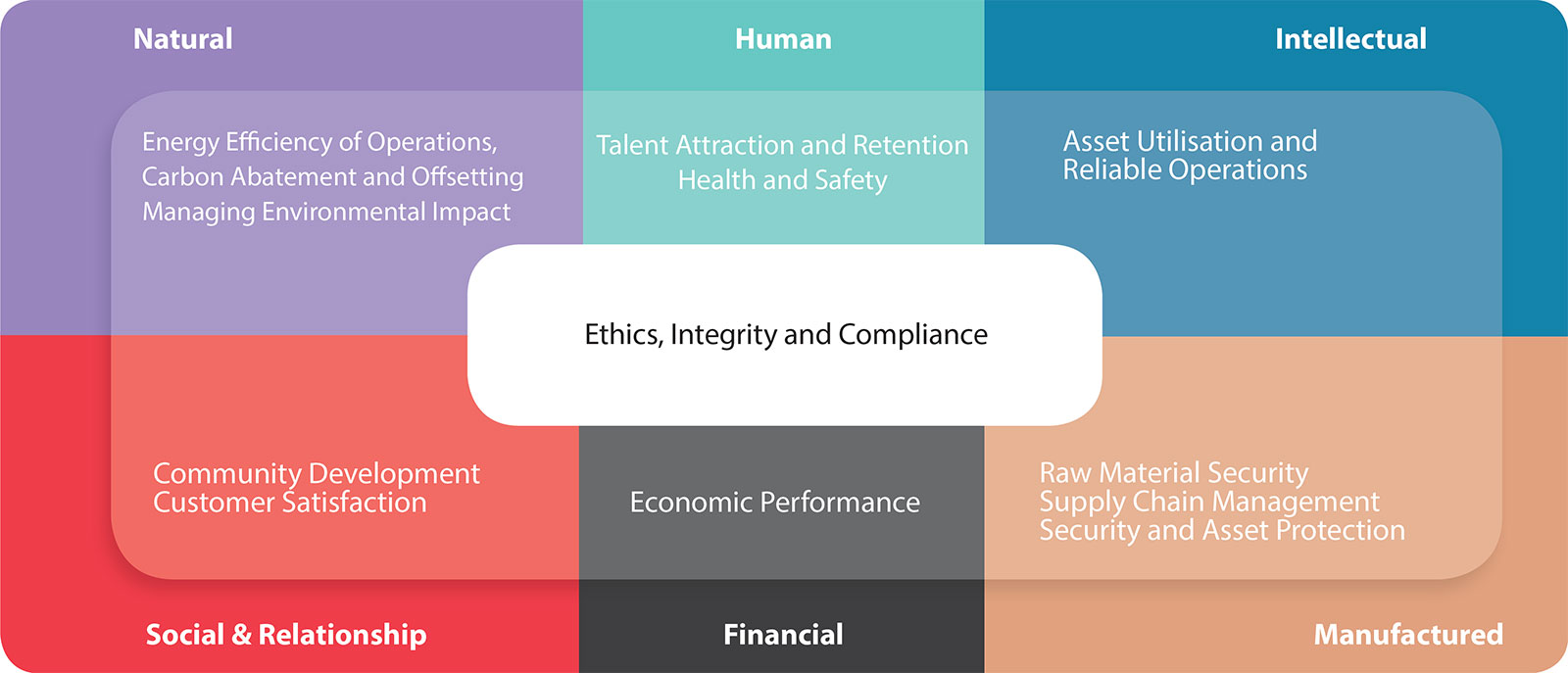
The Report acknowledges Reliance’s responsibility for and being transparent about the impacts of its policies, decisions, actions, products and associated performance on relevant stakeholders. The Company uses the disclosures in the Report for establishing, evaluating and communicating its accountability by aligning to the principles of Inclusivity, Materiality and Responsiveness in accordance with Account Ability’s AA1000APS (2008) standard.
Reliance aims to build strong and long lasting relations with its stakeholders through structured dialogues. The Company values the inputs received from the engagement process and works diligently to identify its sustainability priorities. For more details on identification of stakeholders, frequency of engagement and key priorities of stakeholders, refer to the RIL’s Sustainability Report FY 2015-16 at www.ril.com.
NIKHIL R. MESWANI
HARISH SHAH
LAXMIDAS V. MERCHANT
“A disciplined approach to risk is important in a diversified organisation like Reliance to enable the achievement of its strategic objectives and to ensure that Reliance has an acceptable level of risk commensurate to expected returns. Reliance’s Enterprise Risk Management framework drives a consistent and systematic approach for identifying and managing risk, both at the strategic and operational level. Reliance's integrated risk management framework provides the capability for timely and informed response to address risks and to capture opportunities”.
“Reliance has a comprehensive Reliance Management System, a holistic set of management systems, organisational structures, processes, policies and governance framework. During the year, significant progress has been made with driving a risk aware culture through integrating the risk process into planning and decision making processes, assigning clear accountabilities for risk ownership and ongoing oversight by designated Committees. Furthermore, Reliance is strengthening its continuous controls monitoring capability across the three lines of defense, enabled by analytics technology, covering all key risk areas.”
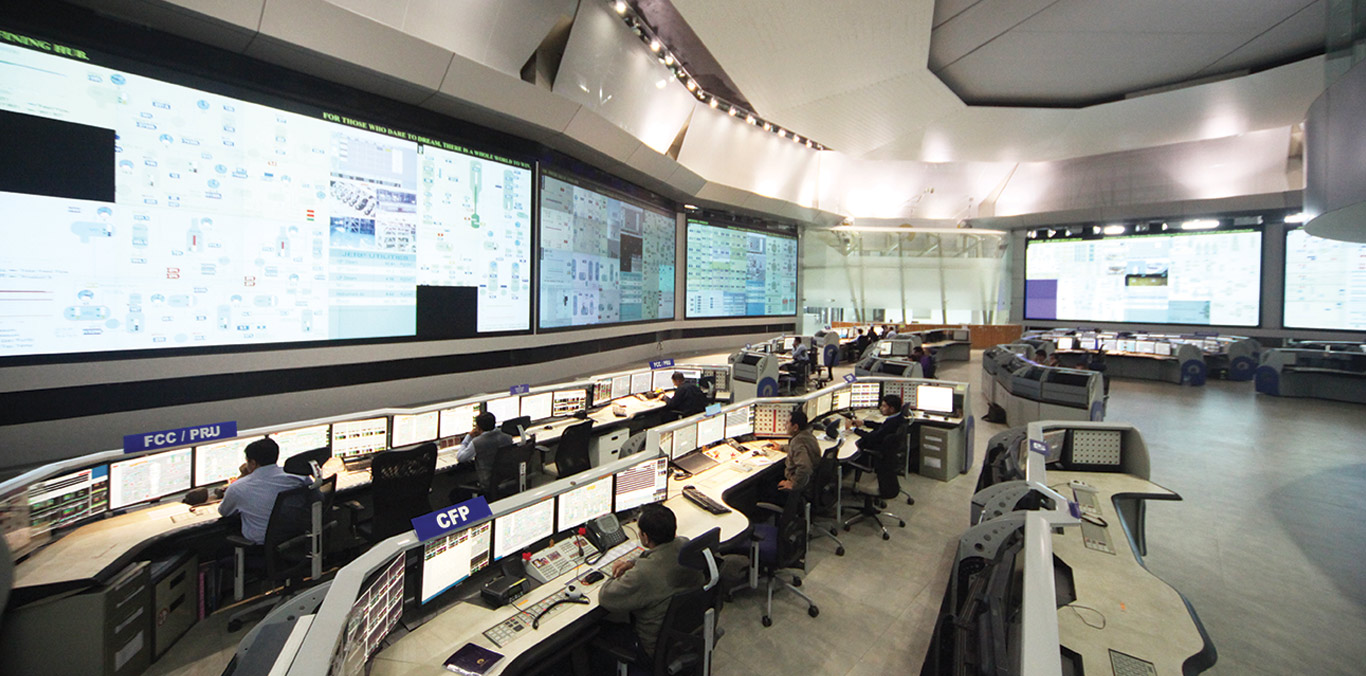
1. INTRODUCTION
Reliance actively stimulates entrepreneurship throughout the organisation and encourages its people to identify and seize opportunities. The current economic environment in combination with significant growth ambitions of the Reliance Group carries with it an evolving set of risks. Reliance recognises that these risks need to be managed to protect its customers, employees, shareholders and other stakeholders in the society to achieve its business objectives and enable sustainable growth. Risk and opportunity management is therefore a key element of the overall Reliance strategy. This section provides Reliance's view on risk and the key risk factors for Reliance as well as how it manages risk through its risk management framework.
2. RELIANCE’S VIEW ON RISK
2.1 Risk Appetite
Reliance’s risk appetite is linked to its strategic approach and is based on the stance it has taken across four areas:
In Reliance, risk appetite is formally articulated through specific policies related to common risks, business decisions or activities. For example, policies such as financing and deal limits, vendor selection criteria, HSE, customer credit and new country entry describe the level of risk Reliance is willing to take including the specific tolerances, limits and other boundaries within which decisions shall be taken or activities shall be carried out. These policies are then enforced through controls integrated in it's business processes and its governance architecture.
2.2 Risk Factors
Reliance emphasises risks that threaten the achievement of the Group’s business objectives over the short to medium-term. As part of its annual planning process, Reliance reviews plan related risks, opportunities and uncertainties. It identifies those as having a high priority for particular oversight by the Board and its various committees and by Executive Committees. An overview of these risks is provided hereafter, including the actions taken to mitigate these risks and any related opportunities:
I. Strategic and commercial risks
A. Commodity Prices and markets
Reliance’s financial performance is subject to the fluctuating prices of crude oil and gas and downstream petroleum products. Prices of oil and gas products are affected by supply and demand, both globally and regionally. Factors that influence fluctuations in crude prices and crude availability include operational issues, natural disasters, political instability, economic conditions and Government pricing policy of petroleum products among others.
Mitigation: Since Reliance operates an integrated hydrocarbon business, some of these risks can be offset by gains in other parts of the Group. To mitigate the risks resulting from nonavailability of crude and feedstock, Reliance has a diversified crude sourcing strategy from multiple geographies (Asia, the Middle East, West Africa, Latin/South America and North Africa) under both short-term and long-term arrangements. In addition, Reliance has put in place commodity risk management policies which provide the framework for decision making with respect to exposures from commodity trading positions.
Changes since last year: There have been no significant changes in the nature of the risk exposures over the last 12 months.
B. Major Project Execution Risk
Reliance’s future growth plans depend upon successful delivery of major capital projects to deliver its long-term strategic objectives related to:
1. Reducing energy costs and boost profit margins;
2. Gasification of Petroleum Coke which will utilise low value refinery streams;
3. Utilising refinery off-gases to produce polymers and polyesters and
4. Expanding into speciality elastomers.
The construction phase for most units in Jamnagar are nearing completion and are under various phases of pre-commissioning and commissioning. The non-Jamnagar projects are also in the process of getting commissioned in the coming months. Managing the risks related to the delivery of these and other major capital projects is key to enhancing Reliance’s long-term shareholder value.
Mitigation: Project risk management is embedded in the way Reliance delivers projects. All Project teams are comprised of experienced project management professionals. Risk Management is diligently carried out within Projects. During the project phase various risks have been identified and they have been mitigated through periodic risk assessments, proactive planning and monitoring and meticulous execution of planned activities.
Currently the residual risks are mostly related to commissioning and safety related risks due to simultaneous working of several agencies. These risks are getting mitigated by conducting ongoing trials on machinery and systems prior to start of Operations and by having a coordinated safety management programme amongst the various agencies.
Changes since last year: In Manufacturing, major Jamnagar expansion and other projects are drawing to a close in the coming months. As a result the risks are shifting from construction risks to exposures related to commissioning and start-up which are being handled through testing, trial runs and conducting comprehensive training of the staff.
Major project execution risks related to building the 4G infrastructure in Jio have diminished significantly since the successful launch of the 4G LTE TDD high speed wireless internet and mobile communication services.
C. Customer Experience and Retention:
Reliance Jio now has more than 100 million customers following an innovative customer acquisition strategy. Jio is committed to deliver on a differentiated customer experience and its constant endeavor is to proactively mitigate any such risks that may weaken Jio’s value propositions, brand and customer loyalty.
To deliver this, along with expansion of its current customer base; customer experience and retention are of utmost importance for Jio to generate sustainable business performance and return on its investments.
Mitigations: To successfully capitalise on Pan- India rollout of an all IP LTE network to deliver next generation digital services and for ensuring sustained customer value proposition, Jio’s strategic and risk framework encapsulates the following mitigations/plans:
1. Leverage Jio’s Pan-India network foot print and digital ecosystem to expand Jio’s product offerings to diversify revenue sources and customer base.
2. Ongoing investments in spectrum and network infrastructure for over 95% population coverage and superior customer experience delivery.
3. Jio Prime Membership Programme for founder members: A loyalty programme that assures not only most competitive monthly tariff plans in the industry, but also many other attractive deals and offers from Jio and its partners to ensure retention and loyalty.
4. To ensure that Jio’s existing and prospective customers do not ever suffer from ‘data anxiety’ and remain assured of the best value for the price paid in a hyper competitive market, Jio is introducing ‘Everyday More Value Offer’. In this offer customers are assured of 20% more data at similar or better pricing than what the leading Indian operators provide.
Changes since last year: Jio has commenced services from September, 2016 and is progressively expanding its network for full population coverage.
II. Safety and operational risks
A. Health, Safety and Environmental (HSE) Risks in Operations
Reliance is exposed to a wide spectrum of HSE risks, given the diversity and complexity of the industries, it operates in. The exploration and production of oil and gas and their further refining and processing is regulated by various HSE related regulations across the geographies where Reliance operates. A major HSE incident, such as fire, oil spill, security breach can result in loss of life, environmental degradation and overall disruption in business activities.
Mitigation: The Reliance HSE policy requires that ‘Safety of persons overrides all production targets’. This ensures that all employees strive for excellence in their own personal safety and the safety of others including employees, contractors, customers and the communities within which Reliance operates. Reliance has set itself the goal of ‘zero injuries and incidents‘. A separate Safety and Operational Risk (S&OR) function provides oversight on HSE exposures and periodically conducts HSE assessments and reviews to get assurance on the operation of the HSE management framework protocols and regulatory compliances.
Changes since last year: All manufacturing sites have made significant progress with re-baselining their risk assessments. For the highest risks, action plans have been defined and endorsed by Executive Management involving capital investments as well as enhancing administrative and operational controls.
Reliance have also made good progress on the implementation of its Integrated Operating Management System (OMS). This included the implementation of more than 20 priority elements that relate to Process, Safety and Reliability. Conformance to these requirements will be verified by a Site-independent auditor during the next 6 months. These initiatives contribute to Operational and HSE Excellence.
B. Marine Safety and Environmental Risks
Reliance is exposed to a complex and diverse range of marine risk including: exploration vessels, oil tankers, chemical tankers, gas tankers, dry cargo vessels, operating ethane vessels, operating chemical tankers, operating a large fleet of tugs and port service vessels as well as owning and operating a significant amount of port and terminal infrastructure. With 96% of all crude being supplied to Reliance by vessel and the overwhelming majority of refined products being exported by vessel it is essential that these activities are actively managed to avoid HSE incidents, oil spills or disruption to business activities and processes.
Mitigation: Reliance’s augmented ship vetting programme will ensure that all vessels used to carry Reliance cargoes or those that call at a Reliance facility undergo an enhanced risk assessment screening using state-of-theart predictive risk software, as used by oil super majors globally, to minimise the risk of substandard vessels entering the marine value chain.
Reliance has further increased its marine contractor auditing programme to ensure that terminal facilities, long-term charter vessels, the owners of long term vessel charter and contractors used in ship-to-ship transfer management are reviewed for compliance against Reliance and industry requirements. Additionally through having a marine technical authority at Reliance marine risk understanding and management is further improved.
The newly introduced ethane vessels are being managed by world class specialist managers who in turn are being monitored by a dedicated team within Reliance to ensure safe, compliant and successful operations.
Changes since last year: As Reliance is introducing six very large ethane carriers into service, a world first, the requirement for enhanced marine risk management understanding and appropriate controls has grown.
C. Physical Security and Natural Calamity risks
Hostile acts such as terrorism or piracy could harm the Company’s people and disrupt its operations. Some of Reliance’s sites are also subject to natural calamities such as floods, cyclones, lighting and earthquakes. If the company does not respond, or is perceived to not respond, in an appropriate manner to either an external or internal crisis, its business and operations could be severely disrupted. Inability to restore or replace critical capacity to the required level within an agreed timeframe would prolong the impact of any disruption and could severely affect Reliance’s business and operations.
Mitigation: Reliance maintains a proactive posture by continuously monitoring and assessing emerging threats, vulnerabilities and risks to manage its physical security. The group security function and embedded security teams provide assurance to businesses at all levels with respect to the management of security risks affecting its people, assets and operations.
To respond to natural calamities Reliance maintains disaster recovery, crisis and business continuity management plans to respond to a disruption or an incident.
Changes since last year: of terrorism is increasing globally as evidenced by intelligence projections and events of last year. Continuous application of appropriate mitigation measures are implemented to ensure exposures remain within acceptable levels.
D. Cybersecurity Risk
Reliance is at the forefront of adopting Technology Led Innovations. An increasing number of business processes are now digitally driven. The larger the digital landscape, the larger is the potential cyber security threat. A digital security breach or disruption to digital infrastructure, due to intentional or unintentional actions, such as cyber- attacks or human error could lead to serious business impacts. These include injury to staff, loss of process control, impact on business continuity or damage to assets and services, harm to the environment, the loss of sensitive data or information, legal and regulatory breaches and reputational damage.
Mitigation: Reliance has continued to strengthen its responses to cybersecurity threats through proactive and reactive risk mitigations. These include, proactive activities to continuously improve its cybersecurity policies, standards, technical safeguard, ongoing monitoring of new and existing threats and cyber security awareness initiatives. Its reactive responses to cybersecurity threats, which include IT disaster recovery, emergency response and business continuity management capabilities to enable the reduction of the impacts of a cybersecurity event.
Changes since last year: The World economic Forum (WEF) in its latest Global Risk Report (2017) has flagged “Massive incident of data fraud and theft” as one of the top 5 global Risk in terms of likelihood. Considering the large digital landscape in Reliance, the Cyber security risks are increasing which require ongoing efforts to counter these evolving threats. Substantial improvement was made on the cyber security risk posture during the last year. Some of the notable measures are:
1. A Continuous Improvement Program (CIP) for cyber security was instituted across Reliance, to keep pace with ever increasing threats.
2. Reliance regularly conducts Cyber Security Awareness programs across the Group and run many and ongoing user awareness connect activities to make sure that each and every user is aware of the basic cyber security hygiene and their responsibilities.
3. Several businesses of Reliance are now benchmarked against ISO 27001, the global standard for ISMS ( Information Security Management System).
III. Compliance and Control Risks
A. Regulatory Compliance Risks
Regulatory Compliance Risks The evolution of the global regulatory environment has resulted into increased regulatory scrutiny that has raised the bar with regards to regulatory compliance. This signifies the alignment between corporate performance objectives, while ensuring compliance with regulatory requirements.
Mitigation: Reliance recognises that meeting all applicable regulatory requirements can be challenging. A comprehensive and digitally enabled compliance management framework has been deployed which is designed to:
Changes since last year: There have been no significant changes in the nature of the risk exposures over the last 12 months. Automation of a comprehensive compliance management framework has been key for this period and has been successfully implemented across the Group in India, resulting in better and transparent controls related to regulatory compliances.
B. Indirect Tax Policy and Compliance Risks
Goods and Services tax (GST) has been identified as one of the most important tax reforms postindependence. The proposed GST levy will impact processes and systems across Reliance's entire value chain of operations, namely procurement, manufacturing, distribution, warehousing, sales, and pricing. Furthermore, some of the most significant impact relates to the (1) exclusion of petroleum products and the uncertainty about when it will be brought under the ambit of GST and (2) interpretational issues in a number of new provisions.
Mitigation: Reliance's mitigation measures encompass the following strategies:
1. Evaluating different scenarios related to the design and application of GST in the various businesses.
2. Continually tracking policy development regarding GST and update prepared scenarios.
3. Identification of any areas of adverse impact and the preparation of contingency measures.
4. Identification of issues and concerns needing representations to the authorities and developing strategies for effective advocacy.
5. A centrally managed project to ensure all process and systems changes are fully tested and integrated.
Changes since last year: New risk due to roll out of GST in FY 2017-18.
IV. Financial Risks
A. Treasury Risks
Treasury risks include, among others, exposure to movements in interest rates and foreign exchange rates. Reliance also maintains sufficient liquidity, so that it is able to meet its financial commitments on due dates and is not forced to obtain funds at higher interest rates. It has access to markets worldwide and uses a range of products and currencies to ensure that its funding is efficient and well diversified across markets and investor types.
Mitigation: The interest rate risk is managed through financial instruments available to convert floating rate liabilities into fixed rate liabilities or vice versa, and is aimed at optimising the cost of borrowings.
Mitigation: Foreign exchange risk is tracked and managed within the risk management framework. Short-term foreign currency asset – liability mismatch is continuously monitored and hedged.
The foreign exchange market is well regulated and Reliance ensures compliance with all the regulations.
Changes since last year: There have been no significant changes in the nature of the risk exposures over the last 12 months. Monitoring mechanisms within the Treasury function have been enhanced to further strengthen the control framework.
3. HOW RELIANCE MANAGES RISK
Reliance manages, monitors and reports on the principal risks and uncertainties that can impact its ability to achieve its strategic objectives. The Company’s risk management framework encompasses internal control in an integrated manner and is tailored to the specific Reliance segments, businesses and functions. It takes into account various factors such as the size and nature of the inherent risks and the regulatory environment of the individual business segment or operating company.
The Reliance management systems, organisational structures, processes, standards, code of conduct and values and behaviours together govern how Reliance conducts its business and manages associated risks.
Reliance’s risk management framework is designed to be a simple, consistent and clear framework for managing and reporting risks from the Group’s operations to the Board. The framework and related processes seek to avoid incidents and maximise business outcomes by allowing management to:
3.1 Group Risk Management Framework
The Group Risk Management Framework is designed to help ensure risk management is an integral part of the way that Reliance works everywhere to enable risks to be identified, assessed and managed appropriately. The Group Risk Management Framework comprises three levels:
3.2 Continuous Assurance through the Three Lines of Defense
Reliance has adopted a Three Lines of Defense model to enable continuous and real time assurance on key risk exposures and the ongoing effectiveness of controls.
First Line of Defense: Business and Functional Leaders continuously verify for themselves that risk management activities they have in place are effective. In conjunction with the risk management activities themselves, this monitoring activity provides the first line of defense.
Second Line of Defense: A network of functional experts provide Functional Assurance to the Businesses in their area of expertise by:
1. Providing a view, independent of the line, of risks within their area of functional expertise.
2. Setting standards for the management of risks and provide guidance on mitigations to relevant Businesses in their area of expertise.
3. Monitoring or verifying the effectiveness of controls and other risk management activities completed by the Business.
Third Line of Defense - Group Audit: Reliance has established an independent Group Audit function, reporting to the Chairman of the Board and the Audit Committee. The Group Audit function is mandated to provide assurance and advisory support on the management systems that manage the key group risks across all subsidiaries and investments by the Reliance Group. Group Audit function is aligned to the key business segments in order to deliver Group Wide assurance coverage as part of the third line of defense.
The Group Audit function has been set up as a multidisciplinary teams that deliver assurance across all areas of risk including strategic & commercial, safety & operational, compliance & control and financial risks across all business segments. Specialised resources, real time assurance technologies, data mining, analytic techniques and external benchmarking of best practices are leveraged extensively to achieve Group wide assurance coverage and deliver audits in an efficient and effective manner. The Group Audit function operates in line with international auditing standards and continuously improves its functional capabilities to achieve world class assurance best practices.
3.3 Developments to Strengthen Reliance's Approach to Risk Management
To support the strengthening of Reliance's approach to risk management, the following actions have been put in place during the financial year:
1. The Company continues to integrate methodologies, processes and systems to support the ongoing development of integrated assurance across the “Three Lines of Defense”. This enables a common integrated view of risks, optimal risk mitigation responses, continuous monitoring of internal controls and efficient assurance activities.
2. The Group Risk function has started to bring together a Group wide risk community from specialist risk areas (e.g. IT, Treasury, HSE etc.) to further enable the alignment, integration and sharing of best practices across the second line of defense.
3. Reliance deployed control self-assessments for the full scope of financial controls and initiated the automation of continuous controls monitoring by the second line of defense.
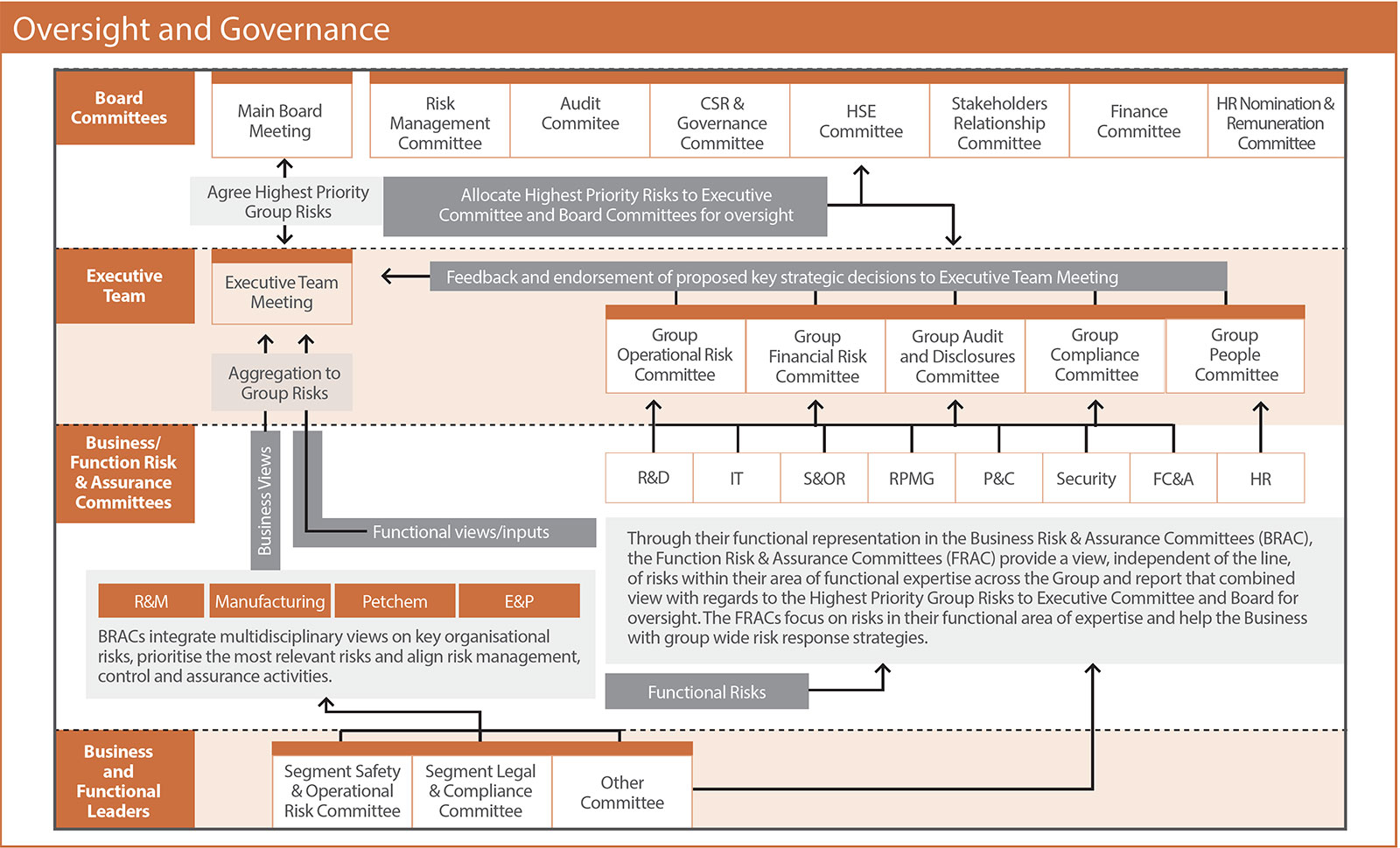
RELIANCE MANAGEMENT SYSTEM
As part of extensive Business Transformation initiative Reliance has put in place a comprehensive Reliance Management System (RMS), a holistic set of management systems, organisational structures, processes and requirements. Reliance believes RMS has substantially enabled it to become a more systematic and simpler company with extensive digitisation. It shall enable a still more evolved governance and risk assurance framework for the Company through its three key elements: Operating Management System (OMS), Financial Management System (FMS) and People Management System (PMS).
Some of the major awards and recognitions conferred during FY 2016-17 are:
LEADERSHIP
HUMAN RESOURCES
PROJECT MANAGEMENT
QUALITY

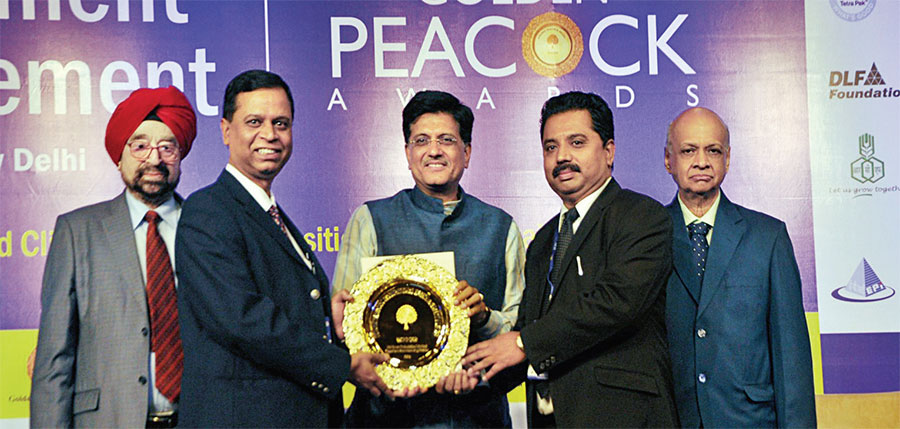
ENERGY & WATER CONSERVATION/ EFFICIENCY
TECHNOLOGY, PATENTS, R&D AND INNOVATION
HEALTH, SAFETY & ENVIRONMENT
RETAIL
JIO
CAPITAL RESOURCES
CORPORATE SOCIAL RESPONSIBILITY
SUSTAINABILITY
| 1 Downstream | The downstream commonly refers to the refining of petroleum crude oil and the processing and purifying of raw natural gas, as well as the marketing and distribution of products derived from crude oil and natural gas. |
| 2 Upstream | The upstream includes searching for potential underground or underwater crude oil and natural gas fields, drilling exploratory wells, and subsequently drilling and operating the wells that recover and bring the crude oil and/or raw natural gas to the surface. |
| 3 Nelson Complexity Index | The Nelson complexity index (NCI) is a measure to compare the secondary conversion capacity of a petroleum refinery with the primary distillation capacity. The index provides an easy metric for quantifying and ranking the complexity of various refineries and units. |
| 4 Gross Refining Margin (GRM) | GRM is the difference between crude oil price and total value of petroleum products produced by the refinery. |
| 5 Crude throughput | Crude throughput is the total amount of crude that goes into a refinery before it comes out processed |
| 6 Crack spreads | Crack spreads are differences between wholesale petroleum product prices and crude oil prices |
| 7 Refinery Off gas Cracker | A refinery off-gas cracker is a petrochemical unit that will use the gas generated as a byproduct of refining operations |
| 8 Pet Coke Gasification project | The gasifier will convert petroleum coke, the lowest value refinery residue, into high value syngas |
| 9 Coal Bed Methane (CBM) | CBM is a form of natural gas extracted from coal beds. |
| 10 Reliance Retail 2.0 | Reliance Retail 2.0 is unveiled with launch of multi-channel initiatives. While the first round of growth for Reliance Retail was by way of asset heavy investments, the second round is to be through a much better use of investments and sweating of assets. |
| 11 LTE technology (LTE) | LTE is a standard for high-speed wireless communication for mobile phones and data terminals, based on the GSM/EDGE and UMTS/HSPA technologies. It increases the capacity and speed using a different radio interface together with core network improvements. |