Home Management Discussion and Analysis Oil and Gas
Management Discussion and Analysis

Oil and Gas

FY 2025-26 marked a year of disciplined operations for the Oil & Gas business. Despite a volatile commodity environment, RIL remained focused on sustaining production, improving recovery, and strengthening its contribution to India’s domestic gas supply, with average production of 26.7 MMSCMD, i.e. ~30% of domestic output.

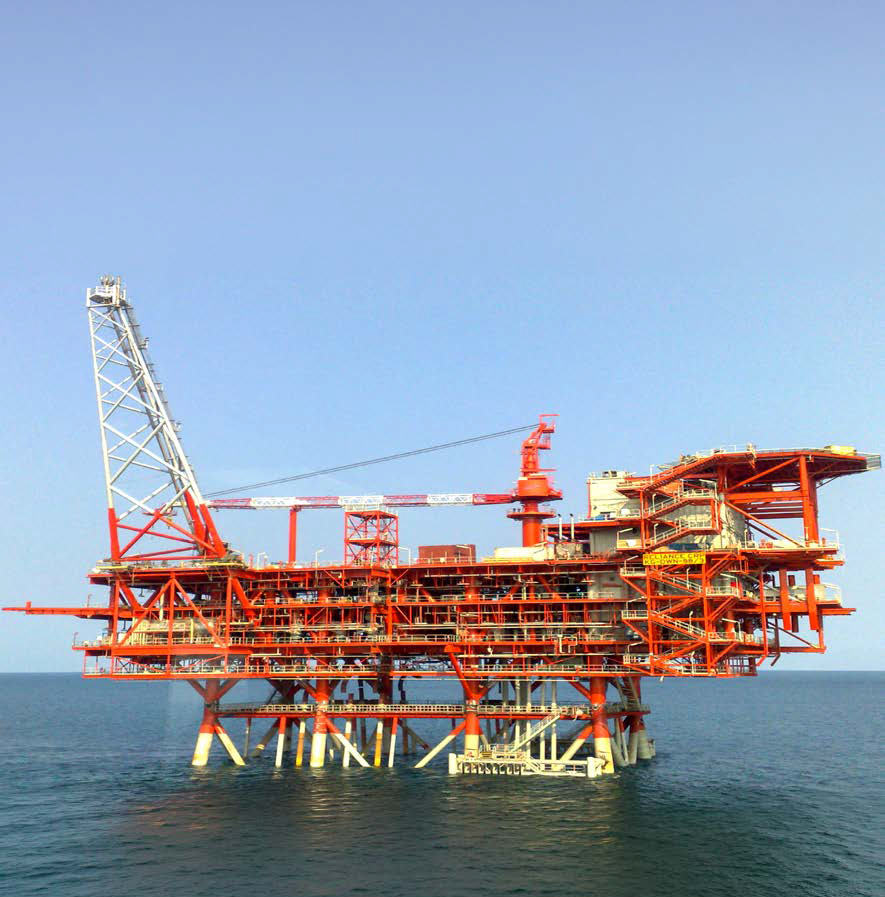
KG Basin assets continued to operate safely and efficiently, supported by robust offshore infrastructure. Targeted production optimisation initiatives and planned development wells in KG D6 are expected to enhance recovery. The CBM portfolio also delivered improved productivity through multilateral horizontal wells and connectivity to the national gas grid.

Strategic Objective

To generate resilient growth and sustainable stakeholder value through disciplined exploration, efficient development, and responsible production of hydrocarbons. The focus is on maximising recovery from existing assets, accelerating monetisation of discovered resources, and leveraging infrastructure-led exploration to strengthen reserves and production sustainability while supporting India's energy security with reliable domestic supply.

Going forward, the Company will prioritise production sustenance, CBM growth, and disciplined exploration to support future resource accretion.

Zero LTI
IN OFFSHORE OPERATIONS
0 MMBBLs (RIL’s share)
OIL AND CONDENSATE PRODUCTION
0 BCF* (RIL’s share)
GAS PRODUCTION

*Production figures include KG-D6 and CBM

0
PEOPLE

Industry Overview

Global oil demand increased by 800 kb/d in CY25 to ~104 mb/d but elevated inventories, combined with macroeconomic uncertainty and muted industrial activity in key regions, led to an ~11% Y-o-Y decline in average Brent crude price. Global natural gas demand is estimated to have increased by around 0.5% during 2025, driven by higher consumption in Europe and North America, which offset subdued demand in Asia. India’s natural gas demand remained resilient at ~192 MMSCMD in 2025. India’s gas consumption was impacted in March 2026 due to reduced LNG imports from Middle East amid Middle East conflict. Looking ahead, expanding gas infrastructure is expected to support growth in domestic gas demand.

E&P Portfolio

Blocks with RIL
Conventional Blocks KG-DWN- 98/3 (RIL 66.67%, bp 33.33%)
NEC-OSN-97/2 (RIL 66.67%, bp 33.33%)
KG-UDWHP-2018/1 (RIL 60%, bp 40%)
KG-UDWHP-2022/1 (RIL 60%, bp 40%)
GS-OSHP-2022/2 (ONGC 40% RIL 30%, bp 30%)*
Coal Bed Methane Blocks SP (East)-CBM-2001/1 (RIL 100%)
SP (West)-CBM-2001/1 (RIL 100%)
*Operated by ONGC
*Operated by ONGC

Emerging Trends and Business Response

Structural Trend Implications for the Business Strategic Response
Expansion of India’s Gas Economy Rising domestic gas demand from CGD, fertiliser and power sectors. Prioritise domestic production growth from existing fields.
Mature Basin Decline & Capital Efficiency Natural production decline in deepwater assets increases focus on recovery and capital discipline. Execute targeted infill drilling in R-Cluster and Satellite Cluster
Deploy multilateral horizontal wells (MLW) in CBM to enhance productivity.
Infrastructure-led Monetisation Capital constraints favour brownfield optimisation over greenfield development. Faster monetisation enhances returns. Prioritise near-field prospects with fast-track tie-in potential.
Leverage hub-and-spoke development model in KG Basin.
Exploration & Resource Accretion Sustained value creation requires continuous reserve replenishment. Advance exploration in existing blocks in KG Basin.
Scout for new acreages in the OALP bid rounds.

Business Performance

Revenues and EBITDA were down 5.4% and 10.1% respectively, primarily due to natural production decline in KG D6 leading to lower volumes and lower price realisation partly offset by increased CBM gas production.

Financial Performance

(₹ Crore) FY 2025-26 FY 2024-25 Y-o-Y Change
Revenue 23,861 25,211 (5.4%)
EBITDA 19,050 21,188 (10.1%)
EBITDA margin 79.8% 84.0% (420 bps)
Price Realisation FY 2025-26 FY 2024-25 Y-o-Y Change
KG D6 Gas (US$/mmbtu) 9.81 9.65 1.7%
CBM Gas (US$/mmbtu) 9.43 10.95 (13.9%)
Condensate (US$/bbl) 71.96 79.80 (9.8%)

KG Basin

KG D6 Deepwater Production

KG D6 Block continues to deliver strong performance, achieving 99.9% uptime and zero LTI while delivering average gas production of ~25.9 MMSCMD and oil production of ~18,170 bbl/day in FY 2025-26. To maximise recovery from the Field, four infill wells are planned in the Block targeting incremental ~220 BCF of gas. Additionally, three workover wells are also planned in FY 2026-27 for production sustenance.

Exploration Strategy

RIL’s exploration strategy is focused on leveraging existing infrastructure. Blocks KG-UDWHP-2018/1 (KG UDW1), KG-UDWHP-2022/1 (KG UDW2) and GS-OSHP-2022/1 awarded under OALP Rounds II, VIII and IX, respectively, have received Petroleum Exploration Licenses. Exploration surveys are underway to pursue prospects. Controlled Source Electromagnetic Survey (CSEM) activity was undertaken in KG-UDWHP-2018/1 (KG UDW1), KGUDWHP- 2022/1 (KG UDW2) blocks. Under Infrastructure-led Exploration (ILX), exploration prospects matured with drilling plans in KG D6.

Coal Bed Methane

RIL is producing Coal Bed Methane (CBM) from Block SP (West)- CBM- 2001/1, with over 320 wells contributing to an average output of ~0.88 MMSCMD in FY 2025-26, a 9.8% Y-o-Y increase.

In the block SP (West)–CBM–2001/1, multi-lateral horizontal well (MLW) programmes (first of its kind in India) have been successfully implemented reversing the Field decline. The first campaign is complete, and second is underway.

Reliance Gas Pipeline Limited, a subsidiary of RIL, operates the 304-km common carrier Shahdol- Phulpur Natural Gas Pipeline from Shahdol (MP) to Phulpur (UP) connecting the CBM Gas fields with the National Gas Grid providing access to consumers across the country.

Update on Arbitrations and Other Legal Issues

There are certain disputes relating to the E&P Business of the Company which are presently sub judice before various courts and tribunals. The details of these disputes have been provided in the notes to accounts (refer Note 34.3 and 34.4 of Standalone Financial Statement).

SCOT Analysis

Strengths

  • KG Basin leadership with scalable deepwater infrastructure.
  • With contribution of ~30% of India’s domestic gas production, RIL is a critical partner in India’s transition to a gas-based economy.

Opportunities

  • Potential to monetise nearby resources using existing infrastructure.
  • Participation in future OALP bid rounds, expanding deepwater and frontier acreage footprint.
  • Implementing AI-driven technologies to optimise recovery factors and reduce downtime.

Challenges

  • Natural production decline in existing fields.
  • Exposure to commodity prices volatility.
  • Capital intensity of deepwater developments with long payback cycles.

Threats

  • Global LNG oversupply cycles impacting domestic benchmark-linked pricing.
  • Rapid shift towards renewables may reduce long-term oil and gas demand.

Outlook

Natural gas is expected to play an increasingly critical role in India’s energy transition, with its share in the energy mix targeted to rise from around 6% to 15% by 2030. RIL’s gas portfolio remains well-positioned to support this structural shift, contributing nearly 30% of the country’s domestic gas production. Continued development of deepwater and CBM assets, supported by existing infrastructure and operational efficiencies, is expected to further augment supplies and cater to India’s growing gas demand in FY 2026–27 and beyond.

New Energy

Powering a Net Carbon Zero Future

Reliance is transitioning from planning to large-scale execution, building a gigawatt-scale clean energy ecosystem with unmatched vertical integration. Reliance's mission is clear – enable Reliance’s transition to Net Carbon Zero by 2035.

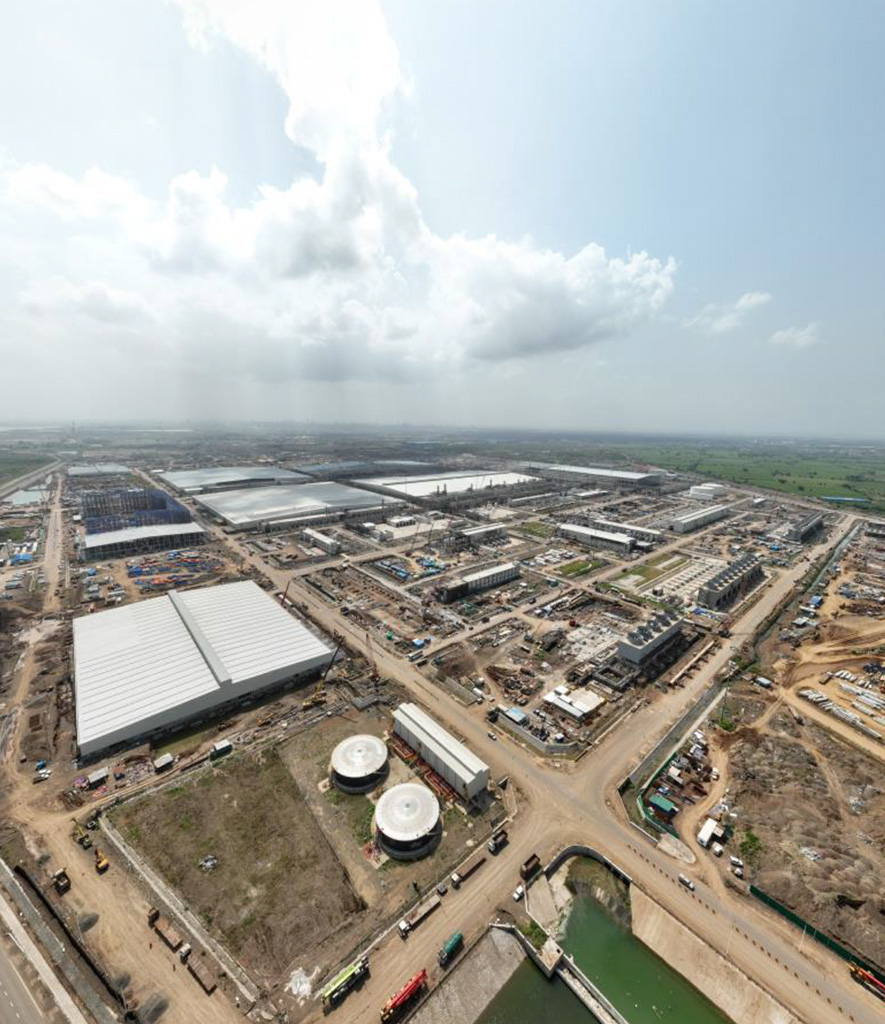
  • The Dhirubhai Ambani Green Energy Giga Complex in Jamnagar is being developed across 5,000 acres, with 44 million sq. ft. of manufacturing and operational built-up area and is envisioned as the world's most integrated clean energy manufacturing ecosystem outside China.
  • The platform will create over 2,00,000 green jobs, reduce India’s energy import dependence, lower RIL Group’s energy costs significantly, and deliver long-term shareholder returns.

Global and Indian Energy Landscape

The global energy industry is at an inflection point. By 2030, renewables are expected to generate ~50% of global electricity, led by solar PV and wind.

  • India’s 2030 targets include 500 GW of non-fossil capacity and 5 MMTPA of Green Hydrogen production.
  • Reliance is central to this transition, with the Kutch renewable platform designed to meet ~10% of India’s electricity demand within a decade.

Business Updates: Execution at Scale

Solar PV Manufacturing

FY 2025-26 was a landmark year, with core manufacturing assets commissioned and Phase I operational.

  • RIL is progressively commissioning its cell and module lines and is ramping up the production of HJT cells – the largest utility-scale, high efficiency cells in the market.
  • The first 200 MWp of HJT modules delivered 10% higher energy yield and 25% lower degradation versus industry standards, with 720 Wp BIS-certified panels.
  • RIL remains on track for the facility to scale to 10 GWp per annum, with expansion to 20 GWp planned, targeting 26% module efficiency, with polysilicon, glass, ingots, and wafers being commissioned in phases toward full integration.

Energy Storage (BESS)

The BESS giga-factory is in advanced commissioning.

  • RIL will be operationalising 40 GWh of annual capacity, with a roadmap to 100 GWh.
  • With civil construction complete and equipment installation underway, production will ramp through second half of 2026, focused on LFP chemistry for utility-scale BESS and mobility.

Green Hydrogen, Fuels and Electrolysers

  • RIL secured exclusive technology licensing from Nel ASA for alkaline electrolysers in India, with rights for captive use globally.
  • Reliance has started work on setting up electrolyser giga-factory and will be commissioning and ramping up the facility in phases over next few quarters.
  • The business is working towards building 3 MMTPA of green hydrogen equivalent capacity by 2032 for global markets.
  • Reliance has entered into a green ammonia long-term offtake agreement with Samsung C&T Corporation, with supply over a 15-year period commencing in the second half of FY 2029.

Renewable Energy Generation and Transmission

In Kutch, RIL is developing a 550,000- acre renewable hub.

  • At peak installation, the site will deploy 55 MWp of solar modules and 150 MWh of battery containers daily.
  • Solar generation is expected in FY 2026-27 for captive use and green fuel production.
  • A dedicated Kutch-Jamnagar transmission corridor will deliver 24×7 green power.
Outlook

Reliance stands at the threshold of a multi-decade opportunity. The focus is now on optimising a fully operational and integrated platform — driving captive value creation, financial selfsufficiency and expansion in green chemicals.

Bio Energy

RIL is building India’s largest integrated CBG platform, converting agricultural residue, energy crops, and industrial waste into clean fuel at Global scale.

  • RIL contributes to over 30% of India’s Compressed Biogas (CBG) production, supplying Green fuel to >40,000 vehicles daily through ~270 Retail outlets including distributors other than RBML, making it largest player in the country’s emerging bioenergy sector.
  • CCBG Production has reached 270+ TPD, with 35 operating plants (capacity ~700 TPD), and is on track to reach 1,100 TPD with 55 operating plants by end of FY 2026-27.
  • On track to commission 6 Largest CBG Complex (50 TPD+) PAN India in FY 2026-27.
  • Engaged 80,000+ farmers and supported 10,000+ jobs.

Over the next five years, RIL targets to establish integrated CBG hubs to achieve 1 million tonnes annual CBG capacity.

Full Report
Back To Top
PREVIOUS PAGE Oil to Chemicals NEXT PAGE Risk and Governance