BUSINESS RESPONSIBILITY REPORT
INTRODUCTION
The importance of a business' role in creating economic value is a well-accepted paradigm. However, the extended role of the business to manage its environmental and social impacts is gaining momentum.
Among Indian corporates, RIL is one of the forerunner of inclusive growth with its deep rooted philosophy of growth as a universal concept that touches all aspects of life. The Company's vision is to create value for the nation, enhance quality of life across the entire socioeconomic spectrum, and help spearhead India as a global leader in the domains where it operates. This manifests in the Company's core values; Customer Value, Ownership Mindset, Respect, Integrity, One Team and Excellence.
Principle 1

Businesses should conduct and govern themselves with Ethics, Transparency and Accountability
Principle 2

Businesses should provide goods and services that are safe and contribute to sustainability throughout their life cycle
Principle 3
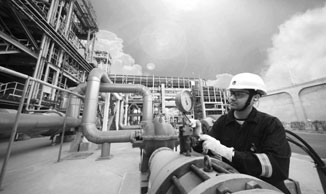
Businesses should promote the wellbeing of all employees
Principle 4
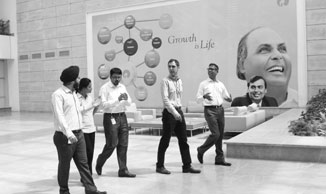
Businesses should respect the interests of, and be responsive towards all stakeholders, especially those who are disadvantaged, vulnerable and marginalised
Principle 5

Businesses should respect and promote human rights
Principle 6

Businesses should respect, protect, and make efforts to restore the environment
Principle 7
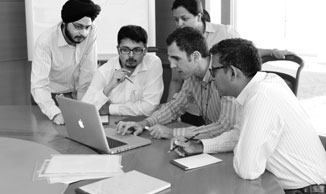
Businesses, when engaged in influencing public and regulatory policy, should do so in a responsible manner
Principle 8
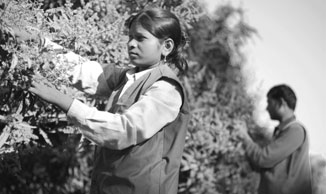
Businesses should support inclusive growth and equitable development
Principle 9
Businesses should engage with and provide value to their customers and consumers in a responsible manner
SECTION A: GENERAL INFORMATION ABOUT THE COMPANY
1. Corporate Identity Number (CIN) of the Company: L17110MH1973PLC019786
2. Name of the Company: Reliance Industries Limited
3. Registered address: 3rd Floor, Maker Chambers IV, 222, Nariman Point, Mumbai 400 021, India
4. Website: www.ril.com
5. E-mail id: sustainability.report@ril.com
6. Financial Year reported: 2014-15
7. Sector(s) that the Company is engaged in (industrial activity code-wise): Refining, Petrochemicals (Polymers, Polyester and Fibre Intermediates), Exploration and Production of Oil & Gas and Textiles.
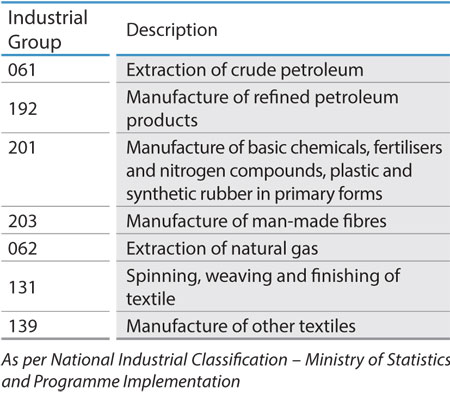
8. List three key products/services that the Company manufactures/provides (as in balance sheet):
Transportation Fuels
Polymers
Polyester Fibre
9. Total number of locations where business activity is undertaken by the Company:
Number of International Locations (Provide details of major 5): RIL has business activity undertaken in 8 international locations (on standalone basis). The major ones are Turkey, Malaysia, China, UK, and Netherlands.
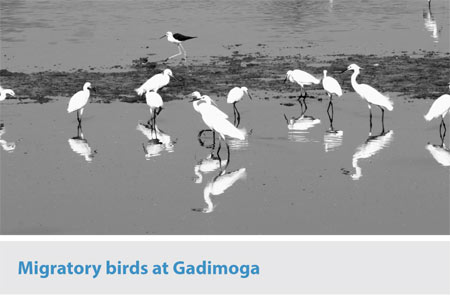
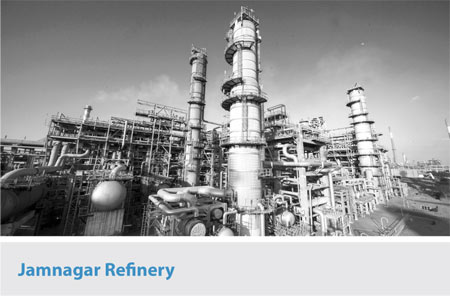
Number of National Locations: RIL has business activity carried out in over 50 domestic locations. The manufacturing divisions are at Allahabad, Barabanki, Dahej, Hazira,Hoshiarpur, Jamnagar, Nagothane, Nagpur, Naroda, Patalganga, Silvassa and Vadodara. The Exploration and Production (E&P) units are at KG-D6 – Gadimoga and Panna-Mukta- Tapti. Besides, there are CBM Blocks and various regional marketing offices.
10. Markets served by the Company – Local/State/ National/International: In addition to serving Indian markets, RIL exported to 121 countries worldwide as on 31st March, 2015.
SECTION B: FINANCIAL DETAILS OF THE COMPANY
1. Paid up capital (INR): 3,236 crore
2. Total turnover (INR): 3,40,814 crore
3. Total profit after taxes (INR): 22,719 crore
4. Total spending on Corporate Social Responsibility (CSR) as percentage of profit after tax (%): 3.35%
5. List of activities in which the Corporate Social Responsibility (CSR) expenditures have been incurred: The major areas in which the above expenditure has been incurred includes rural transformation, healthcare, education, environment, protection of national heritage, art and culture and disaster response.
SECTION C: OTHER DETAILS
1. Subsidiary Company/Companies The number of RIL's subsidiary companies as on 31st March, 2015 was 96 as per details given in Annexure A to Consolidated Financial Statements.
2. Participation of Subsidiary Company/Companies in the Business Responsibility (BR) initiatives of the parent company RIL encourages its subsidiary companies to participate in its group-wide BR initiatives on several topics. RIL's CSR mission is to continue growing as a responsible organisation that believes in enriching lives of those around it, and it propagates this mission through its business partners. All subsidiaries are aligned to the activities under the aegis of Reliance Foundation. RIL's subsidiaries like Reliance Retail Limited and Reliance Trading Limited, have taken part in initiatives across several areas during FY 2014-15. These include farm engagement activities, training and skill development of youth, community development activities and promotion of education etc.
3. Participation and percentage of participation of other entity/entities (e.g. suppliers, distributors etc.) that the Company does business with, in the BR initiatives of the Company RIL collaborates with all relevant stakeholders as part of the BR initiatives of the Company. This includes suppliers, distributors, local communities, government and other entities in the value chain. Considering the spread of RIL's value chain, at present the number of entities which directly participate in the BR initiatives would be less than 30%.
SECTION D: BR INFORMATION
1. Details of Director/Directors responsible for BR
a) Details of the Director/Directors responsibl for implementation of the BR policy/policies The Corporate Social Responsibility and Governance (CSR&G) Committee of the Board of Directors is responsible for implementation of BR policies. The following are the members of the CSR&G Committee:DIN Number: 00001879 Name: Shri Yogendra P. Trivedi (Chairman) Designation: Independent Director
DIN Number: 00001620 Name: Shri Nikhil R. Meswani Designation: Executive Director
DIN Number: 00001982 Name: Dr. Dharam Vir Kapur Designation: Independent Director
DIN Number: 00074119 Name: Dr. Raghunath A. Mashelkar Designation: Independent Director
b) Details of the BR Head
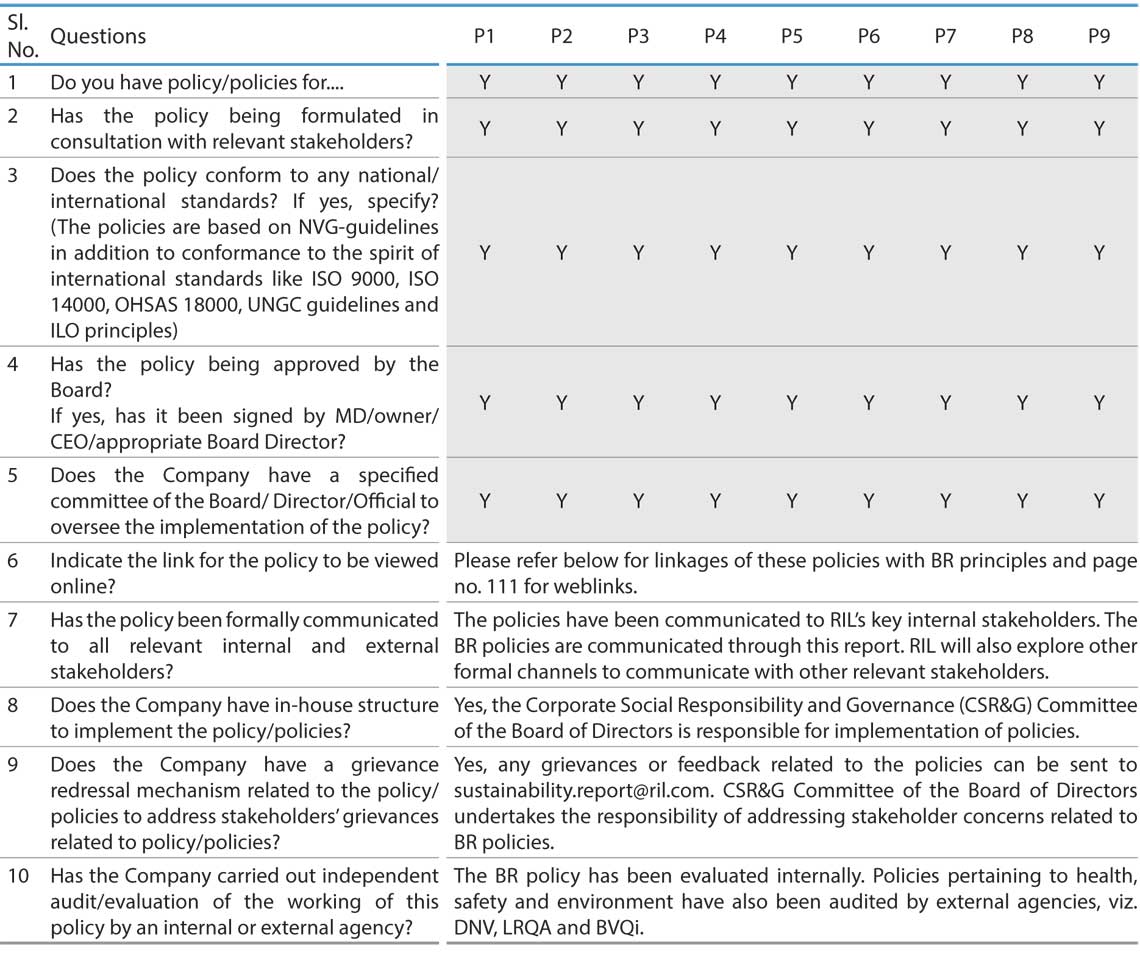
2. Principle-wise (as per NVGs) BR policy/policies (Reply in Y/N)
P1– Businesses should conduct and govern themselves with Ethics, Transparency and Accountability
P2– Businesses should provide goods and services that are safe and contribute to sustainability throughout their life cycle
P3– Businesses should promote the well-being of all employees
P4– Businesses should respect the interests of, and be responsive towards all stakeholders, especially those who are disadvantaged, vulnerable and marginalised
P5– Businesses should respect and promote human rights
P6– Businesses should respect, protect, and make efforts to restore the environment
P7– Businesses, when engaged in influencing public and regulatory policy, should do so in a responsible manner
P8– Businesses should support inclusive growth and equitable development
P9– Businesses should engage with and provide value to their customers and consumers in a responsible manner
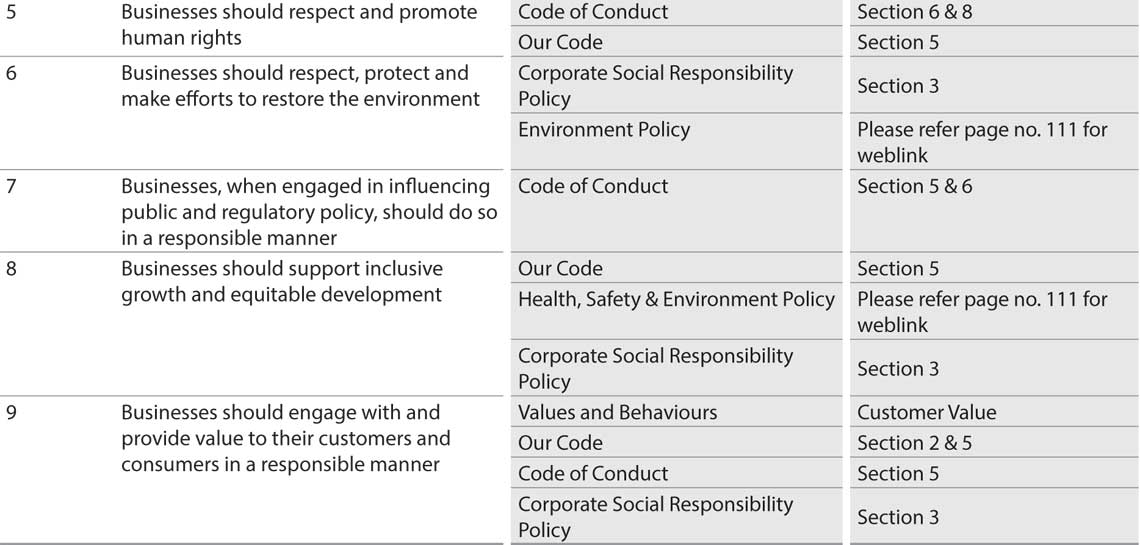
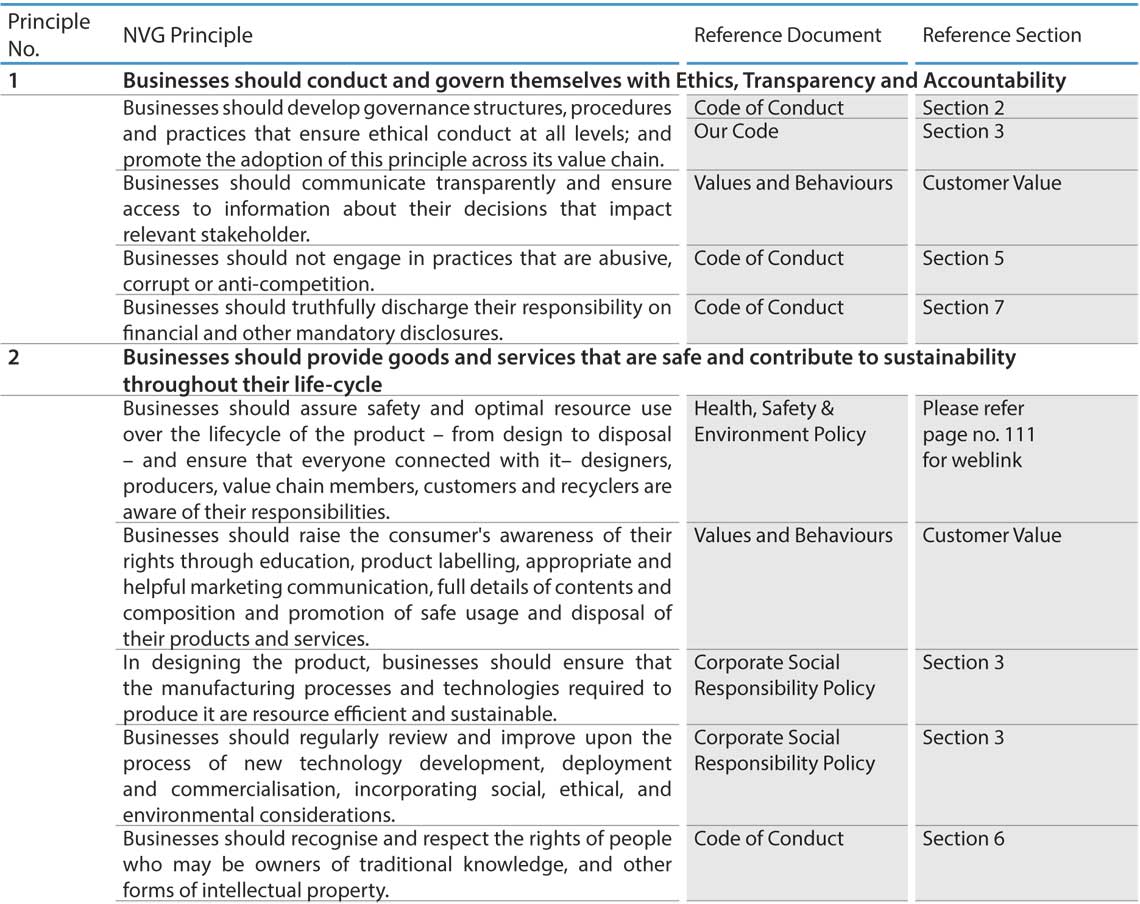
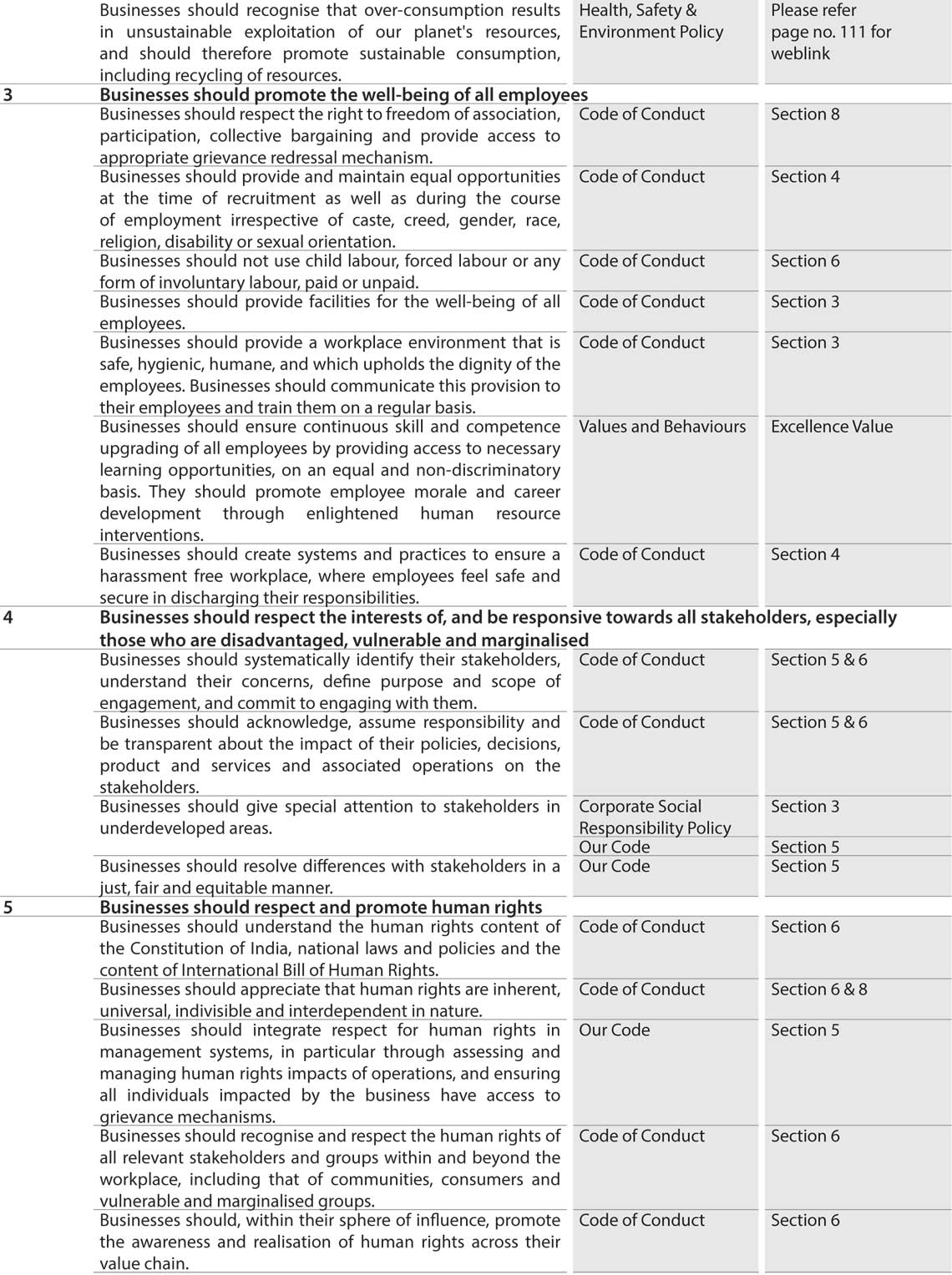
Linkages of various Company policies with BR Principles as per NVG

Detailed description of NVG
Links
1. Click here to view environmental policy
2. Click here to view Health, Safety and Environment Policy
3. Click here to view corporate social responsibility policy
4. Click here to view our code
5. Click here to view code of conduct
6. Click here to view values & behaviours
3. Governance related to BR
a) Frequency with which the Board of Directors, Committee of the Board or CEO meet to assess the BR performance of the Company The CSR&G Committee assesses the BR performance of the Company annually.b) BR and Sustainability Reports published, frequency and link of published reports
1 Declaring an Application Level results in a clear communication about which elements of the GRI Reporting Framework have been applied in the preparation of a report. The reporting levels C, B and A reflects an increasing application or coverage of the GRI Reporting Framework while the '+' sign signifies that the report is externally assured.
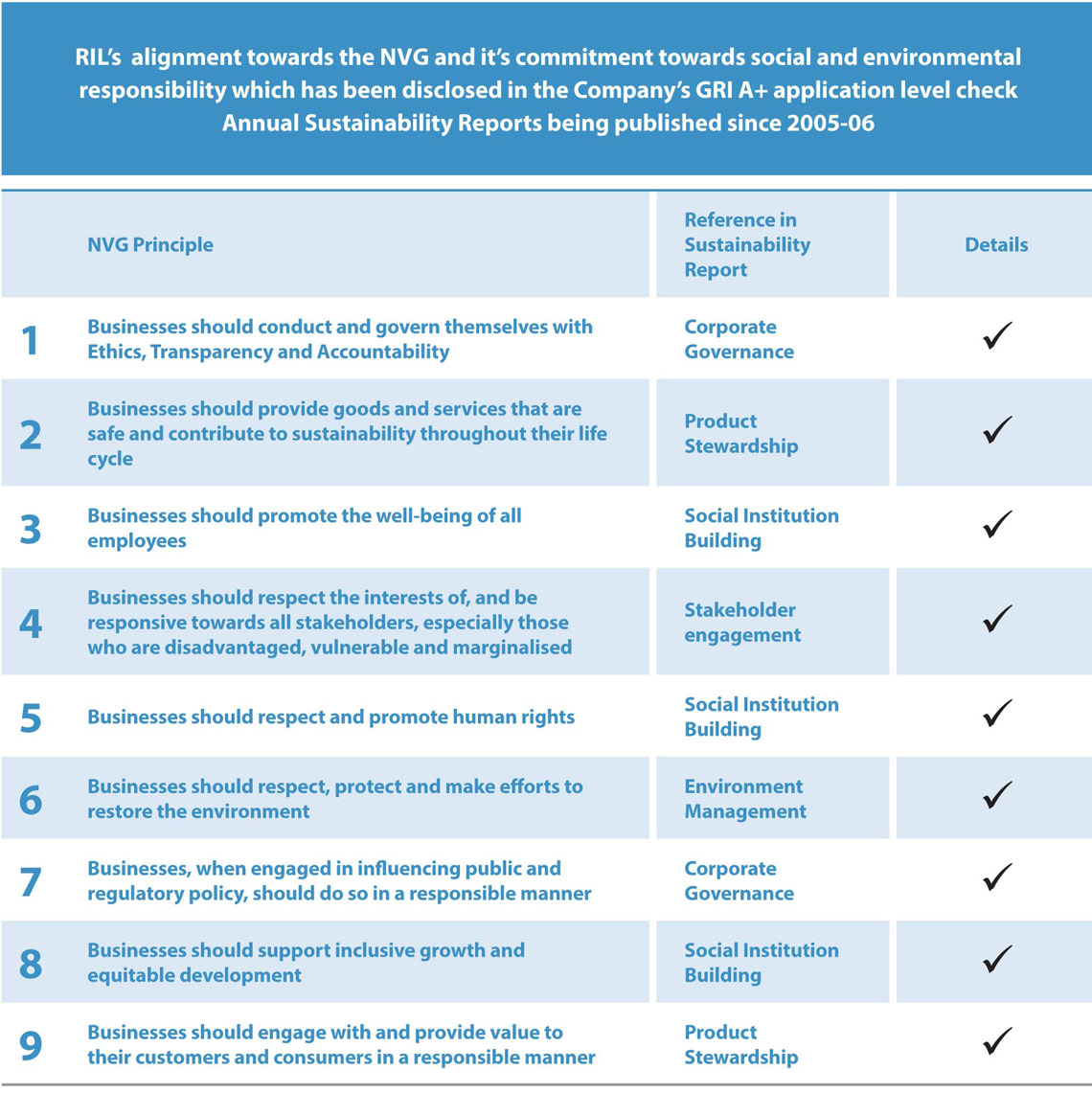
RIL publishes its Sustainability Report annually based on Global Reporting Initiative's (GRI) latest reporting guidelines. RIL has been publishing the GRI A+ application1 level check reports since 2005-06. The last published Sustainability Report for FY 2013-14 and all previous reports are available at Click here to view corporate sustainability
SECTION E: PRINCIPLE-WISE PERFORMANCE
Businesses should conduct and govern themselves with Ethics, Transparency and Accountability
Conducting business on the pillars of ethics and transparency fosters the trust of stakeholders. RIL believes that image and reputation are vital in adding value to the organisation.
1. Coverage of policy relating to ethics, bribery
and corruption (e.g. Joint Ventures, Suppliers,
Contractors, NGOs etc.).
RIL's code of conduct covers the policy on bribery and
anti-corruption and it includes all individuals working
with it, and its subsidiaries at all levels and grades.
This mechanism includes directors, senior executives,
officers, employees (whether permanent, fixed-term
or temporary), and third parties including consultants,
contractors or any other person associated with
RIL. The well-defined policy lists tenets on ethical
business conduct, definitions and the framework for
reporting concerns.
2. Stakeholder complaints received in the past
financial year and percentage of complaints
satisfactorily resolved by the management.
As specified in the Corporate Governance Report,
2,301 investor complaints were received during FY
2014-15. No complaint was outstanding, as on 31st
March, 2015. In addition to this, 2,527 customer complaints were received, out of which 2,435
were successfully resolved as on 31st March, 2015.
Subsequently, most of these complaints have been
resolved.
RIL's code of conduct has a provision for all its stakeholders to freely share their concerns and grievances with RIL through a structured mechanism.
Businesses should provide goods and services that are safe and contribute to sustainability throughout their life cycle
Creating sustainable products is a part of RIL's endeavour towards responsible product stewardship. RIL aims to make its products safer and more environment friendly.
1. List three products or services whose design has
incorporated social or environmental concerns,
risks and/or opportunities.
It is RIL's constant endeavour to make products that
not only have a positive impact on the environment,
but also cater to consumer needs. Some of the
products created during FY 2014-15 are listed below:
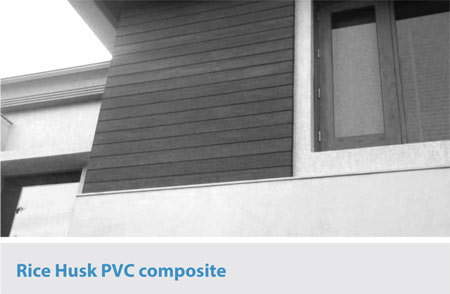
a) Rice Husk Polyvinyl Chloride (PVC) Composite
boards for construction and furniture
applications
Rice Husk PVC Composites are manufactured
using PVC resin, additives and Rice Husk (Husk
generated during milling). As these products
perform equally well compared to wood, they
have potential to save forest coverage of the
country by reducing the demand of wood.
The husk generated during milling of rice is
mostly used in the boilers for processing paddy,
producing energy through direct combustion
and/or by gasification. The ash generated as
a result is a great environment threat causing
damage to the land and the surrounding area in
which it is dumped.
Rice Husk PVC Composites can be cut, nailed,
screwed, glued and routed like wood. These
properties make it useful for various products
including furniture, siding, shuttering, flooring,
railing, partitions and doors. Rice Husk PVC
composites also have potential in industrial
applications like industrial lumbers, pallets etc.
Rice Husk PVC products are used in Green
Buildings across the world due to their potential
to meet the necessary requirements.
RIL organised meeting with many processors
to manufacture Rice Husk PVC products. To
start with, two processors have ventured into
manufacturing of Rice Husk PVC Composite
construction boards.
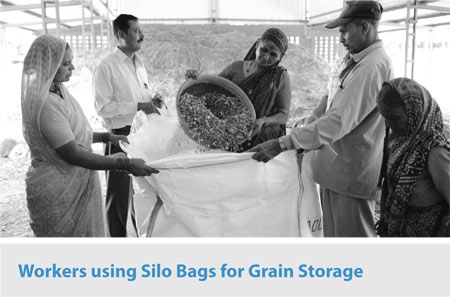
b) PE Flexible Silo Bags for food grain storage to
reduce the wastage of food grain
Hermetic Storage (HS) technology has emerged
as a significant alternative to other methods
of storage that protect commodities from
insects and molds. HS is based on the principle
of generation of an oxygen-depleted, carbon
dioxide-enriched interstitial atmosphere caused
by the respiration of the living organisms in the
ecological system of a sealed storage.
Silo Recron Green Products is a Bulk Grain Storage
system which is a low cost alternative to fixed
structure storage. A Silo Bag is simply a long PE
(polyethylene) bag that comes in different sizes.
A Silo Bag is a laminated mix of three layers of PE.
The first two layers act as a UV filter. The third layer is
black and is designed to keep out the sunlight.
The basic principle is to keep the grain in a modified
atmosphere, low in oxygen and with a high
concentration of carbon dioxide (CO2). Once filled,
the bag is sealed. The conditions within the bag
thereafter control the breading of vermin, insects
and fungi, eliminating the need for fumigation .
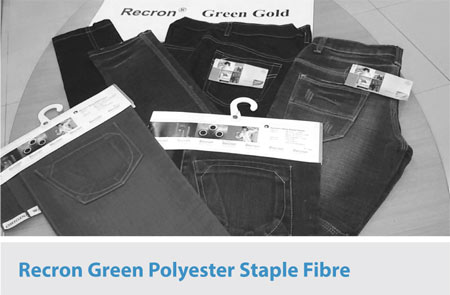
c) Recron Green Polyester Staple Fibre
RIL has taken many initiatives towards addressing
environmental concerns, and continues to make
eco-friendly sustainable fibre under the brand
name Recron® Green Gold polyester staple fibre.
The Company's philosophy is to reduce, re-use,
recycle and replace, in all stages of Recron® Green
Gold polyester staple fibres are produced with 100
% post-consumer waste PET bottles. These fibres
are one of the greenest fibres in the world and have
one of the lowest carbon footprints. These fibres
have been tested for lowest carbon footprint by SGS,
for both Grey (white) and EcoD (pre-colour fibres)
meeting the most stringent environmental criteria
for being a green fibre.
2. Procedures in place for sustainable sourcing (including transportation) and percentage of inputs sourced sustainably
RIL's ethos on sustainable sourcing symbolises protection of the environment, social progress and supporting India's economic development. The Company has adopted RC-14001 international environmental management system in an endeavour to effectively manage the manufacturing, distribution and use of chemicals in the products. To improve the protection of human health and the environment, the Company has sourced REACH (Registration, Evaluation, Authorisation and Restriction of Chemical's) compliant materials and its requirements include that its tier 1 suppliers also procure REACH compliant materials. RIL ensures 100% compliance of statutory laws and regulations including labour laws by its contractors.
In order to dispose of the waste effectively, the Company audits its processors' operations to ensure that credible disposal practices. RIL prefers vendors who undertake green initiatives and reduce, reuse, recycle as a continuous exercise. The Company takes highest care in safe handling of its materials and also does reconnaissance of entire logistics handling/ storage from supplier factory to its gate. Through it's large scale new capacity addition projects, it has enabled the creation of a large engineering base in India.
3. Steps taken to procure goods and services from local and small producers, including communities and capability building activities undertaken for local and small vendors
RIL has invested in mega projects and operations in India. These investments have developed India's chemicals and engineering supplier base. Today leading Indian engineering companies, raw materials companies and industrial goods companies are RIL's long-term vendor partners. Through its sustained efforts, the Company has helped local industry develop new products to serve its needs and enabled them to grow their businesses globally. While RIL always believes in working with highest capability vendors, majority of its suppliers and contractors are India based.
RIL's manufacturing sites act as economic nerve centres for local communities. The Company ensures that it engages local villagers and small businesses around its plants in variety of productive employment especially through vehicle hiring, material handling, housekeeping, waste-handling and horticulture contracts. Some of these vendors have been serving the Company's manufacturing sites for the past two generations. These contracts have led to entrepreneurship development around the manufacturing sites and have created employment for the populace.
CASE STUDY- JOINT DEVELOPMENT OF APE FREE SPIN FINISH FOR PSF
RIL has been working hand-in-hand with one of its long time suppliers of speciality chemicals, Croda, for adopting sustainable products/ technologies. Spin finishes are speciality chemicals (surfactants) used during manufacture of polyester fibres. Depending on the application, the spin finish may be washed off during production or remain on the fibre to deliver some processing characteristics to the fibre. Alkyl Phenol Ethokylate (APE) based surfactants are used in the industry due to their very high performance. However studies have indicated that APEs are slow to degrade, bio-accumulate, toxic to aquatic organisms and endocrine disruptor in higher animals. In an endeavour to create spin finishes that are sustainable and environment friendly, RIL, along with Croda, worked to develop spin finishes that are APE free and also compliant with Öko-Tex Standard (independent testing and certification system for textile products).
CASE STUDY- VENDOR AND SUPPLIER ORIENTATION ON ENVIRONMENT AND SAFETY ISSUES
Regulatory and legal compliance are of top priority for the Company and violation of any sorts is unacceptable. RIL has conducted awareness programmes for vendors, suppliers, contractors about its philosophy towards health, safety and environment.
4. Mechanism to recycle products and waste and the percentage of recycling of products and waste (separately as <5%, 5-10%, >10%)
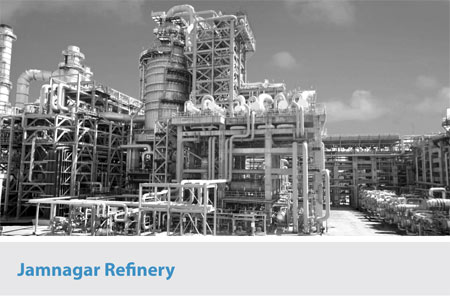
RIL considers waste minimisation as the first step towards responsible management of waste. Through process technology and operational control measures, it intends to minimise the generation of product or process waste. However, considering the nature of its operations, there is a certain amount of waste generation which is inevitable. Recycling and reusing of waste helps the Company in reducing its environmental impact while at the same time improving the material efficiency of the operations. In this direction, RIL has taken various measures such as converting waste to organic manure and biogas generation, recycling of used oil, slop oil and oily sludge at Jamnagar plant, recycling of waste PET bottles at Hazira, Nagothane, Hoshiarpur and Barabanki plants and recycling of used/ waste oil, spent catalysts through authorised re-processors.
RIL ensures responsible disposal of waste generated by partnering with various agencies to encourage end-of-life recycling and reuse. The industrial waste generated at the Naroda plant is converted into useful 'bio-manure' by the vermi-composting method, thereby reducing the load of waste disposal on the environment.
The Jamnagar refinery has reduced its load on the environment by tapping and desalinating sea water instead of using fresh water resources. The waste water generated is treated and used for green belt development thereby ensuring zero effluent discharge.
Continuous focus on waste minimisation, reuse and recycle help the Company in reducing consumption of virgin material.
RIL has recycled treated waste water across its manufacturing divisions.
RIL is recycling about 60000 tons/year of polyester both industrial and consumer waste, and has plans to expand further in recycling capacity.
Polyester fabric waste recycling: Work is underway to develop a process to recover polyester component of fabrics and enzymatically hydrolyse the products of non- polyester components like cotton and viscose to glucose. As a value addition, this glucose can be consumed for production of various biochemicals while the polyester recovered can be recycled.
CASE STUDY- OPTIMISATION OF EFFLUENT TREATMENT OPERATIONS AT HAZIRA MANUFACTURING DIVISION
Primary treatment is done for individual effluent streams at the plant level as per the requirement. These streams are then segregated into Low Total Dissolved Solids (LTDS) streams and High Total Dissolved Solids (HTDS) streams and led to separate LTDS Effluent Treatment Plant (ETP) and HTDS ETP respectively. The effluent at both the LTDS and HTDS ETPs are sequentially treated in primary, secondary and tertiary treatment facilities. Treated effluents from HTDS ETP are discharged outside after ensuring that quality of the effluent meets or is better than the prescribed discharge standards. The treated effluent from LTDS ETP are further processed through reverse osmosis plant and recycled as make-up water to cooling towers. About 8000 m3/day of treated effluent (25% of total volume) is thus reused as makeup water to cooling tower, reducing requirement of freshwater for the complex.
Businesses should promote the well-being of all employees
RIL believes in its people power propelling its progressive growth. Their knowledge, experience and passion to perform are fundamental to building the organisation further. Hence at RIL, it provides employees with opportunities that encourage them to excel. RIL ensures a work environment that promotes well-being.
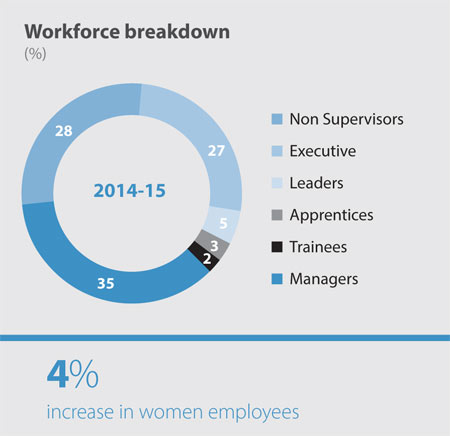
1. Total number of employees
The total number of employees is 24,930 as on
31st March, 2015.
2. Number of permanent women employees
The total number of permanent women employees is
1,195 as on 31st March, 2015.
3. Number of permanent employees with disabilities
The total number of permanent employees with
disabilities is 83 as on 31st March, 2015.
4. Employee associations recognised by the
management
RIL has various unions and associations of employees
at various sites which encourage the employees to
participate freely in constructive dialogue with the
management.
5. Percentage of permanent employees that
members of recognised employee association
Almost 100% of non-supervisory
employees at manufacturing locations are
of trade unions/employee associations.
6. Number of complaints relating to child labour,
forced labour, involuntary labour, sexual
harassment in the last financial year and pending,
as on the end of the financial year
No cases of child labour, forced labour, involuntary
labour, sexual harassment and discriminatory
employment were reported in the last financial year.
Taking a step further, RIL has formed an Internal
Complaints Committee where employees can
register their complaints against sexual harassment.
This is supported by the Sexual Harassment Policy
which ensures a free and fair enquiry process with
clear timelines.
7. Percentage of under mentioned employees that were given safety & skill up-gradation training in the last year
- Permanent Employees
- Permanent Women Employees
- Casual/Temporary/Contractual Employees
- Employees with Disabilities
It is RIL's constant endeavour to keep its employees abreast with the latest technical knowledge. During FY 2014-15, a total of 1.76 million man-hours of training was imparted by RIL to its people. 65.6% of RIL's permanent employees received safety and skill up-gradation trainings while 61% of the women employees received trainings through classroom as well as web-based training programmes. Out of 83 permanent employees with disabilities, 51.8% received safety and skill up-gradation trainings. All of RIL's contractual employees receive mandatory safety training before entering the premises and receive on the job training through the contractor and the Company.
Businesses should respect the interests of, and be responsive towards all stakeholders, especially those who are disadvantaged, vulnerable and marginalised
Stakeholders play an important role in determining RIL's growth story. Stakeholder engagement, at RIL, aims to provide transparency in communications and continual improvement. It's a dialogue that defines the RIL approach of understanding stakeholder needs, and develop action plans to fulfil them.
1. Mapping of internal and external stakeholders The stakeholders have been mapped and the key categories are as below:
i) Government and regulatory authorities
ii) Employees
iii) Customers
iv) Local community
v) Investors and shareholders
vi) Suppliers
vii) Trade unions
viii) NGOs
RIL engages with its identified stakeholders on an ongoing basis through a constructive consultation process. There is a structured stakeholder engagement programme which entails specific engagement mechanisms for each stakeholder group. The Company follows a system of timely feedback and response through formal and informal channels of communication to ensure that the stakeholder information remains current and updated.
2. Identification of the disadvantaged, vulnerable
and marginalised stakeholders
Through RIL's stakeholder engagement, the
disadvantaged and marginalised stakeholders are
identified.
3. Special initiatives taken by the Company to
engage with the disadvantaged, vulnerable and
marginalised stakeholders
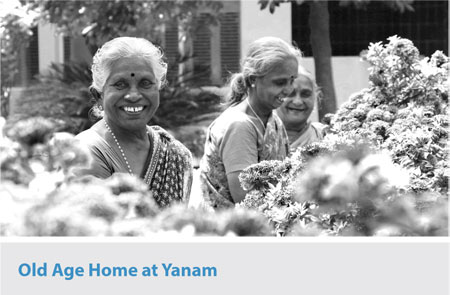
RIL goes beyond its business activities to create
societal impact through its diverse initiatives, and
is working towards improving lives of India's most
marginalised and vulnerable communities. At RIL,
there are certain criteria for selecting a project. In
order to determine the beneficiaries, the Company
undertakes a need assessment that focuses on the
scale, impact and sustainability of the project. These
include rural rejuvenation projects that help empower
farmers, schools for children living in remote areas,
affordable healthcare for the average Indian, urban
planning to build essential infrastructures etc.
A large number of RIL's livelihood support programmes are women-centric and have helped them become independent and gain a steady source of income through a range of different vocations. The Company is continuously improving the access to quality education through adopting schools in and around its manufacturing units. These educational institutions include children from the underprivileged communities whose fee are completely or partially waived. Meritorious students are assisted with scholarships to pursue higher education in colleges. Students who are physically challenged are specially assisted to pursue high education in colleges. RIL is moving ahead in every possible direction to help India move into the brave new world.
For specific details, please refer to Report on Corporate Social Responsibility.
Businesses should respect and promote human rights
RIL's culture demonstrates integrity and respect for human rights. RIL developed policies and mechanisms to ensure human rights are an entitlement to all. It is guaranteed in day-to-day operations and in the way RIL conducts its business. RIL publicly reports its progress against the ten principles by UNGC, one of them being human rights.
1. Coverage of the Company's policy on human rights
to the Company and its extension to Group/Joint
Ventures/Suppliers/Contractors/ NGOs/Others
RIL's code of conduct demonstrates its commitment
towards the preservation of human rights across
the value chain. The Company believes that a
sustainable organisation rests on a foundation of
ethics and respect for human rights. RIL promotes
awareness of the importance of respecting human
rights within its value chain and discourage
instances of abuse.
2. Stakeholder complaints received in the past
financial year and percentage of complaints
satisfactorily resolved by the management
There were no reported complaints during FY 2014-15.
Businesses should respect, protect and make efforts to restore the environment
RIL believes in safeguarding the environment, while executing its operations. To this effect, it takes every effort towards environmental conservation. RIL ensures to do business with a minimal environmental impact that aims at rational use of natural resources and reduced waste and emissions.
1. Coverage of the policy related to Principle 6 and its
extension to the Group/Joint Ventures/Suppliers/
Contractors/NGOs/others
Environmental conservation is core to RIL's business
strategy. RIL, in its 'Environment Policy', has stated
that protection of the environment is of prime
concern. RIL is conscious of its responsibility towards
creating, maintaining and ensuring a safe and clean
environment for sustainable development. The policy
addresses issues related to Group companies, JV
partners, suppliers, contractors and customers.
RIL encourages sharing of process and product innovations within the group and extending it to benefit the industry and key members of its value chain.
2. Company's strategies/ initiatives to address global
environmental issues such as climate change,
global warming, etc.
One of the key strategic pillars of RIL's sustainability
strategy is ensuring energy security. In its endeavour
to become a key global energy player, the Company
has strengthened its focus in recent years on
opportunities to harness alternative energy sources.
RIL is continuously working to improve energy efficiency in its manufacturing operations, thereby reducing emission of greenhouse gases (GHG). A dedicated Clean Development Mechanism (CDM) cell identifies the opportunities, and works on climate change mitigation projects. RIL adheres to all legal requirements and norms of energy conservation and other environmental conservation standards stipulated by the Government of India and other countries where RIL has a presence. All of RIL's manufacturing sites regularly account for GHG emissions, resulting from their manufacturing operations. Energy conservation initiatives are a part of regular operations, which help reduce the Company's GHG emission as well. Data on GHG emission is annually published in its Sustainability Report.
CASE STUDY- SHORE POWER SUPPLY TO TUGS AT HAZIRA:
Reduction in fuel oil consumption of support tugs by providing shore electrical power supply at Jetty.
Benefits:
- Reduction of HSD fuel consumption by 138 KL in FY 2013-14
- Reduction in maintenance cost
Protection of the environment:
- Reduction in CO2 emission by 360 tonnes per year
- Reduction of noise level on board vessel
- Reduction of waste in lube oil generation
3. Identification and assessment of potential
environmental risks
RIL has identified and assessed potential
environmental risks for FY 2014-15. RIL has systems in
place that ensure continuous monitoring of potential
environmental risks involved in its operations. For
new and upcoming projects, potential environmental
risks are identified while preparing Environment
Impact Assessment (EIA) and Risk Assessment reports.
Accordingly, identified potential environmental risks
are addressed at the design stage and also mitigated
through incorporation of robust environmental
management plan. Environmental audits are carried
out regularly which help in identifying potential risks
and necessary corrective actions are taken to mitigate
the same.
All the manufacturing divisions are certified as per the ISO-14001 environment management system and integrated with quality and safety management systems (ISO 9001 and OHSAS 18001). In addition, all these sites have also been covered under the British Safety Council UK's environment five star audit. The periodic audits conducted as part of these management systems help RIL identify potential risks at its locations.
The measures highlighted in the environmental assessments are addressed in a timely manner and monitored accordingly. Mitigation measures and environmental parameters are internalised at all stages of project design, execution, construction, operation and maintenance.
4. Company's initiatives towards Clean Development
Mechanism
The Company continues to work towards development
and implementation of climate change mitigation
projects, mainly through energy efficiency and use of
cleaner fuels. RIL has eight CDM projects registered
with the United Nations Framework Convention
Climate Change (UNFCCC). The Company has built inhouse
capacity to develop CDM projects and obtain
the registration and issuance of the same in the form
of Certified Emission Reductions (CERs) from the
UNFCCC.
5. Company's initiatives on – clean technology,
energy efficiency, renewable energy, etc.
Clean Technology
- Process for CO2 capture from refinery flue gas: Work is underway to further reduce emissions through CO2 capture, storage, and further utilisation for conversion to useful chemicals. The patented RIL process for development of in-house adsorbent and energy efficient CO2 capture process follows carbonate-bicarbonate chemistry for adsorption and regeneration step with minimum operating expense as compared to conventional amine absorption process. The results of recently concluded pilot plant study provide definite indications towards the efficacy and scalability of this adsorption process for capturing CO2 from both oil refinery and power plant. These works support RIL's commitment to ameliorating long-term environmental issues.
- Work is underway for the development of catalyst and processes for gasification of petroleum coke/ biomass at low temperature.
- Design and installation of organic stripper systems at Silvassa, which reduced emissions of organic vapours to environment and also partially substituted fuel oil or natural gas as fuel, thus reducing fossil fuel use.
- Development of sulphur and particulate matter removal systems at Barabanki Unit.
- Direct synthesis of Dimethyl carbonate from carbon dioxide recycles CO2 into fuels that lowers GHG emissions.
- Development of advanced non phthalate polypropylene catalyst, donor & polypropylene products. Phthalates have been identified as potential endocrine disruptors and it is desirable to eliminate their use.
- Design & installation of organic stripper systems at Silvassa which reduced emissions of organic vapours to the environment and also partially substituted fuel oil or natural gas as fuel, thus reducing fossil fuel use.
- Development of a new product, RelFarmS™, which converts by-product sulfur into a high quality fertilizer. RelfarmS™ is currently in field test.
Energy Efficiency
- Use of Vapour Absorption Chiller at Silvassa, Patalganga and Hoshiarpur, using waste steam/ hot water in place of electricity to generate refrigeration for process. This also substitutes a HCFC based refrigerant (Global Warming Potential 1300) chiller with a water refrigerant chiller.
- Additives to improve efficiency in Hydrocarbon Process: Research work is underway to improve the conversion of hydrocarbons to petrochemical building blocks and thereby not only reducing the by-product formation but improving process efficiency.
- Replacement of lighting systems by LED based systems.
- Optimisation of compressed air system at Silvassa, thereby cutting down on power import from grid (600 kW reduction).
Renewable Energy
- RIL's 'Algae to Biocrude' effort aims at establishing a green platform to achieve sustainable and economically viable production of biocrude by large scale cultivation of 'producer' algal strains with optimal inputs of sea water, low cost nutrients (N, P) and crop protection measures. Use of Algae to produce biocrude represents the adaptation of 'Green Chemistry / Green Technology' with benefits such as (a) less environmental impact on land currently used for production of food crops (b) use of land that is otherwise non-productive (c) potential to reduce the generation of GHG and to recycle CO2 emissions from flue gases from power plants and natural gas operations.
- Biofuel Productivity improvement and Large scale production: Research and development efforts in the areas of improvement of productivity of biofuels per unit area and production of clean energy and chemicals using renewable raw materials are closer to commercialisation. These efforts have a potential to produce significantly large quantities of clean fuels and chemicals.
- Jatropha based biodiesel: Marginal low-rainfall land is ideally suited for our globally competitive high yielding Jatropha hybrids.
- Agri-residue to hydrocarbons: Agri-residue is often burnt to quickly clear fields. Our technology provides a better alternative by enabling efficient conversion of this waste agriresidue into products such as kerosene.
6. Reporting on the Emissions/Waste generated by
the Company as per the permissible limits given by
CPCB/SPCB
The emissions / waste generated by the Company
is within the permissible limits given by the State or
Central pollution control boards. In RIL's environmental
management system, environmental compliance
is an indispensable aspect. RIL's emissions/waste
generated reports are regularly submitted to CPCB/
SPCB by the Company and no non-conformances
have been reported. Efficient control equipment
and robust procedures help us meet the applicable
environmental standards continuously.
7. Number of show cause/ legal notices received
from CPCB/SPCB which are pending (i.e. not
resolved to satisfaction) as on the end of
financial year
There are no pending or unresolved show cause/
legal notices from CPCB/SPCB in FY 2014-15.
Businesses, when engaged in influencing public and regulatory policy, should do so in a responsible manner
RIL's collaboration with industrial bodies and academia demonstrates its approach towards addressing sustainability challenges. RIL aims to create an environment that encourages supportive decisions made in a responsible way. The associations formed are in consultation with the Board and contains representation from the Board in certain memberships.
1. Representation in any trade and chamber or association
RIL has its representation in several business and industrial
associations such as The World Economic Forum, The
American Chemistry Council (ACC), Indian Chemical
Council (ICC), The Chemicals and Petroleum Manufacturers
Association (CPMA), Gulf Petrochemicals & Chemicals
Association (GPCA), World Business Council for Sustainable
Development (WBCSD) European Petrochemicals
Association (EPCA), American Fuel & Petrochemical
Manufacturers (AFPM) Association of Oil and Gas
Operators in India (AOGO), Federation of Indian Chambers
of Commerce and Industry (FICCI), Confederation of
Indian Industry (CII), Associated Chambers of Commerce
and Industry of India (ASSOCHAM) and Association Of
Synthetic Fibre Industry (ASFI).
2. Advocating/lobbying through above associations for
the advancement or improvement of public good
RIL as a responsible producer of petrochemicals is
collaborating with ICPE (Indian Centre for Plastic in
the Environment) on a voluntary basis and provides
technical and financial support to help develop
newer technologies for plastics waste management,
establishment of pilot projects for plastics waste
management in cooperation with municipal
authorities and civil society.
Businesses should support inclusive growth and equitable development
RIL believes in creating opportunities for the people around its operations to enable a sustainable future and ensure inclusive growth. Its community development activities focus on areas that foster development and well-being of communities. RIL's CSR initiatives are aligned to aspects, such as rural transformation, healthcare, education, environment, protection of national heritage, art and culture, and disaster response.
1. Specified programmes/initiatives/projects by the
Company in pursuit of the policy related to Principle 8
RIL's CSR policy demonstrates its efforts towards
social and economic development. RIL's community
development initiative focuses on rural transformation,
healthcare, education, environment, protection of
national heritage, art and culture, and disaster response.
Following are some of the initiatives RIL undertook during FY 2014-15:
1. Ensuring well-being of local communities
2. Building capabilities for employment generation
3. Empowering women
4. Creating access to healthcare
5. Conserving environment
6. Promoting education
2. Modes through which programmes/projects undertaken (through in-house team/own foundation/external NGO/government structures/ any other organisation)
Corporate Social Responsibility Philosophy: RIL's business priorities co-exist with social commitments and its activities support inclusive growth.
RIL seeks to strategically consolidate the Company's CSR initiatives to focus on discrete social problems, all aimed at enabling lives, living and livelihoods. In order to streamline its social initiatives, the Company has identified six focus areas that aim to positively and holistically impact society. The six focus areas identified by RIL are as follows:
- Rural transformation
- Healthcare
- Education
- Environment
- Protection of national heritage, arts and culture
- Disaster Response
For specific details please refer to the Report on Corporate Social Responsibility.
3. Impact assessments for initiatives
Impact assessments for the CSR initiatives across
RIL, help gauge the impact made on the lives of
beneficiaries and also facilitates the decision making
process. Before embarking on a project, a primary or
secondary baseline study is undertaken to establish
the situation prior to the intervention. Measurement
of the impact and achievements of programmes are
done through sample surveys and studies. These
are carried out at different points of time in the
intervention life cycle to systematically measure and
capture the change. These studies are mostly external
in nature to ensure the objectivity and credibility of
the findings.
Studies have been conducted to assess the impact of health initiatives across RIL manufacturing locations and rural transformation initiatives which focus on agriculture.
After initiation of the CSR activities, RIL has constituted mechanisms to collect relevant information about the beneficiaries so that the progress and changes could be measured over a period of time. RIL continuously seeks feedback to understand the impact of its initiatives which also includes visits by its CSR teams on a periodic basis. In addition, feedback is also sought from the village heads/Sarpanch to get an understanding of the impacts of the initiatives and opportunities for improvement.
4. Company's direct contribution to community
development projects
During FY 2014-15, RIL spent ` 760.58 crore on
community development initiatives. Community
development expenditure incurred by RIL is on rural
transformation, healthcare, education, environment,
protection of national heritage, art and culture, and
disaster response.
5. Steps undertaken to ensure that community
development initiatives are successfully adopted
by the community
RIL follows a participatory approach in the areas
of intervention and encourages participation from
communities for planning and implementation
purposes. There is continuous engagement with
communities for needs assessment. This engagement
also supports the decision making process after taking
the local context into consideration and brings about
a sense of ownership among them. Their capacities
are built through multiple training programmes, so
they are self-sufficient and capable of managing the
programme even in the absence of a third party.
To ascertain the medical care needs, multiple interactions are held with communities through village meetings, meetings with local administration and officials from the health department on the basis of which infrastructure is established. Through continuous feedback from the beneficiaries, more facilities and specialised services have been added in locations where there was a demand for them.
Businesses should engage with and provide value to their customers and consumers in a responsible manner
Understanding customer needs is a key step in RIL's endeavour towards developing an efficient product stewardship programme. RIL ensures utmost care is taken towards customer safety. Putting customers first has always been the approach of conducting business at RIL.
1. Percentage of customer complaints/consumer
cases pending as on the end of financial year.
RIL conducts regular Customer Relation Meets (CRM)
to educate and appraise customers about all aspects of its products and takes their feedback in addition to
understanding their concerns.
The Company has a separate framework to deal with customer complaints. As on 31st March, 2015, 2,527 customer complaints were received out of which 2,435 were successfully resolved. Subsequently, most of these complaints have been resolved.
2. Product information and product labelling
All marketing communication efforts of the Company
adhere to the brand standards/ guidelines with regard
to visual manifestation, brand promise and relevancy
and saliency of the target group. RIL adheres to
all legal statutes with respect to product labelling
and display of product information. RIL follows
the Globally Harmonised System for classification
of chemicals and preparation of Material Safety
Data Sheets. Besides, RIL shares information with
its customers on safe handling and use of products
during distribution.
3. Case filed by any stakeholder against the Company regarding unfair trade practices, irresponsible advertising and/or anti-competitive behaviour during the last five years and pending as on the end of financial year. Nil
4. Consumer survey/consumer satisfaction trends
carried out by the Company
Customer satisfaction is RIL's goal, which drives
the Company to ensure its products deliver results
that continuously meet customer requirements. To
understand customers better, RIL follows several
modes of engagement. These engagements include
customer audits, customer surveys and call centres,
direct feedback taken by visiting managers/plant
personnel and factory visits organised for customers.
These modes help RIL to understand customer
requirements, satisfaction levels and customer
behaviour. RIL also conducts one-to-one meetings
with customers to enable efficient communication
and resolve specific needs. In addition, it conducts
web-based customer satisfaction surveys.
RIL has also conducted third-party Mystery Customer Audits, Customer Satisfaction Index and Call Centre evaluation studies for this purpose. This has helped RIL to ensure periodical fulfilment of service delivery promise, conformance to internal norms and standards, identification of process improvement areas and understand customer attitude and behaviour stage to ascertain that needs are met at all stages.
Click here for more information please refer sustainability reports
Click here to view Corporate Sustainability


